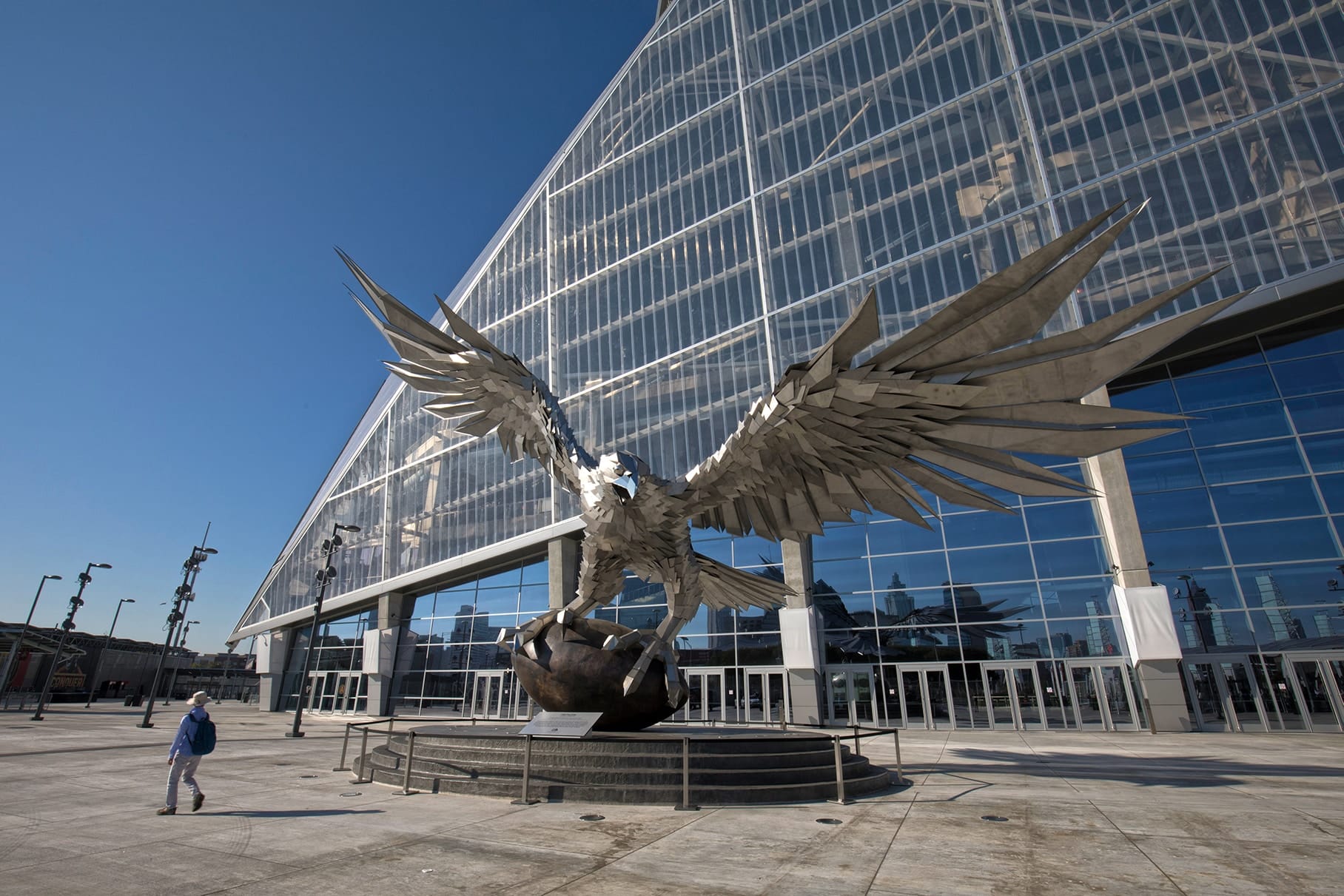
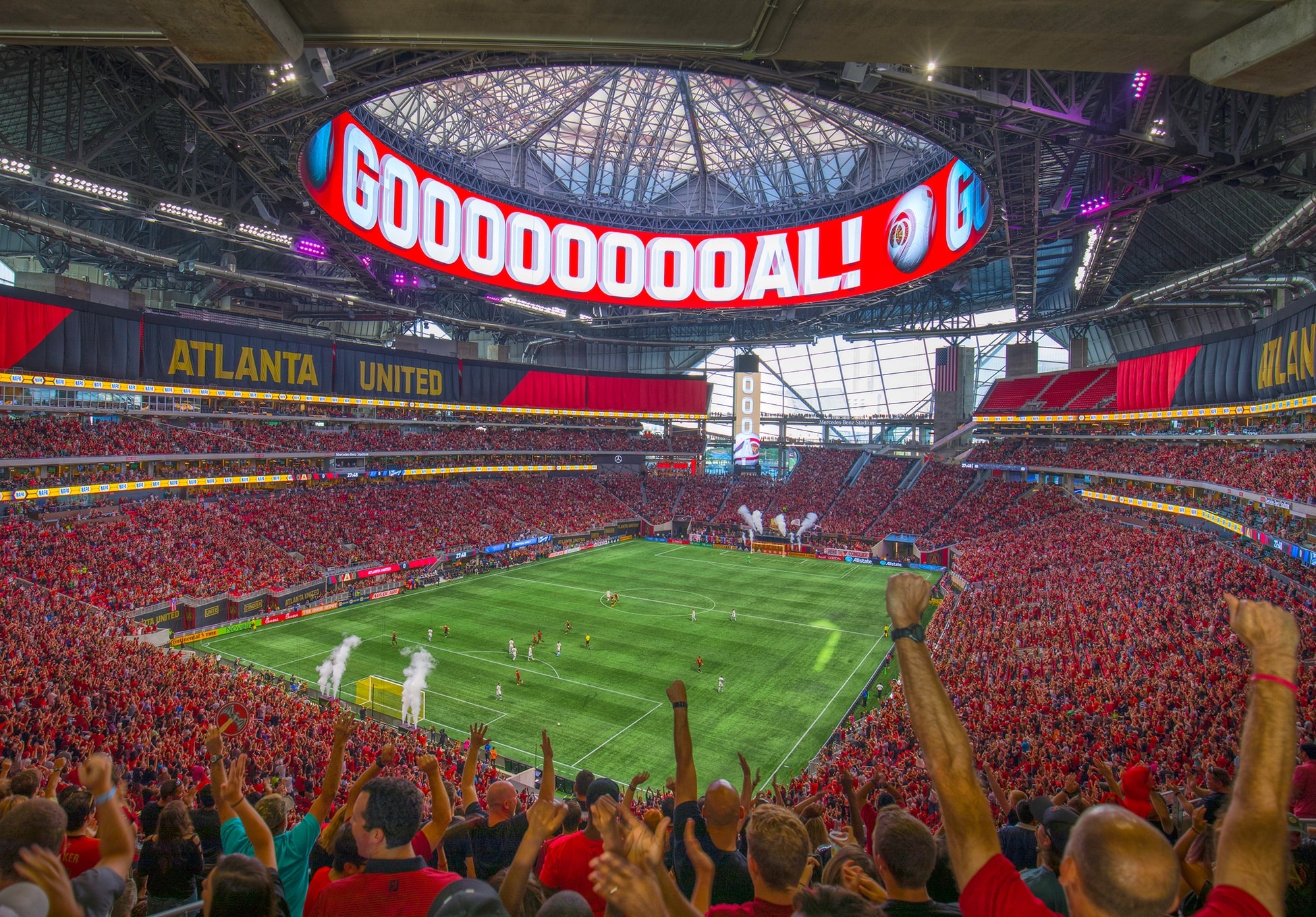
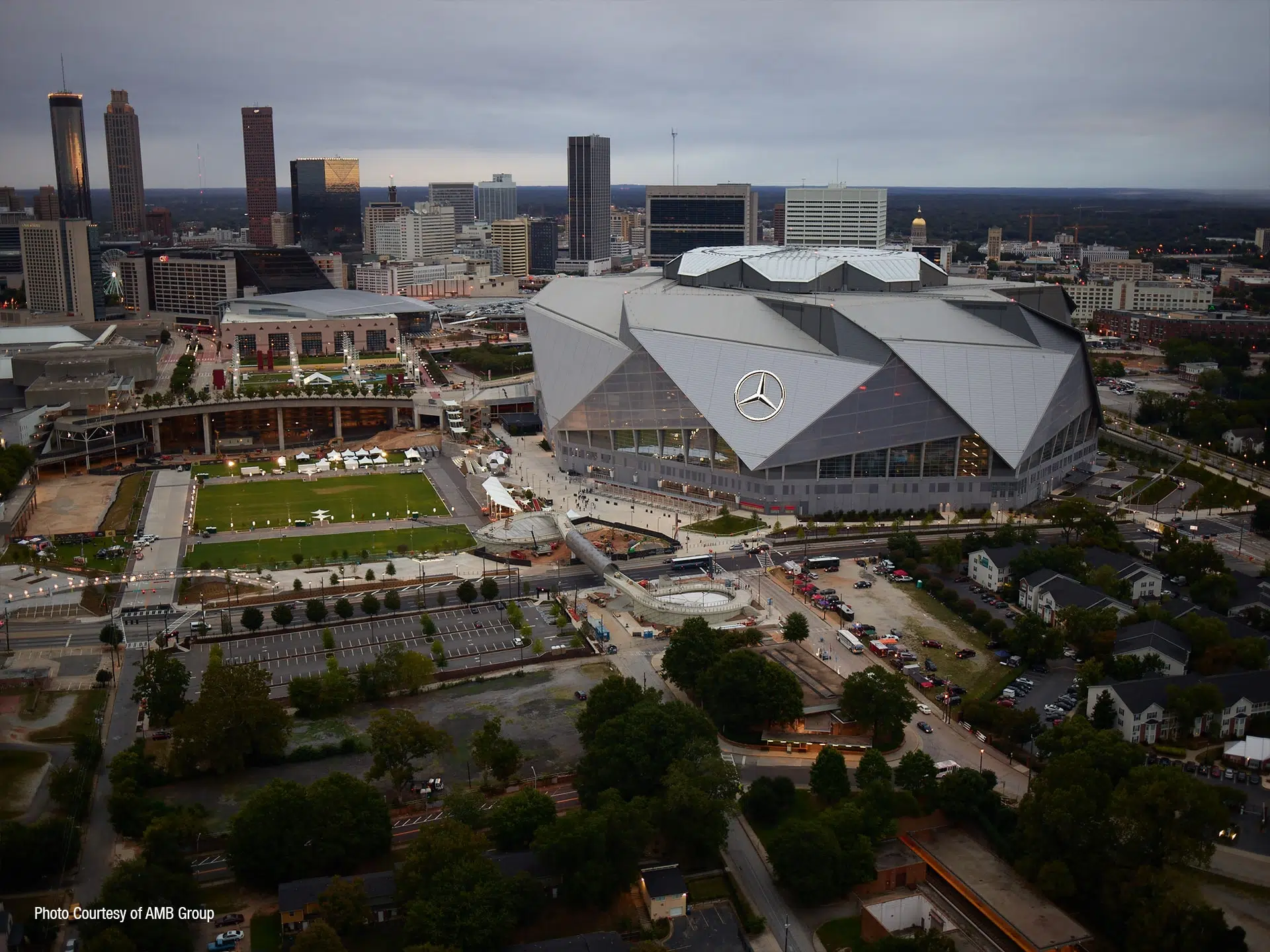
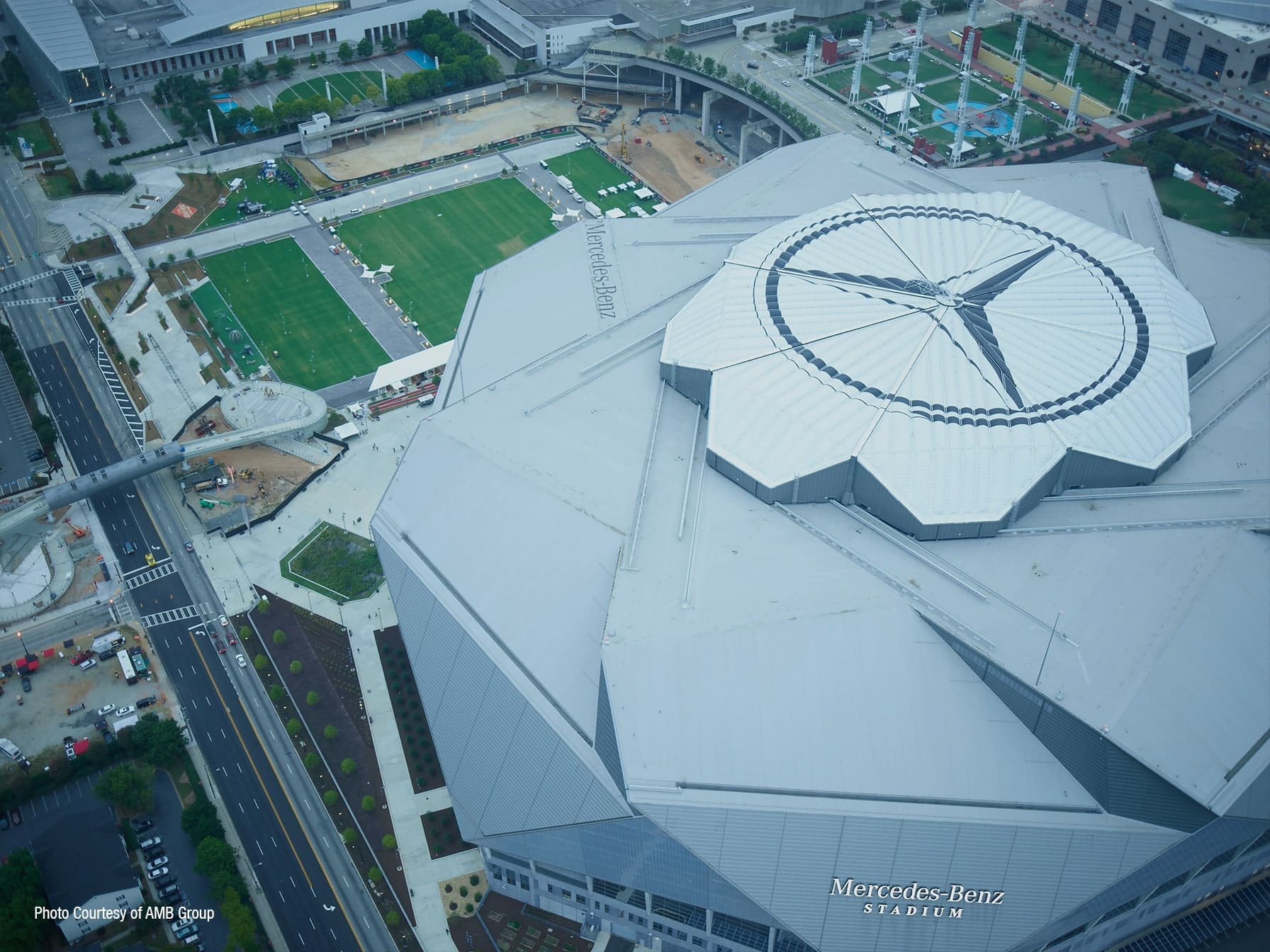
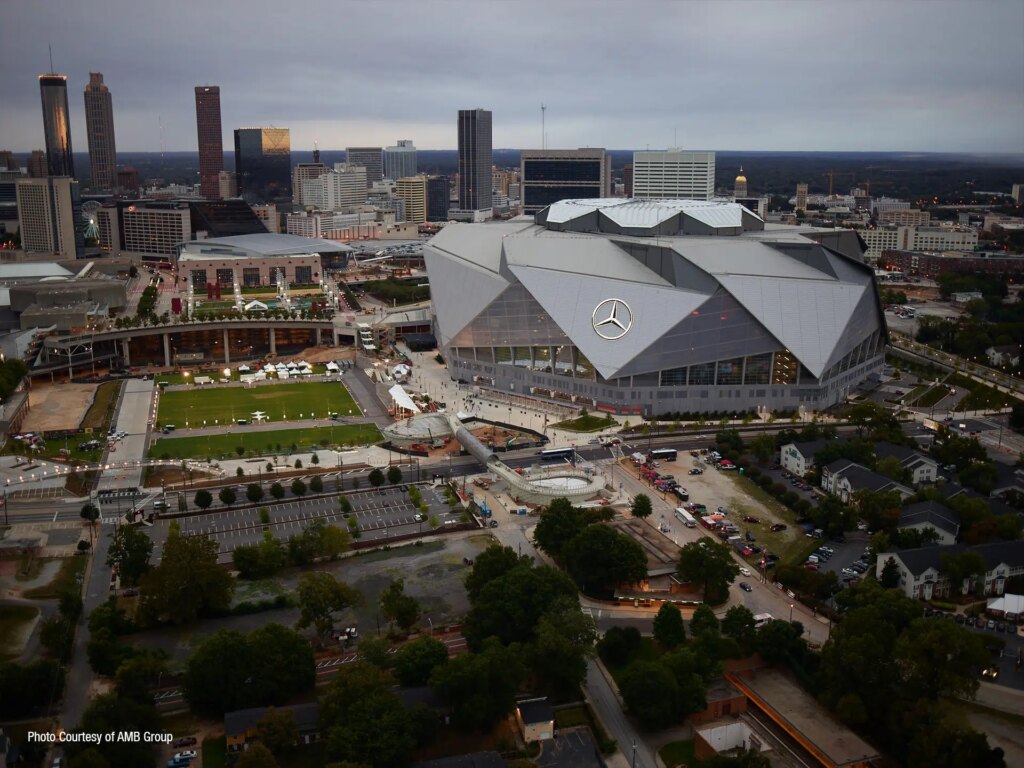
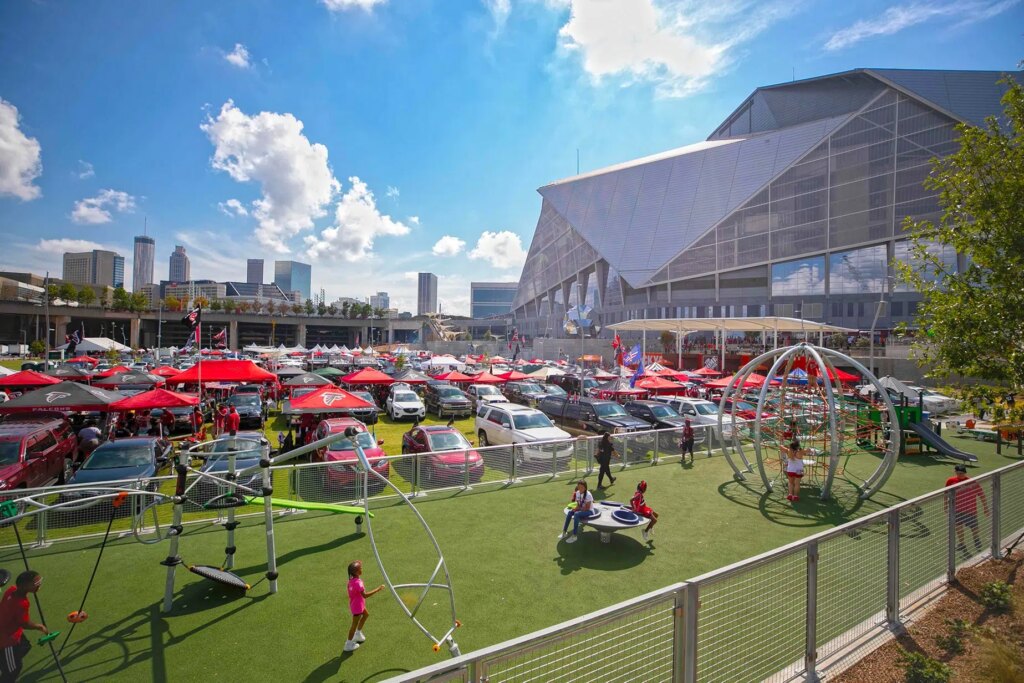
Atlanta’s new multipurpose stadium, Mercedes-Benz Stadium, features transparent views of the city and a retractable, mechanized roof allowing for both indoor and outdoor events. A 360-degree scoreboard is integrated into the roof structure allowing for more creative content without impeding sightlines. The team’s commitment to sustainability and quality design is illustrated throughout the facility, which achieved the highest level of LEED Certification: Platinum.
Kimley-Horn provided civil engineering services for this urban infill site, including site design, green infrastructure, extensive utility relocations, and coordination with multiple review agencies.
The team also provided structural design services for the elevated plaza structure that serves as a pedestrian thoroughfare, connecting the stadium with the viaduct street level, the Falcons Landing International Plaza, and the adjacent parking. Additionally, by designing a 1.2-million-gallon underground detention vault, the team achieved approximately $1 million in savings for the client while supporting the project’s stormwater needs. Further scope included a pedestrian bridge connecting the parking deck and stadium concourse, a 680,000-gallon rainwater cistern, retaining walls, and crash-tested vehicular barriers to enhance site security.
Green infrastructure to manage stormwater runoff was incorporated within the stadium’s design in a truly multi-disciplinary way. Runoff from the stadium roof and plaza structure is diverted to the above-ground rainwater cistern and is reused to offset potable water use for the building’s mechanical system and landscape irrigation. In addition to the cistern, an underground detention vault was designed to manage larger volume storm events to mitigate downstream impacts within the Proctor Creek basin. In total, the cistern and vault provide nearly 2 million gallons of stormwater storage, reducing the 25-year storm event discharge rate by 55% compared to the existing site. Bioretention areas providing infiltration and cleaning opportunities were also incorporated throughout the site to receive runoff from adjacent parking and hardscape areas. Overall, the stadium’s stormwater management system incorporated the requirements of LEED v4 even before they were adopted as the standard and exceeded the quantity and quality requirements of the City of Atlanta’s stormwater ordinance.