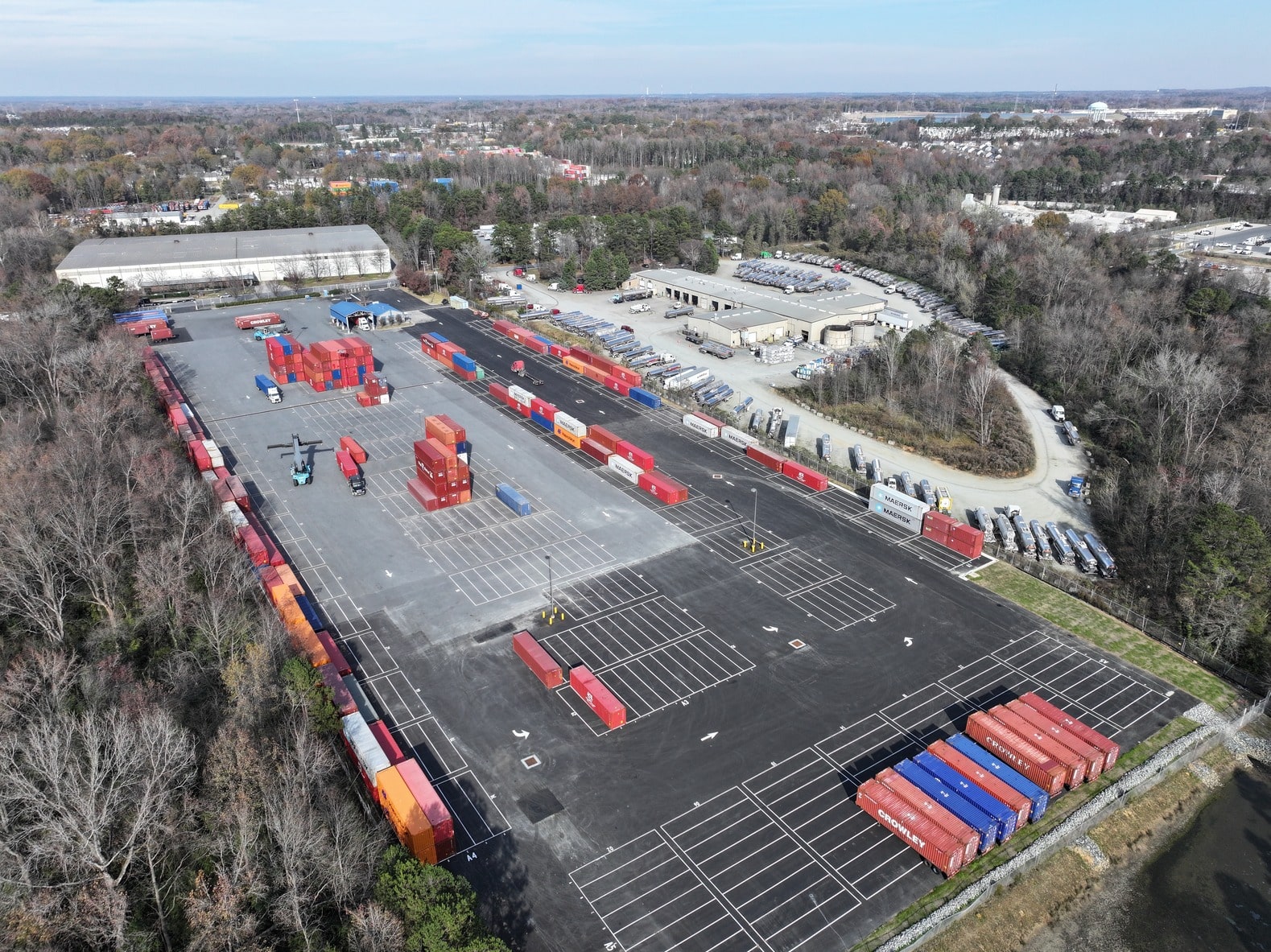
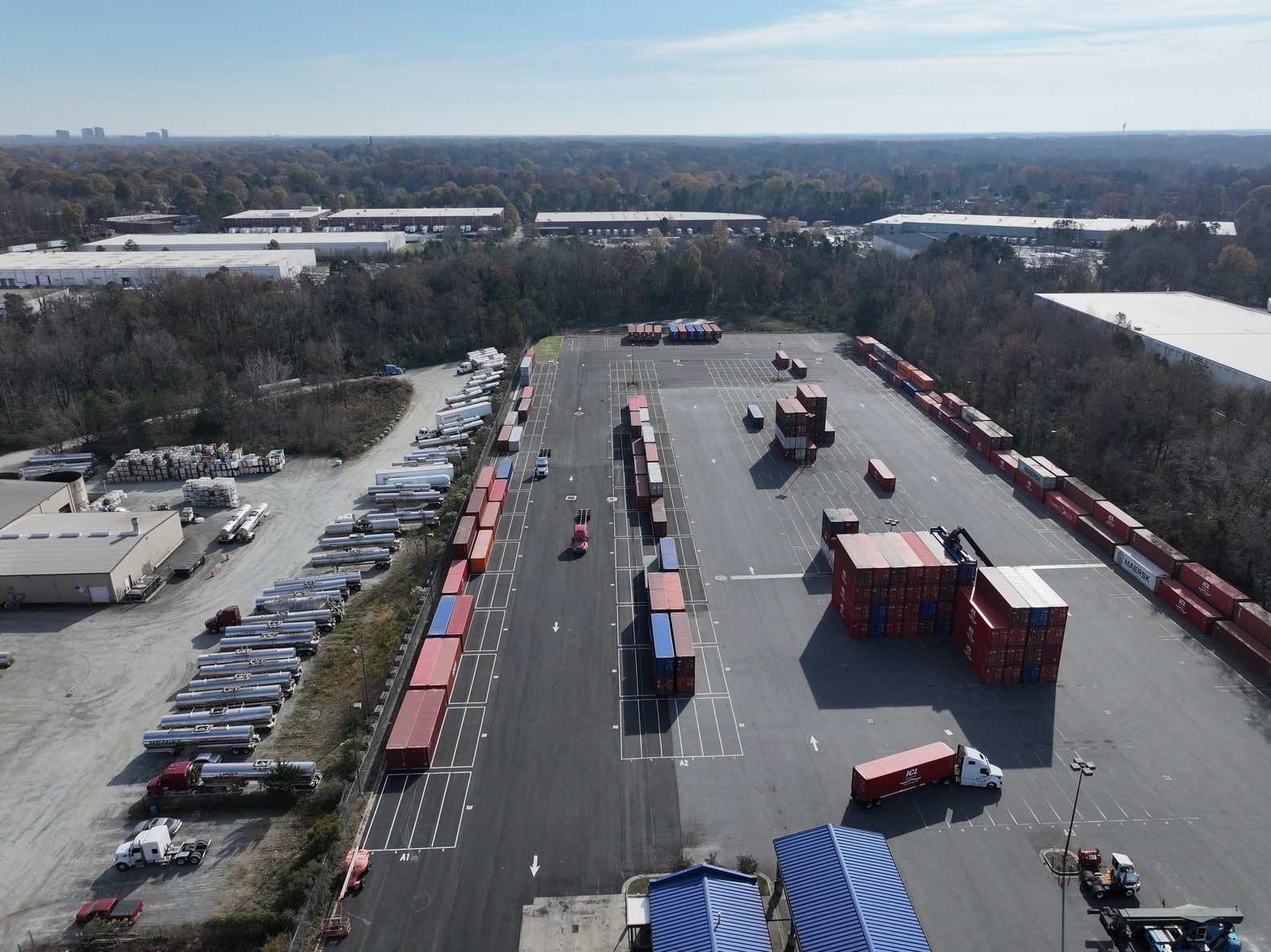
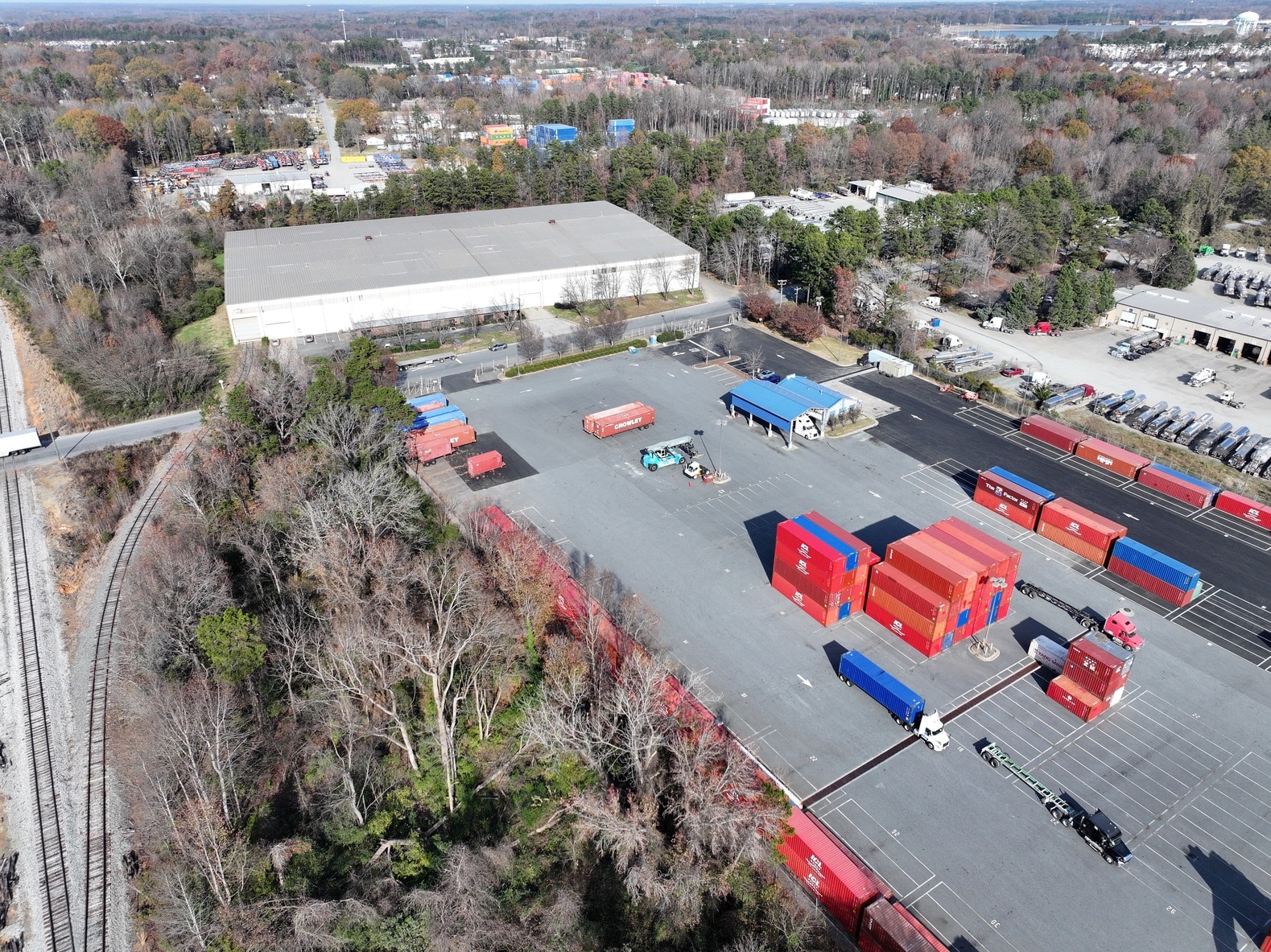
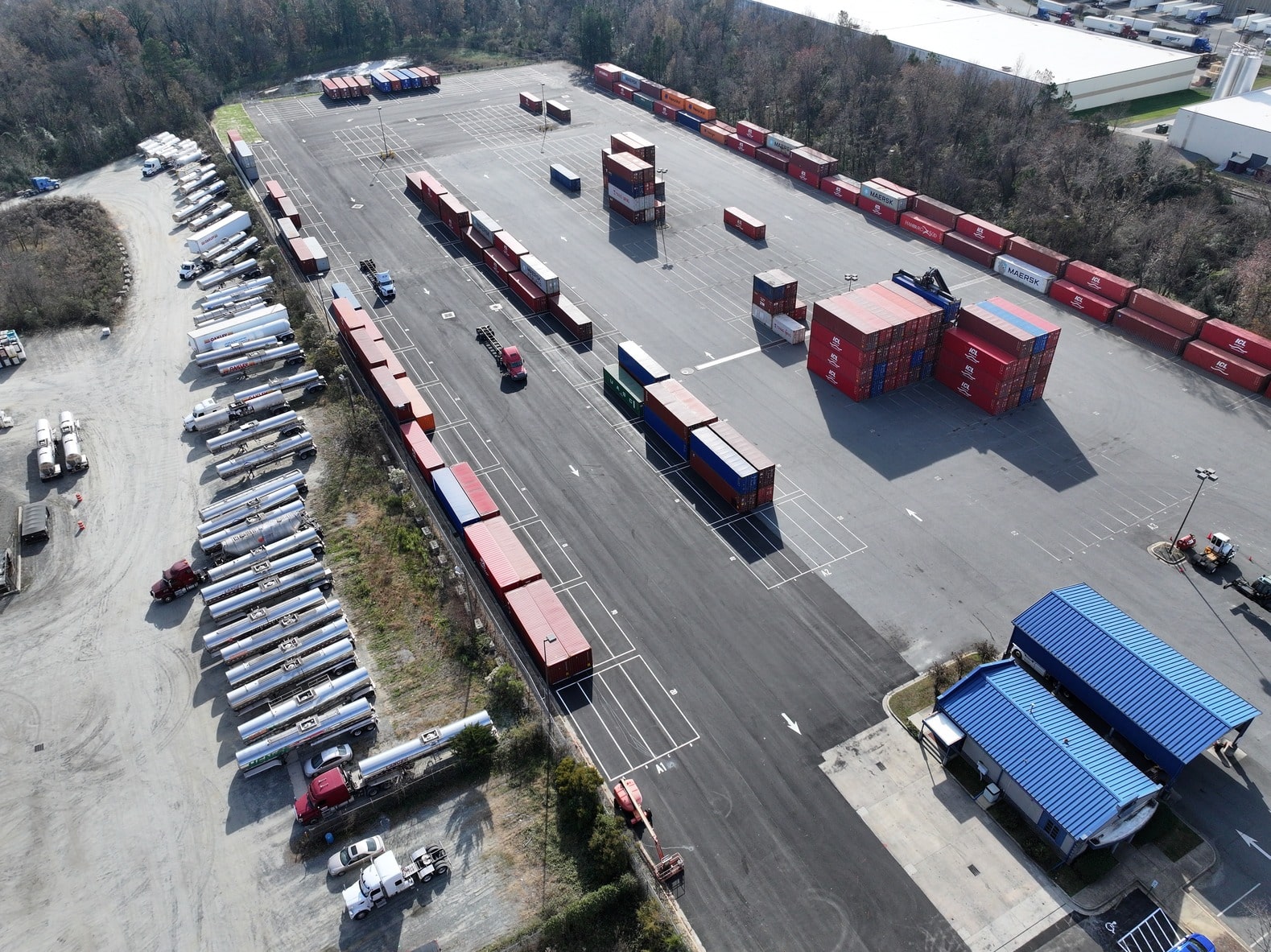
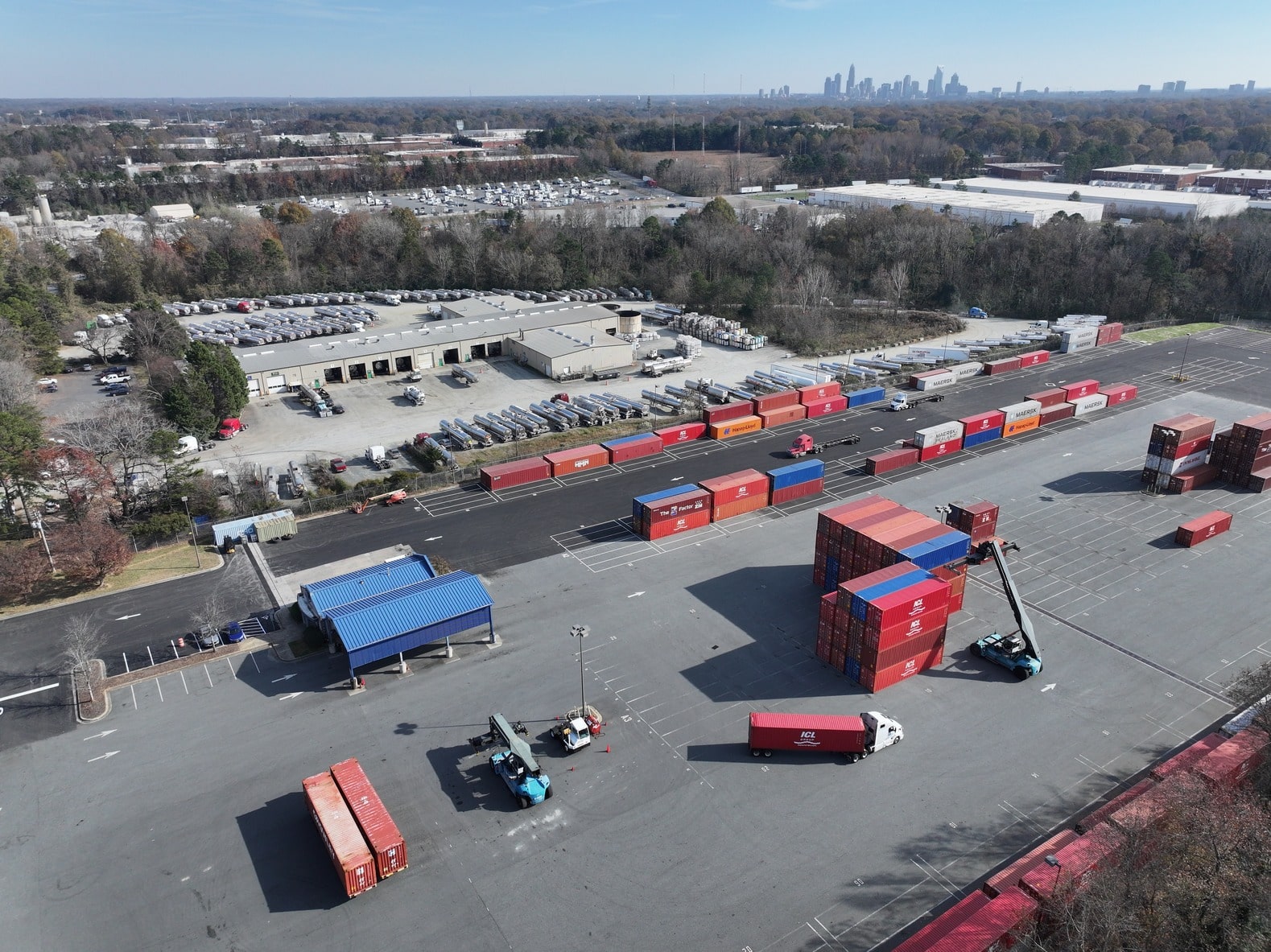
A critical lynchpin in North Carolina’s freight network, the Charlotte Inland Port (CIP) plays a key role in transporting cargo from the Port of Wilmington and the neighboring CSX intermodal yard. As freight volumes surged and intermodal activity intensified over the years, the Port faced a practical but consequential challenge: its existing container yard limited how much cargo could be efficiently handled and could no longer support the demands of modern freight operations.
To prevent infrastructure constraints from slowing momentum, CIP identified the need to expand usable container storage and upgrade gravel and aging pavement while continuing daily operations without disruption.
Expanding Container Yard Capacity Without Interrupting Operations
CIP advanced a phased container yard expansion and pavement modernization strategy while keeping the terminal fully operational, supported by Kimley-Horn’s technical expertise and implementation as the project’s prime consultant. Partnering closely with CIP’s engineering and operations teams, Kimley-Horn developed concept layouts to maximize storage, designed heavy-duty pavement capable of withstanding repeated container loads, and upgraded former gravel areas into fully functional container storage. With upgraded pavement across zones that previously couldn’t support heavy container loads or modern reach stacker equipment, CIP gained full-yard operability—eliminating prior storage and movement constraints.
From early concepts through final closeout, Kimley-Horn supported the Port with permitting coordination—including reviews with the City of Charlotte—as well as construction documentation, bidding, contractor selection, and on-site construction support. When unexpected stormwater emerged during construction, the team adapted designs in real time, collaborating with the contractor to minimize cost impacts while keeping the project on schedule.
To support a fully functional, continuously operating port, improvements also addressed: drainage improvements, utility coordination, erosion control, and subgrade strengthening through lime stabilization in coordination with geotechnical subconsultant Terracon. Because the project site is an operating port, each phase of work required careful sequencing and coordination with CIP’s staff to ensure cargo movement continued without interruption. The result was a project delivered on time and under budget—and without change orders.
A Foundation for Continued Impacts