Enhancing Safety with Improvements to the I-264 Witchduck Road Interchange

Vital Safety Improvements
Designed a two- and three-lane collector-distributor road from I-64 through the Newtown Road interchange, improving safety and traffic operations in one of the Hampton Roads region’s busiest corridors

Multidisciplinary Design
Led and performed interchange improvements on high-volume freeways, blending complex maintenance of traffic staging and structural design with a variety of other services to provide additional capacity and reduce daily congestion

Cohesive Vision
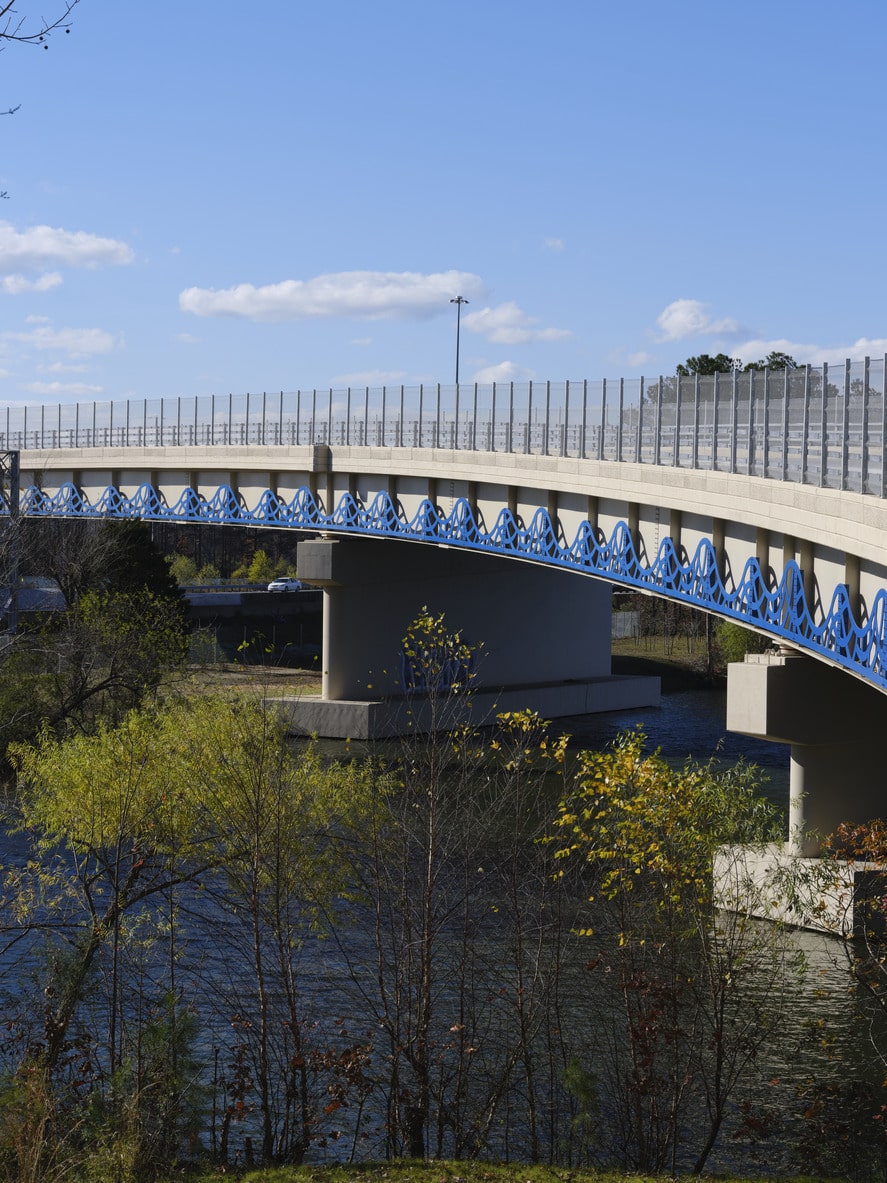
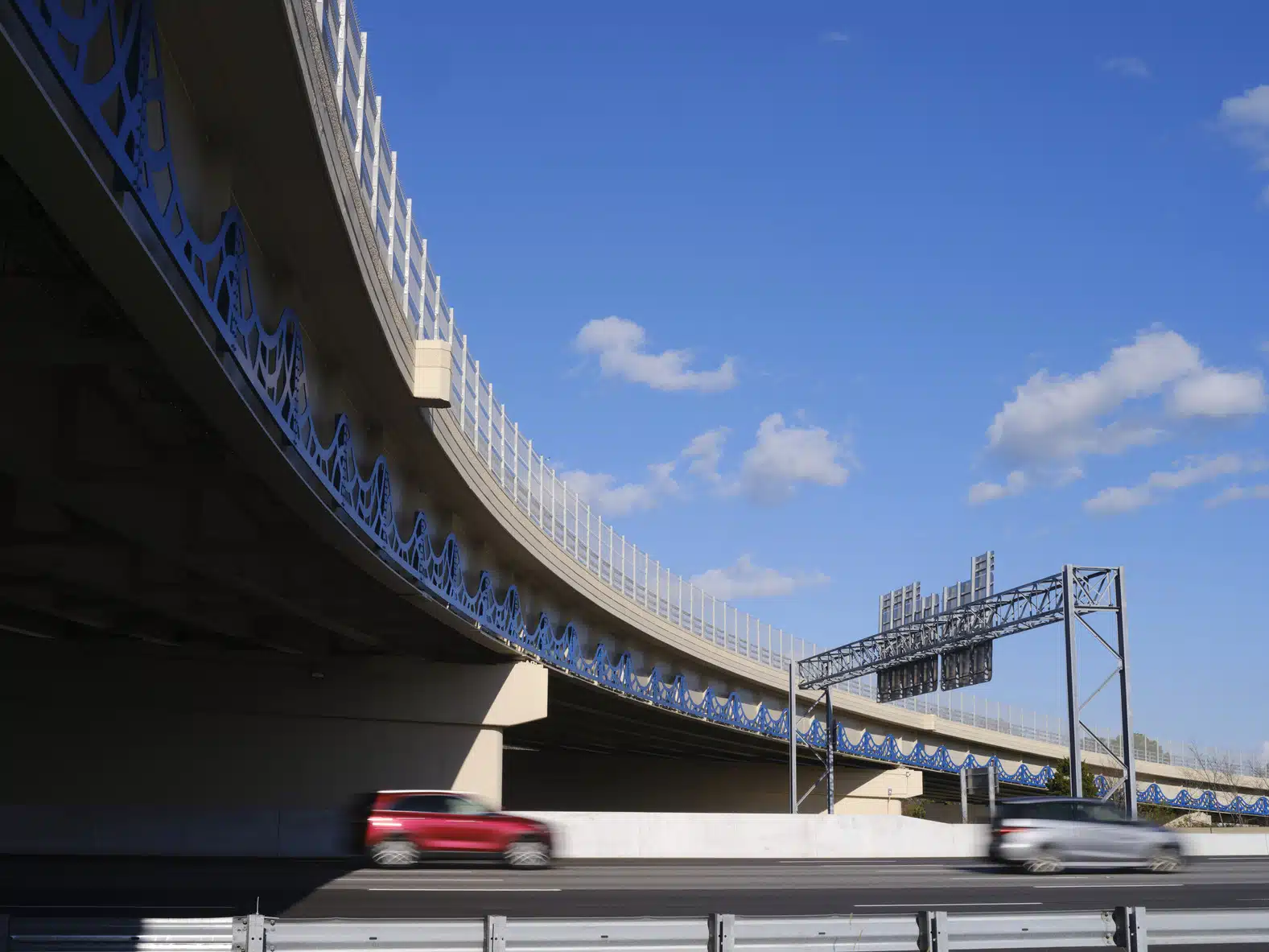
Utilized comprehensive public input to create a unifying bridge design with visually appealing treatments, including backlit steel panels, decorative pedestrian fencing, a plaza area, and signage
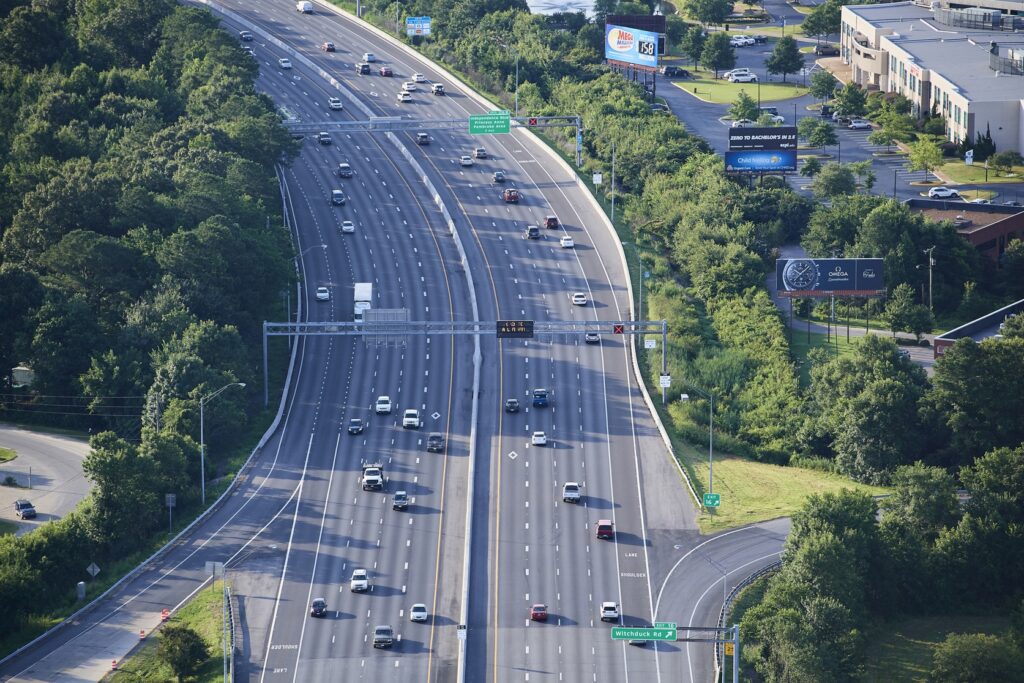
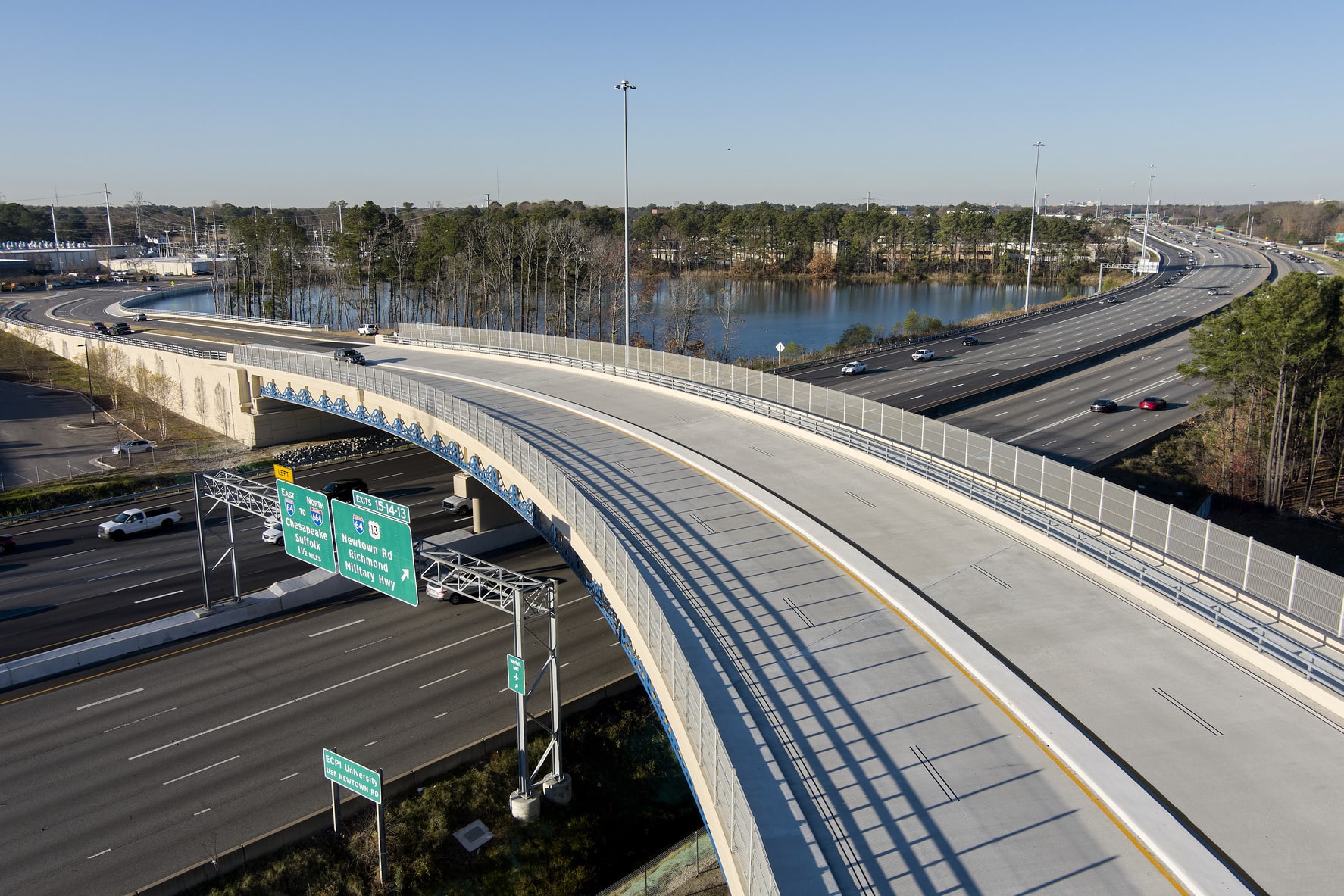
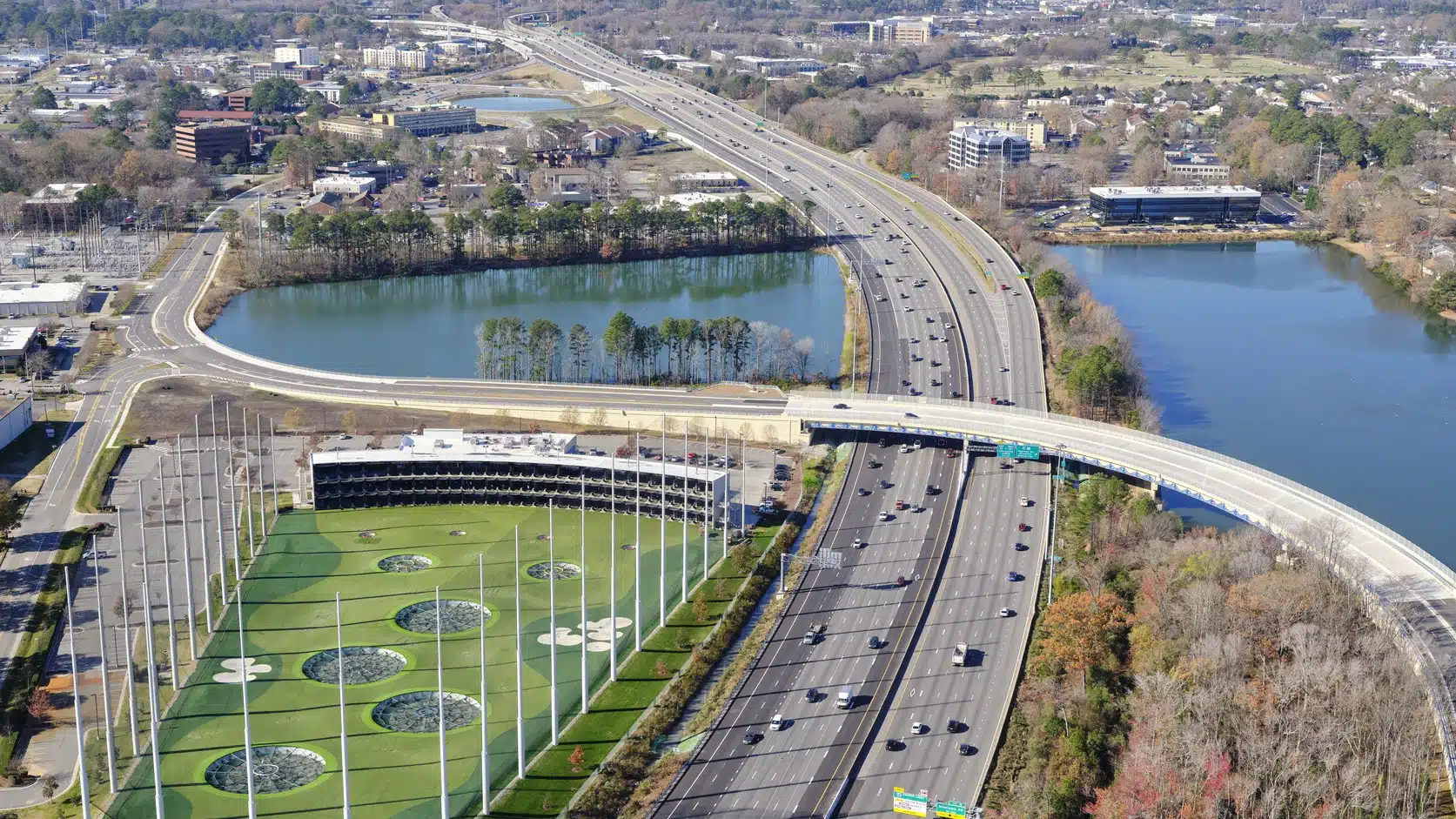
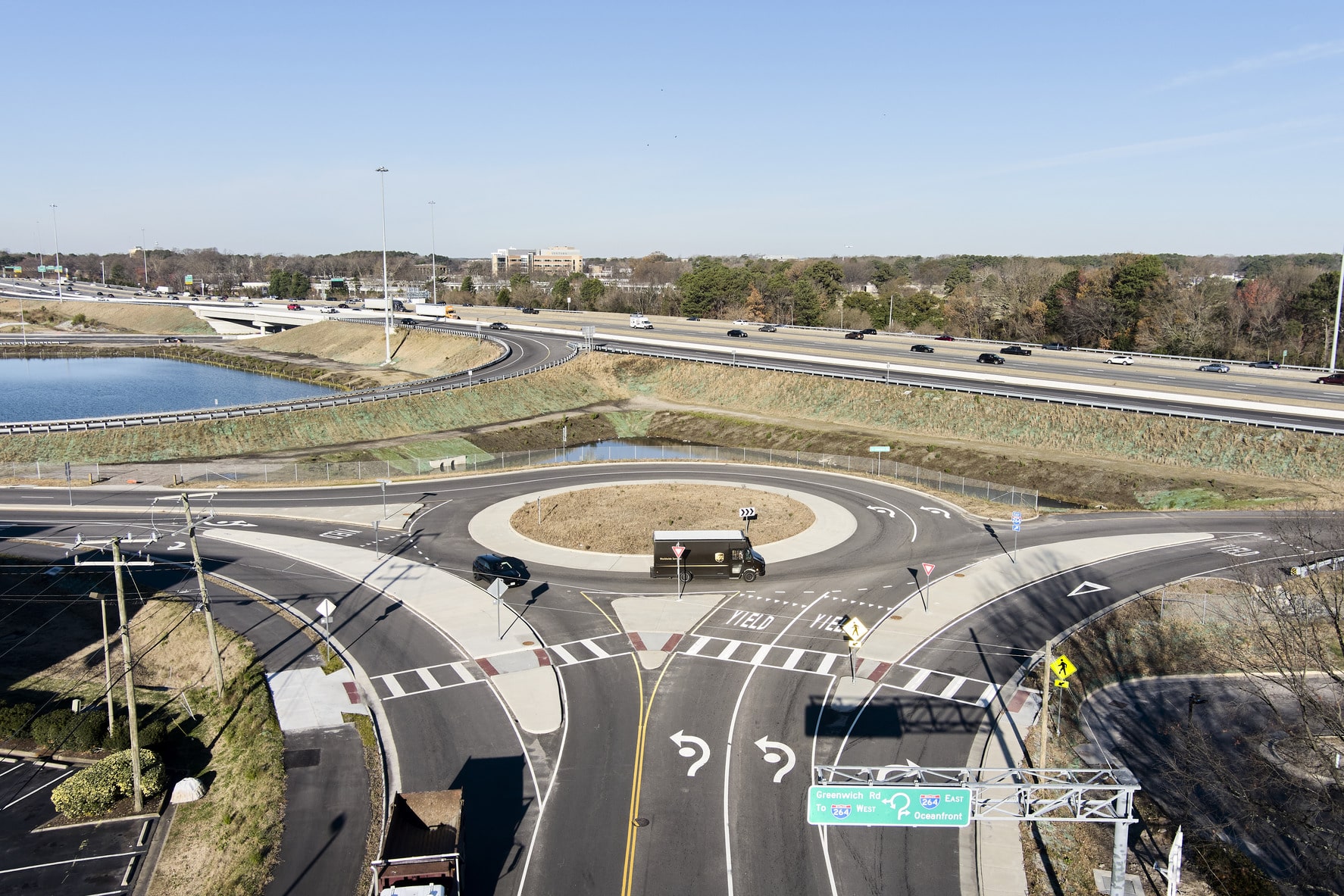
Kimley-Horn served as a trusted advisor to the Virginia Department of Transportation (VDOT), providing design improvements to Interstate 264 (I-264) in the eastbound direction and at each interchange between the Newtown Road interchange and the Witchduck Road interchange, collector-distributor road and mainline interstate widening, and the Greenwich Road flyover bridge. Located in one of the most heavily congested areas in the Hampton Roads region, the interstate historically has experienced a high volume of accidents and was identified for improvements by VDOT. With our services, the roadway project reduced congestion, helping to address the corridor’s safety issues and providing an efficient gateway that welcomes visitors and residents to the City of Virginia Beach.
Project Recognition

Providing Multidisciplinary Design Services
The improvements to I-264 spanned the Cities of Virginia Beach and Norfolk, requiring nimble adaptation and complex techniques. To ease congestion on the highly trafficked interstate, our team designed a widened two- and three-lane collector-distributor (C-D) road along eastbound I-264, from the I-64/I-264 interchange through the Newtown Road interchange. In addition to the C-D road, we widened two additional eastbound lanes along I-264 from the end of the C-D road through the Witchduck Road interchange.
Our team’s roadway services throughout the project’s phases included:
- Preliminary engineering and alternatives analyses for roadway, interchanges, drainage, stormwater facilities, bridges, and other structures
- Roadway design for interstate, interchanges, and arterial surface streets
- Stormwater management for hydraulic and hydrologic design, erosion, and sediment control
- Structure and bridge design
- Developed a special performance provision for mechanically stabilized earth (MSE) walls
- Plans for a pile-supported box culvert extension under I-264
- Construction of multi-lane hybrid roundabout
- Final design
Managing Geotechnical and Flooding Challenges
The interchange ramps and bridge were situated on large fills and underlying soft soils, posing challenges for slope stability and long-term settlement. To address the compressibility of soft surface clays in high fill areas, our team employed a variety of innovative geotechnical techniques. We coordinated with AECOM, who served as the project geotechnical engineer, and translated their recommendations into ground improvement plans, details, and cross sections, including pile-supported load transfer platforms for bridge approaches and wick drains and surcharges. We also developed plans for an approximately 44,000-square-foot mechanically stabilized earth retaining wall.
Due to Virginia Beach’s recurring flooding, we developed a master stormwater management plan for one of the two project watersheds. This included modeling and designing two large interconnected wet ponds to treat nearly 100 acres of contributing drainage area and address water quantity and water quality requirements. We also conducted hydrologic and hydraulic analyses for existing and proposed drainage elements, developing storm inlet, storm sewer, and culvert design and computations along 3.7 miles of both the interstate and urban arterial.
Engaging the Public in Design
During the design process, Kimley-Horn engaged in extensive project outreach and public involvement with the Cities of Norfolk and Virginia Beach, as well as homeowners’ associations and other citizen groups. After an initial citizen’s information meeting, we collaborated with VDOT to organize a series of local public hearings and went on to prepare meeting materials and actively participate in the presentations.
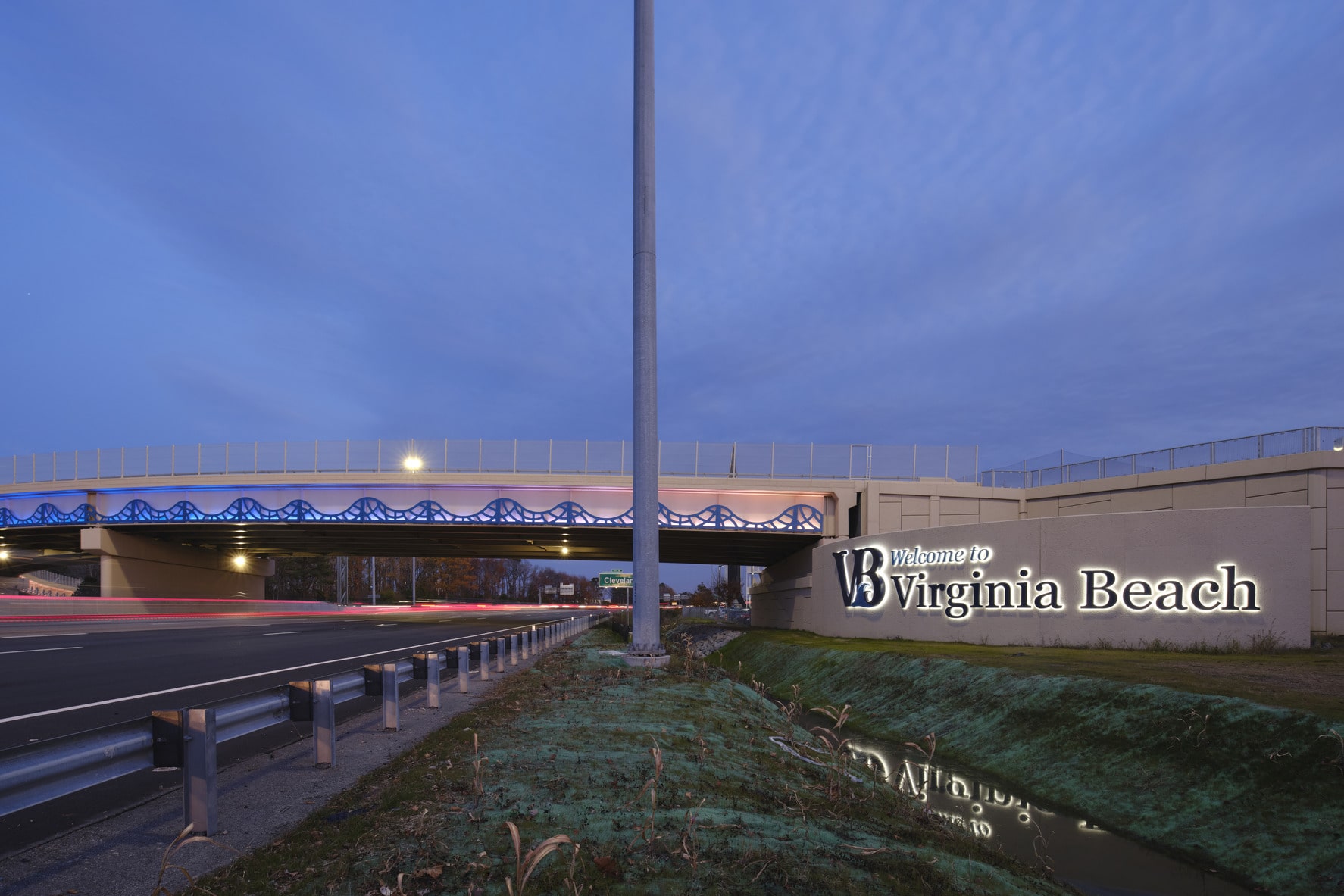
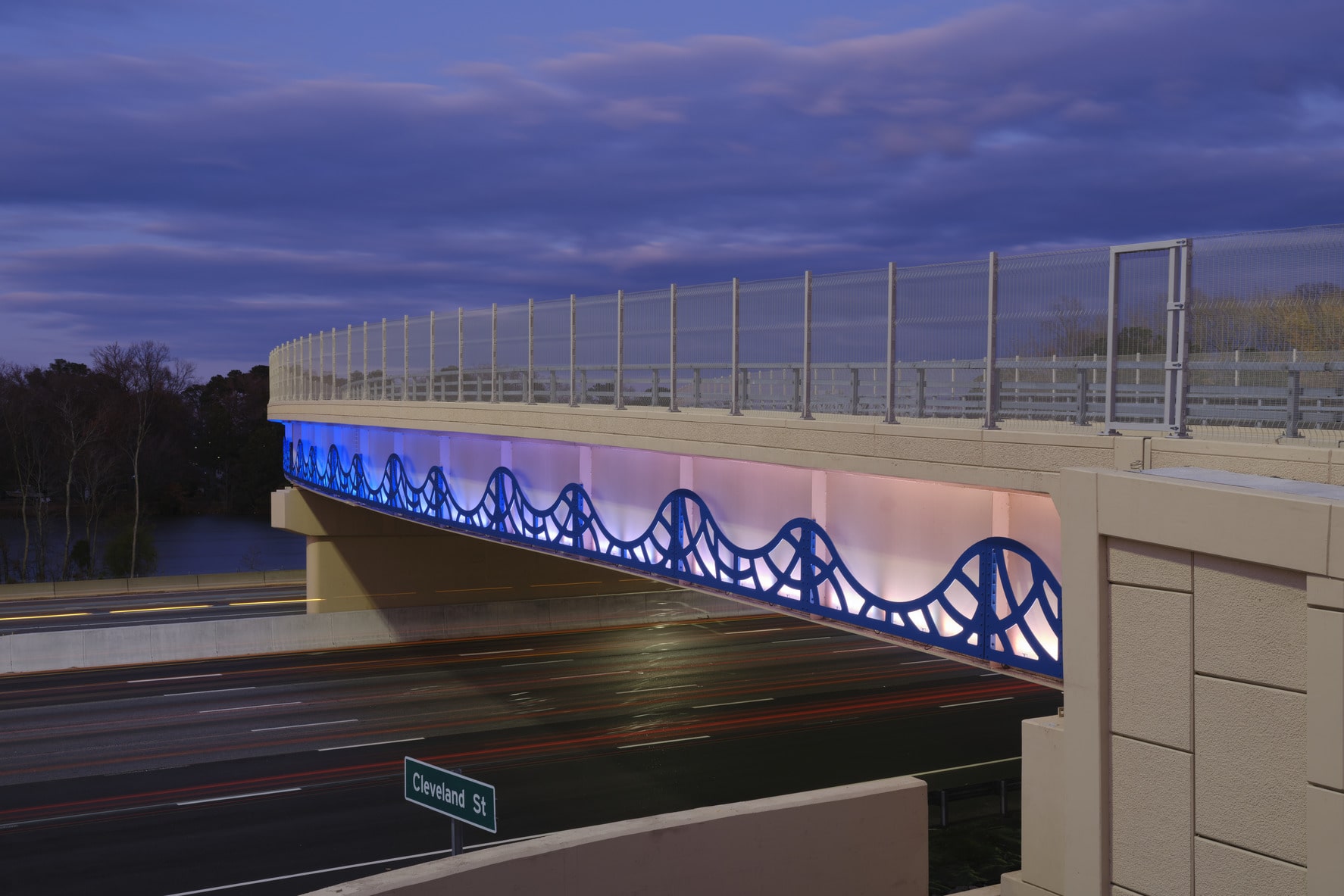
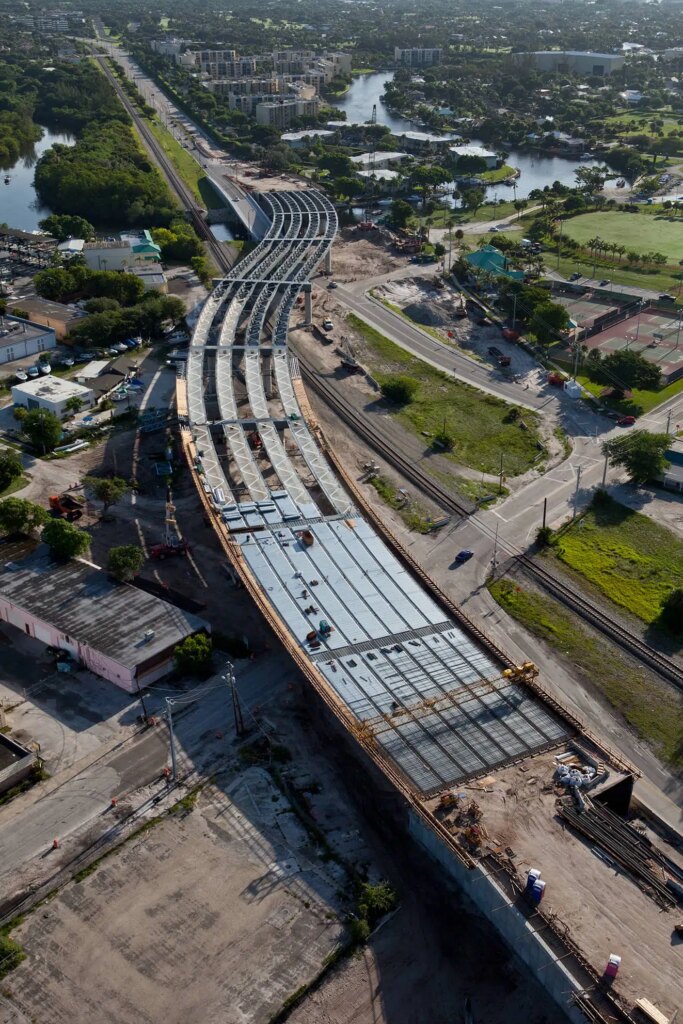
We also worked collaboratively with VDOT and the City of Virginia Beach to enhance the flyover bridge’s new curved girder structure. Under the City’s direction, we enhanced the bridge design with aesthetic treatments, including an inlaid wave pattern with backlit steel panels featuring color-changing LEDs that the City of Virginia Beach can program for different events, decorative pedestrian fencing, a plaza area, and “Welcome to Virginia Beach” signage that serves as a gateway for incoming visitors.
Addressing the Corridor’s Operational and Safety Issues
Completed in 2022, the interstate improvements have enhanced eastbound direction flow, reducing congestion, increasing capacity, and improving safety. These upgrades have also supported economic growth and redevelopment along the Cleveland Street corridor. The flyover bridge connecting Cleveland Street to Greenwich Road has helped direct traffic into the central business district, boosting connectivity and fostering development for new residential areas, medical offices, businesses, and schools. Following the project’s success, VDOT has entrusted Kimley-Horn with additional bridge design projects, including a trail project in the former Norfolk Southern Railroad corridor, further strengthening our partnership with VDOT and our commitment to enhancing mobility for those who call this region home.
Related Projects