Staying on Track with the FrontRunner Forward Phasing Plan

Grant Procurement

Integrative Program Management

Strategic Stakeholder Engagement
The FrontRunner commuter rail system serves 82 miles of Utah’s Wasatch Front, running south from Ogden to Provo and parallel to the Union Pacific Railroad (UPRR) and I-15 corridor. Run by the Utah Transit Authority (UTA), FrontRunner is expected to have a 76% increase in ridership by 2040 due to Wasatch Front’s fast-growing population. To accommodate the growth and meet the needs of commuters, UTA knew they needed to transform FrontRunner from its dated, single-track system to a modern, convenient, and reliable transportation network. UTA and the Utah Department of Transportation (UDOT) worked together to procure independent engineering and operational consultants to develop the FrontRunner Forward Phasing Plan and identify how to improve the system with incremental steps.
Due to our experience working with UPRR and UDOT and our portfolio of multidisciplinary work, UTA chose Kimley-Horn as the FrontRunner development program manager to manage preliminary design, engineering, and funding efforts. We worked with UTA to better understand current travel patterns, corridor constraints, rail market projections, funding opportunities, and the best strategies to reach UTA’s modernization goals.
Our preliminary assessments concluded that the best way to increase FrontRunner’s efficiency was to add double-track segments to the already existing system. We provided the following services to set FrontRunner up for success:
- Preliminary design and engineering for tracks, stations, and platforms
- Preliminary assessment of impacts to existing utilities
- Development of project procurement and construction schedules
- Upgrades to UTA commuter rail standards to align with current industry specifications
- Grants & funding services
- Strategic business planning
- Environmental planning and permitting
- Secondary staffing
- Implementation planning
Overcoming Geographic and Design Constraints
The FrontRunner commuter rail winds through some of the most scenic views in Utah—the Wasatch Mountain Range, the Great Salt Lake, and the Jordan River. There are also archaeological resources along the corridor, such as the Galena Soo’nkahni Preserve, which protects the ancient artifacts and lands of the Native American tribes that once inhabited the area.
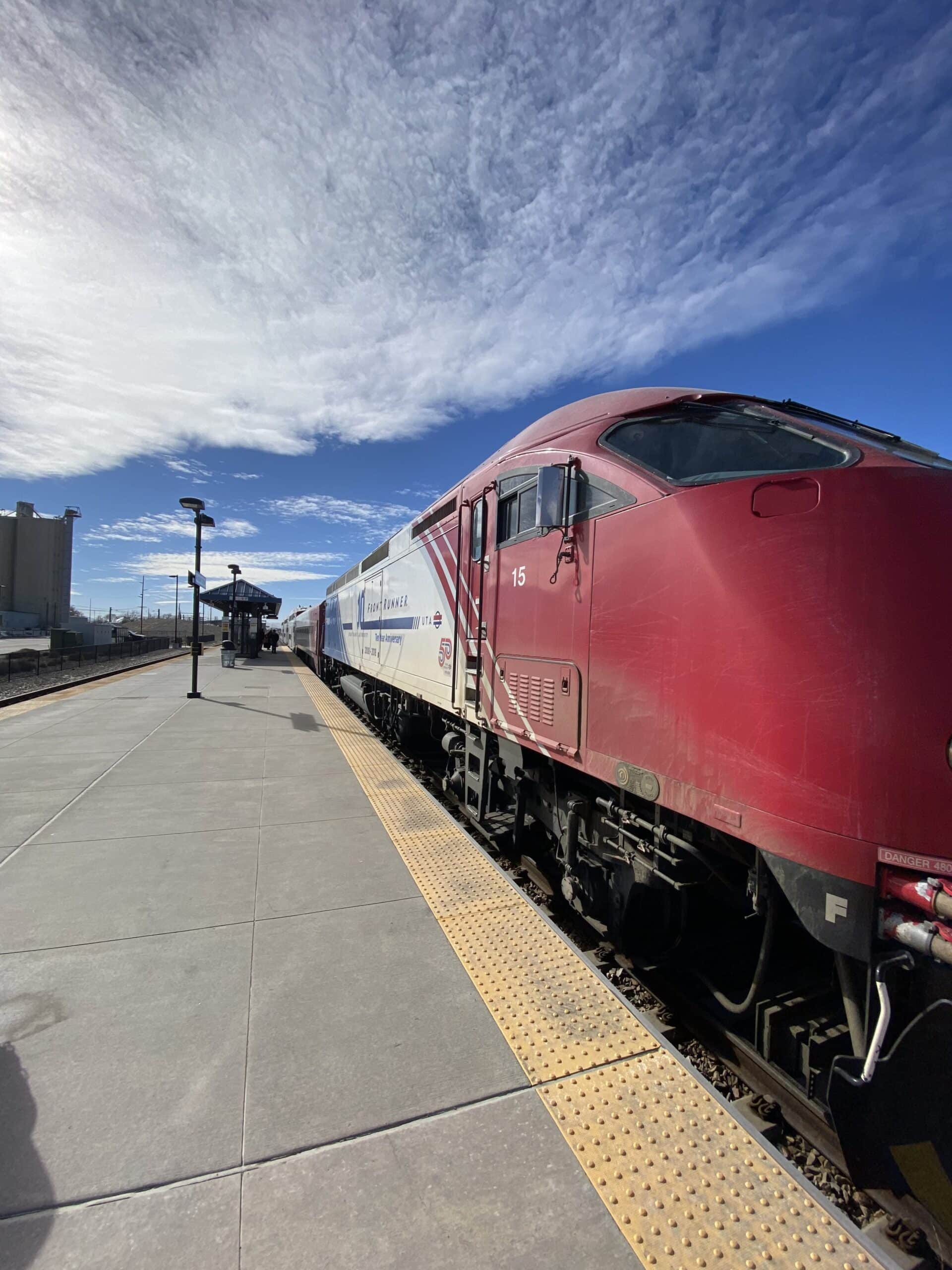
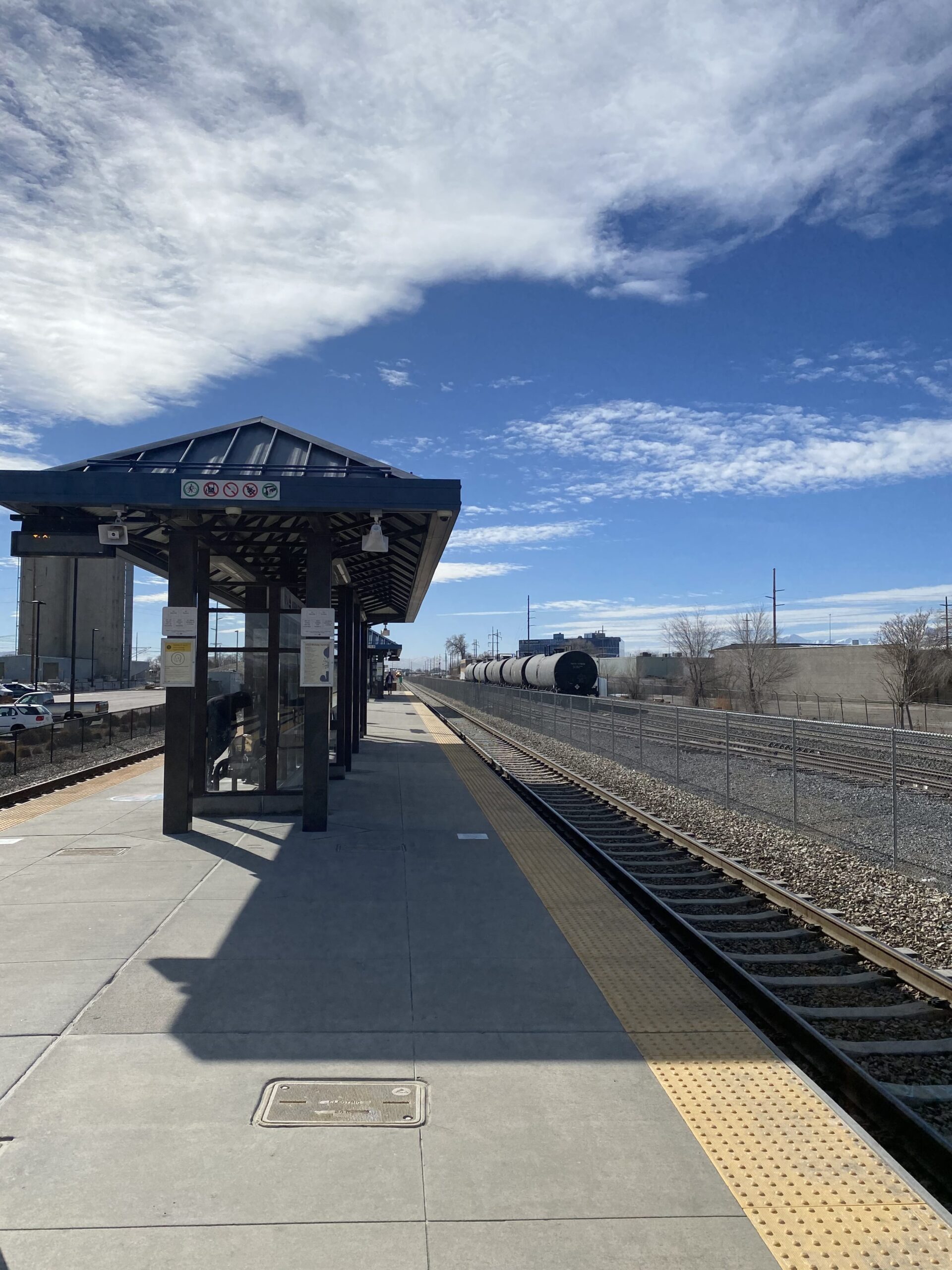
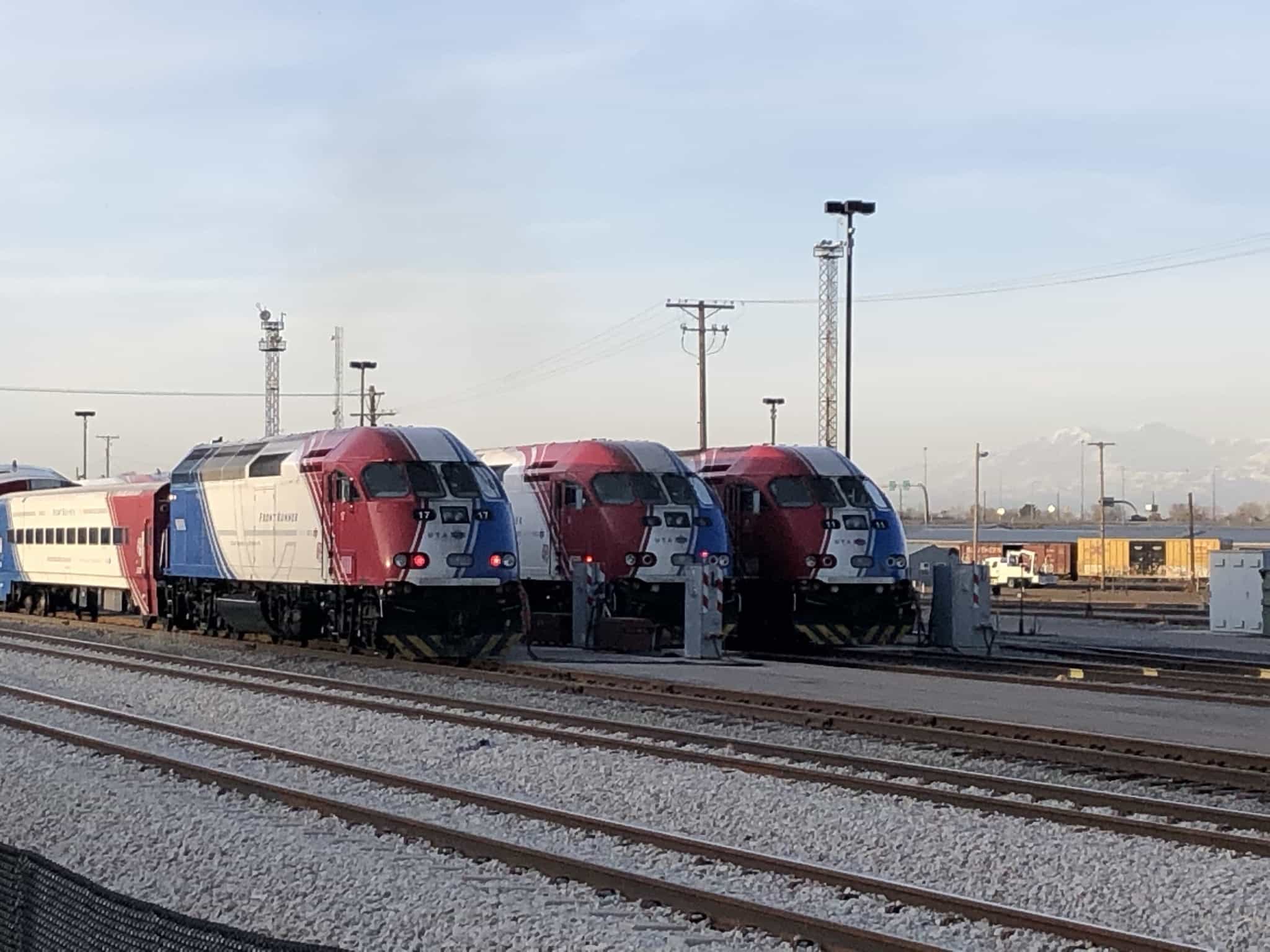
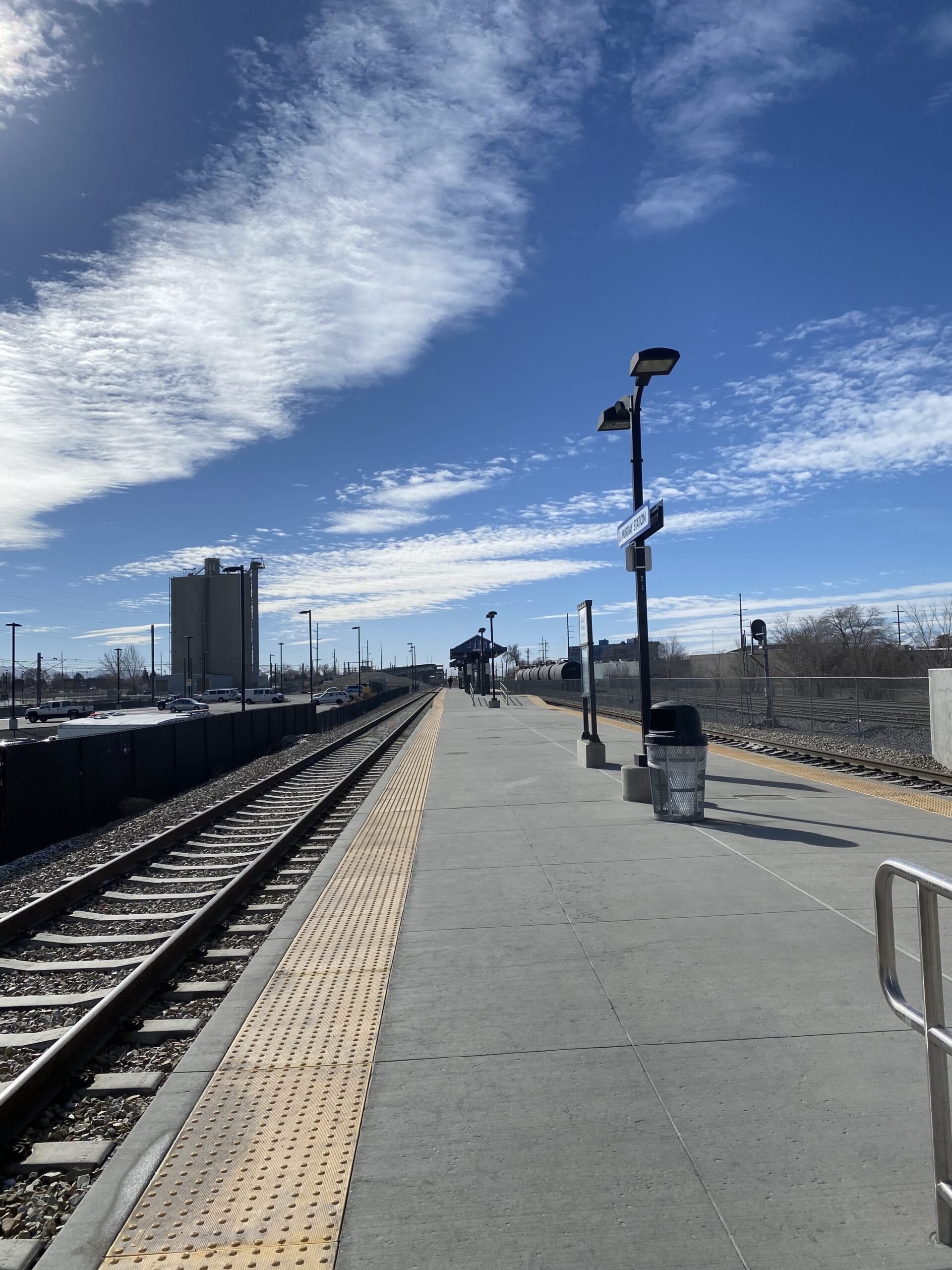
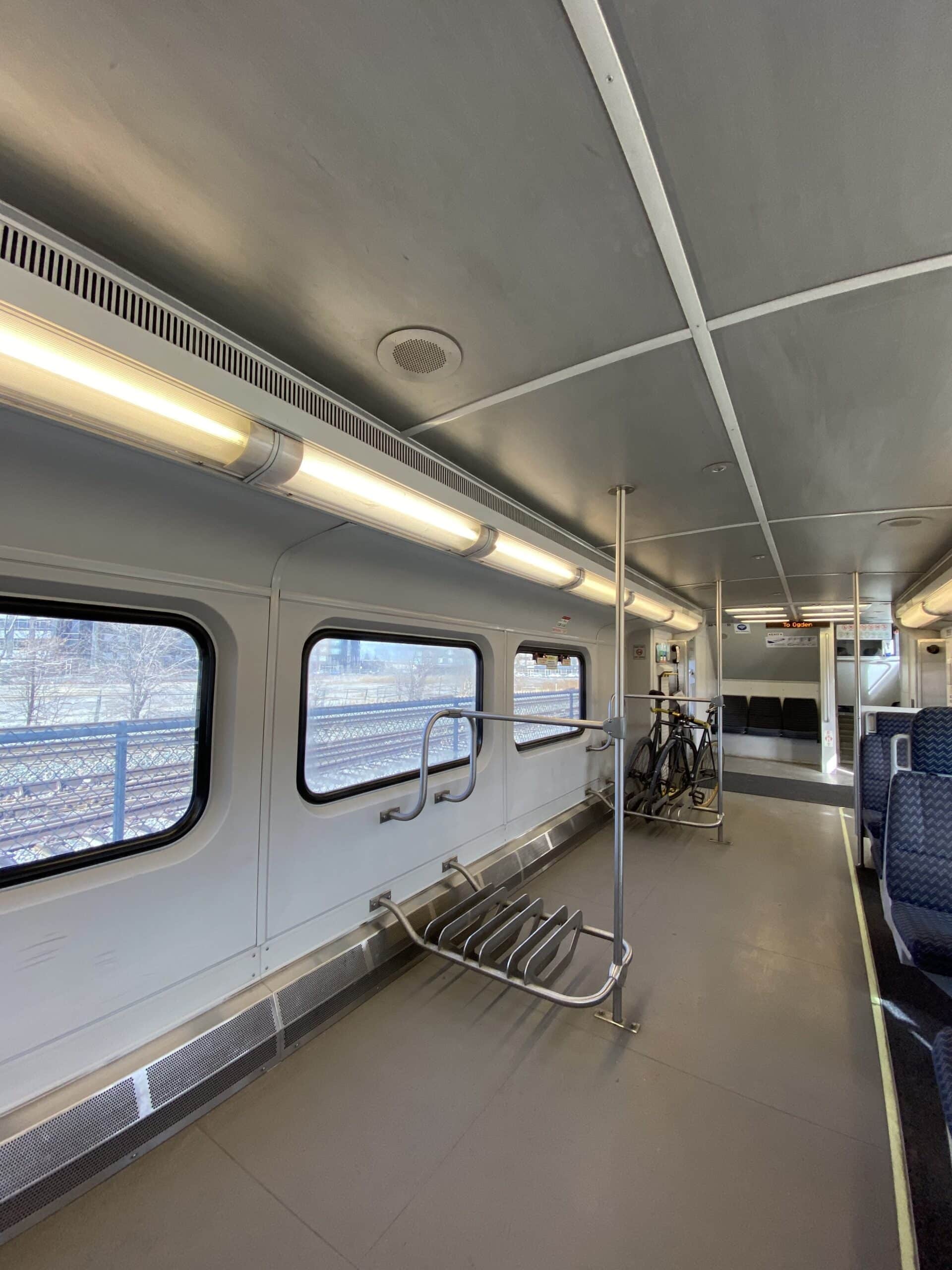
These geographical constraints and the UPRR running alongside the tracks posed a challenge to FrontRunner’s double-track railway design plans. Determined to provide UTA with efficient solutions, Kimley-Horn tackled the challenges head-on and immediately contacted UPRR to begin coordination on trackage rights, design, and cost. Through our positive working relationship with UPRR, we streamlined communication between the companies and overcame obstacles to implementing the recommended track design.
The geographical constraints required our team to think creatively and strategically. As the development program manager for the FrontRunner Forward Phasing Program, we were tasked with the strategic oversight of seven multidisciplinary teams—ranging from iteratives operations modeling teams, engineering teams, and design teams. Acting as the lead interface with the UTA, we connected the data and recommendations from subcontractors into one cohesive plan. Due to our ability to coordinate and gather information from multiple teams, we were able to give accurate track placement recommendations—saving UTA time and money.
Securing Funding to Power the Future
One of this project’s most significant achievements was procuring the Core Capacity Grant in 2022 through the Federal Transit Authority (FTA). This grant funds corridor-based projects that are currently at capacity or expected to be overcrowded in 10 years. Kimley-Horn worked closely with UTA to prepare all grant materials and submittals to meet strict application deadlines.
The FrontRunner Forward Phasing Plan was in the early stages of development during the application process, so many consultants advised that the UTA could not execute specific plans due to fast-approaching deadlines. Kimley-Horn took a different approach—instead of telling UTA what they could not do, we provided alternate, feasible solutions. Because of our persistence and support, UTA secured approximately $671 million from the FTA, allowing them to add the double-track sections and procure additional train sets to alleviate overcapacity and congestion on the corridor.
The work between UTA and Kimley-Horn has set FrontRunner on course to have double tracks, electrification, and infill stations by 2060. The FrontRunner Forward Phasing Plan will provide the infrastructure needed to meet UTA’s goals of providing a convenient, reliable, sustainable, and efficient transportation option for the growing population.
Related Projects