METRO A Line: Setting the BRT Precedent for Twin Cities Transit
Precedent-setting
Implemented the first arterial Bus Rapid Transit (BRT) corridor for Metro Transit, setting the standard for planned BRT investments in the Twin Cities
Efficiency
Implemented Transit Signal Priority (TSP) throughout the corridor to improve reliability and operational efficiencies, collaborating with the MNDOT and county and city stakeholders on proposed signal modifications
Connectivity
Designed and executed a BRT system that is providing more frequent and efficient service for riders as well as access to both the METRO Blue and Green light rail transit lines
Kimley-Horn provided design services for the first arterial Bus Rapid Transit (BRT) line in the Twin Cities—the METRO A Line. Previously, bus operations in the Twin Cities faced two main issues: slow speeds and inadequate facilities. Arterial BRT emerged as a solution for these challenges, and the Snelling Avenue corridor—which stretches across Minneapolis, St. Paul, Falcon Heights, and Roseville and across Hennepin and Ramsey Counties—was targeted for enhanced bus services. The Kimley-Horn team designed 20 station pairs along Snelling Avenue, Ford Parkway, and 46th Street, allowing the BRT system to connect to both the METRO Blue and Green light rail transit lines.
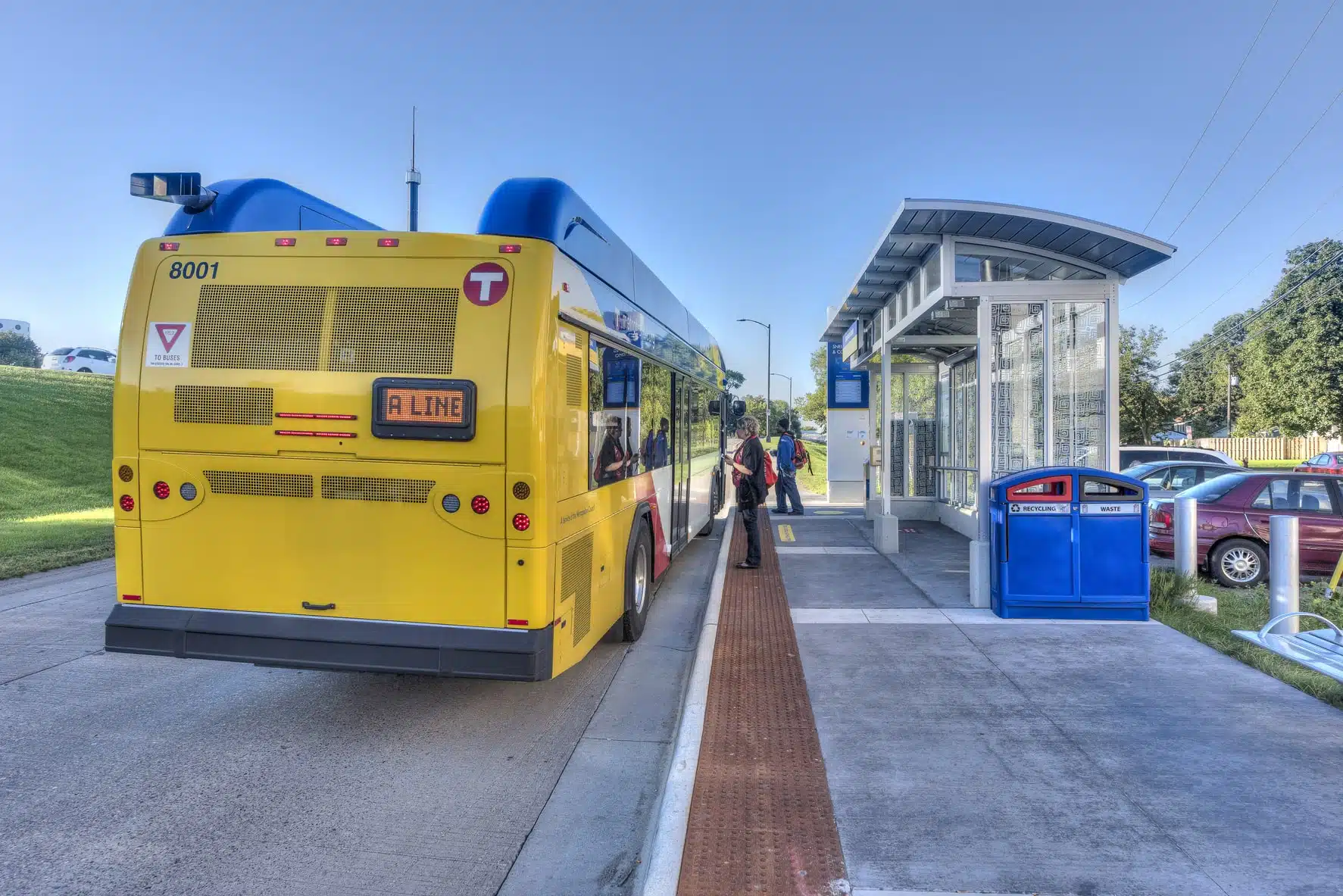
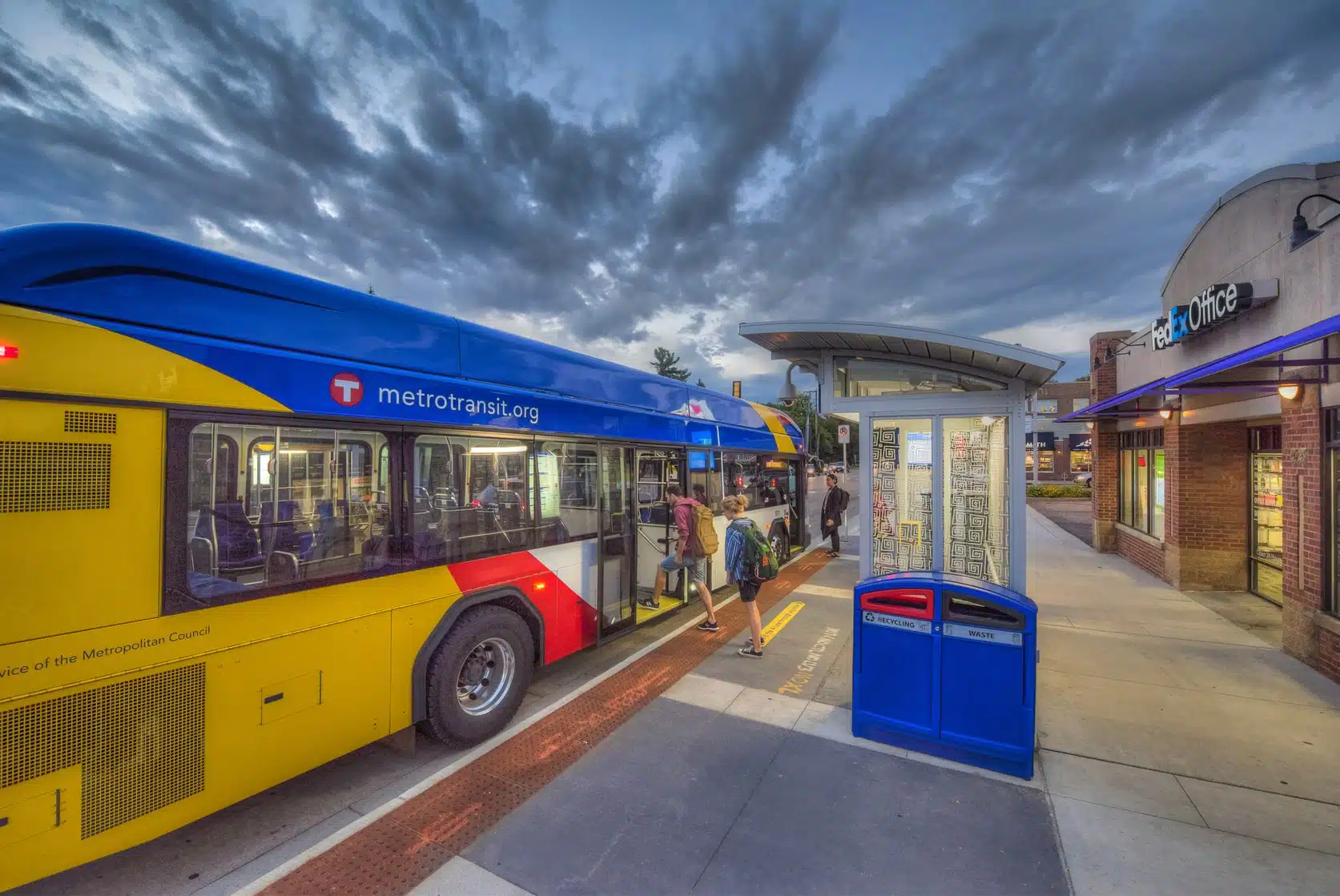
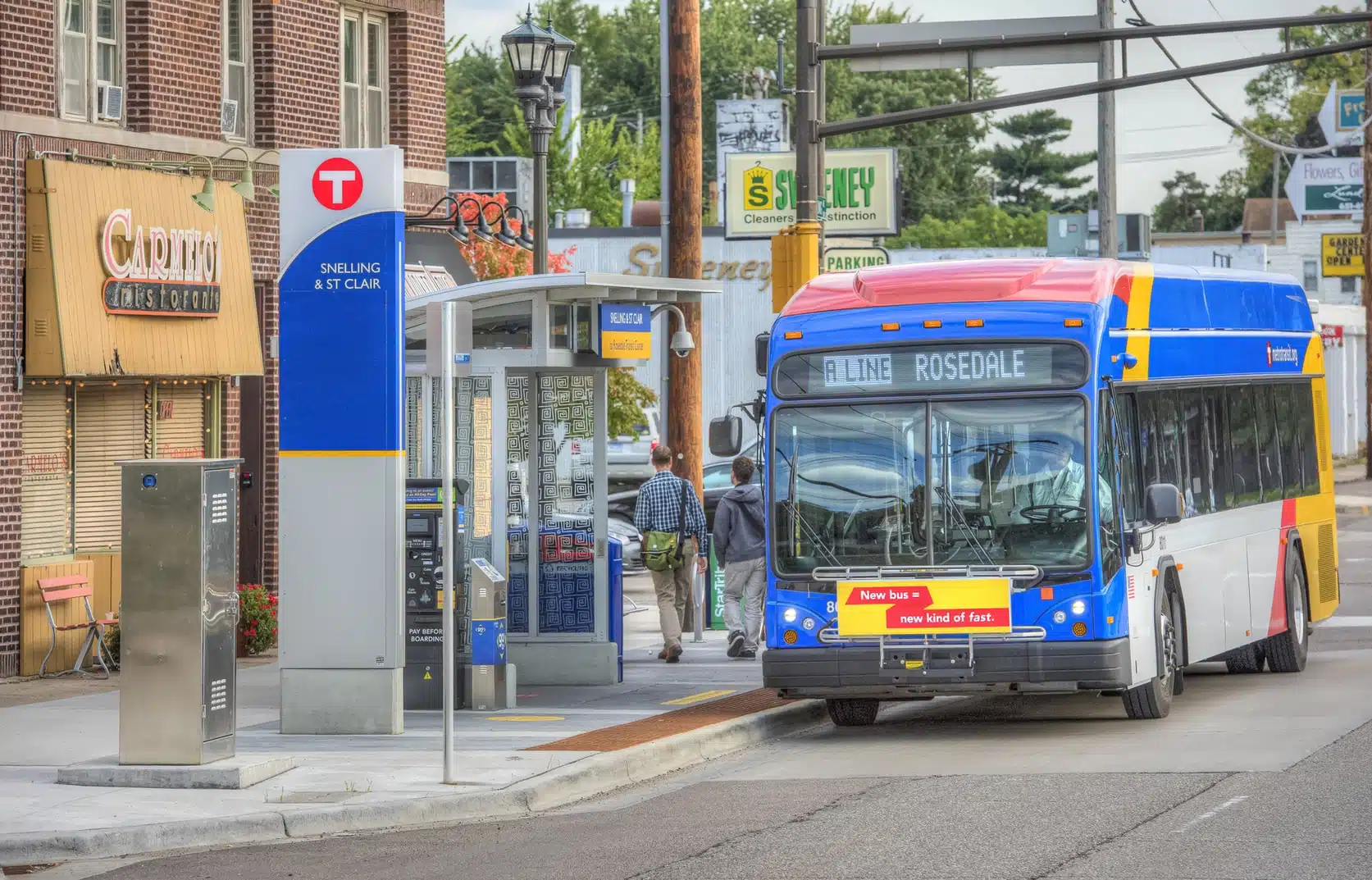
Providing Arterial BRT Services
Kimley-Horn provided civil and urban design for 11 of the 20 total stations on the A Line. As the first of 11 arterial BRT corridors, this set the precedent for planned BRT investments in the Twin Cities. Our transit team designed the BRT station layout and the roadway and urban elements associated with the stations, including the pilot station in Minneapolis. Planning roadway and urban elements required multi-agency coordination with the Cities of Minneapolis, St. Paul, Roseville, and Falcon Heights as well as the Minnesota Department of Transportation (MnDOT) and Ramsey County.
The A Line BRT route is located within MnDOT highway right-of-way, which required our team to obtain approvals from MnDOT to construct the stations within their right-of-way and comply with their requirements. Portions of the project were also constructed as part of larger MnDOT and Ramsey County projects, which consolidated overall construction durations within the A Line BRT corridor.
Our services for Metro Transit included:
- Project management
- Site design
- BRT design
- Utility design
- Landscape architecture
- Structural engineering
- 3D animation
- Structural station prototype design
- Transit signal priority
- Traffic design and signal timing
- Hazard and threat analysis
- Construction staging/phasing
- Design support during construction
Our team additionally implemented transit signal priority (TSP) at 19 intersections along the A Line corridor. This traffic signal solution helps get priority vehicles through intersections efficiently, which allowed the A Line to travel more quickly and provide more efficient and reliable service.
Overcoming Urban Constraints
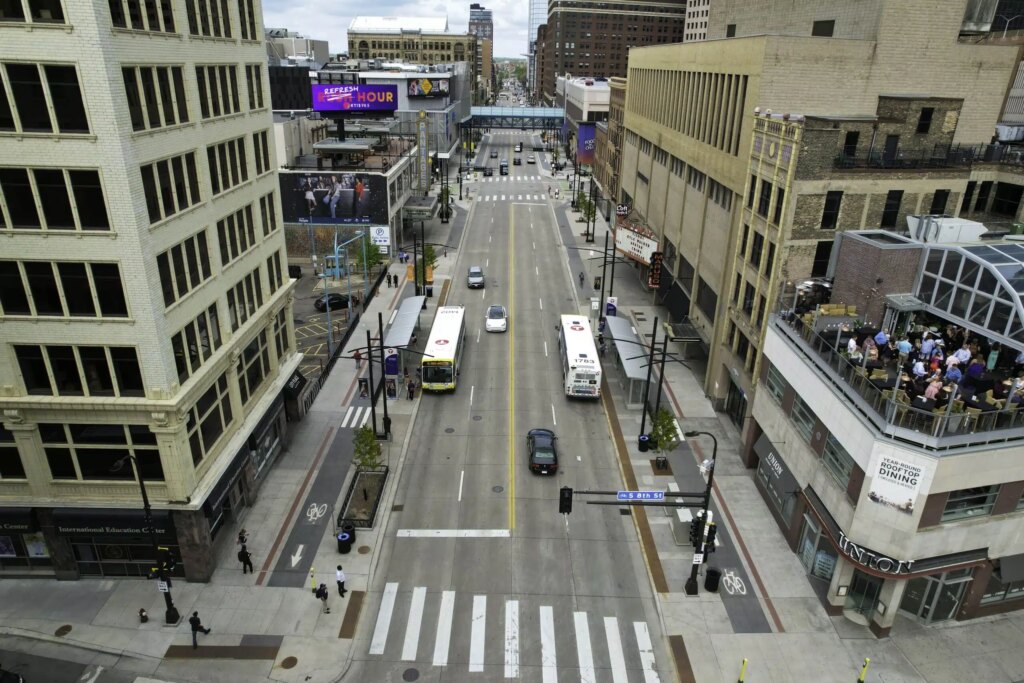
Since most bus operations occur in the Twin Cities’ urban environment, buses typically have to pull out of the travel lane, stop to let passengers on and off, then merge back into traffic. The A Line BRT implemented extended curbs, modifying the curb to be adjacent to the travel lane versus the parking lane, allowing buses to stop in the travel lane and provide more space for a larger station platform and pedestrian throughway. By letting the buses remain in the travel lane, the station dwell time is shortened and the time-consuming process of merging back into traffic is eliminated, improving efficiency and reducing travel time.
Designing Enhanced Stations
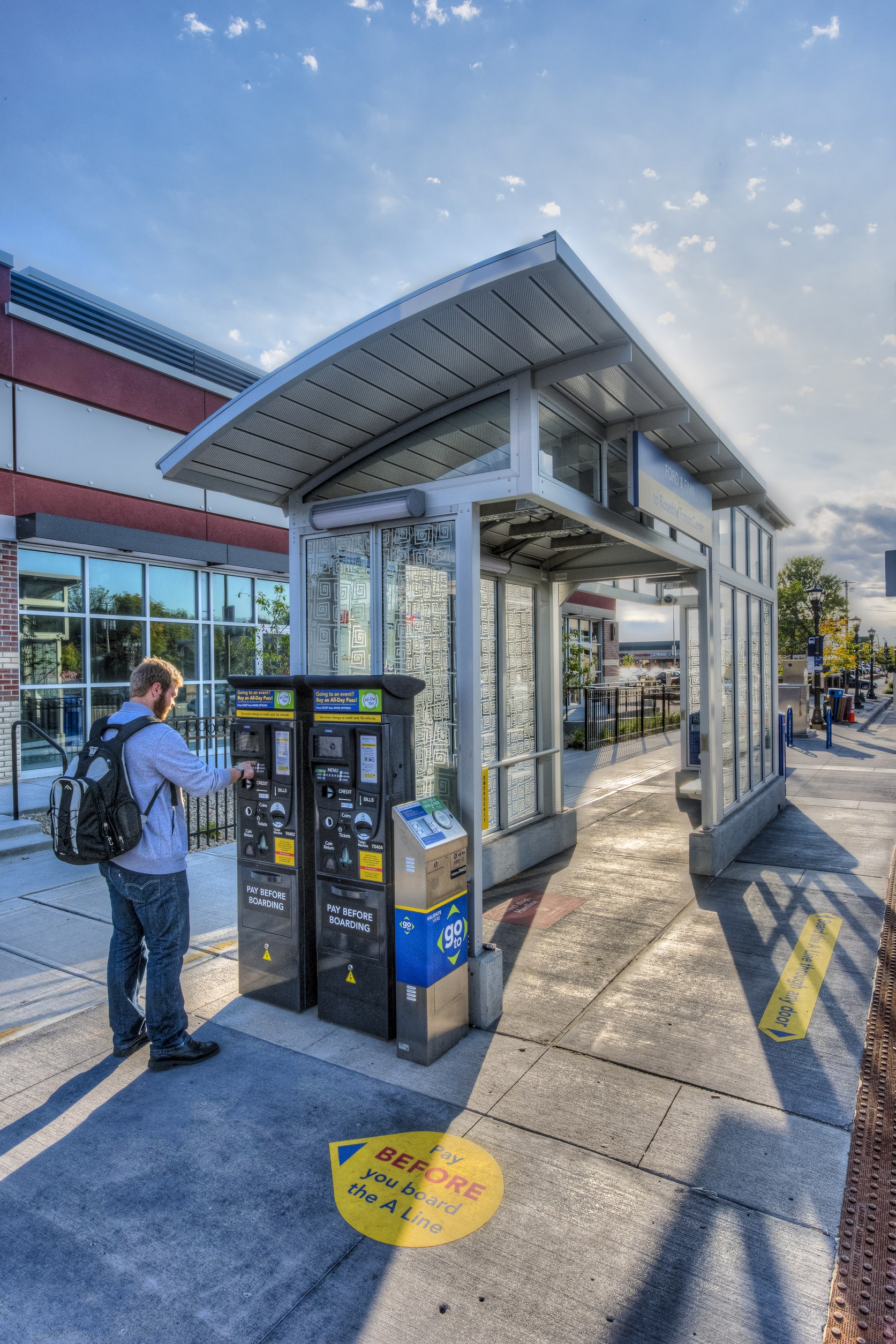
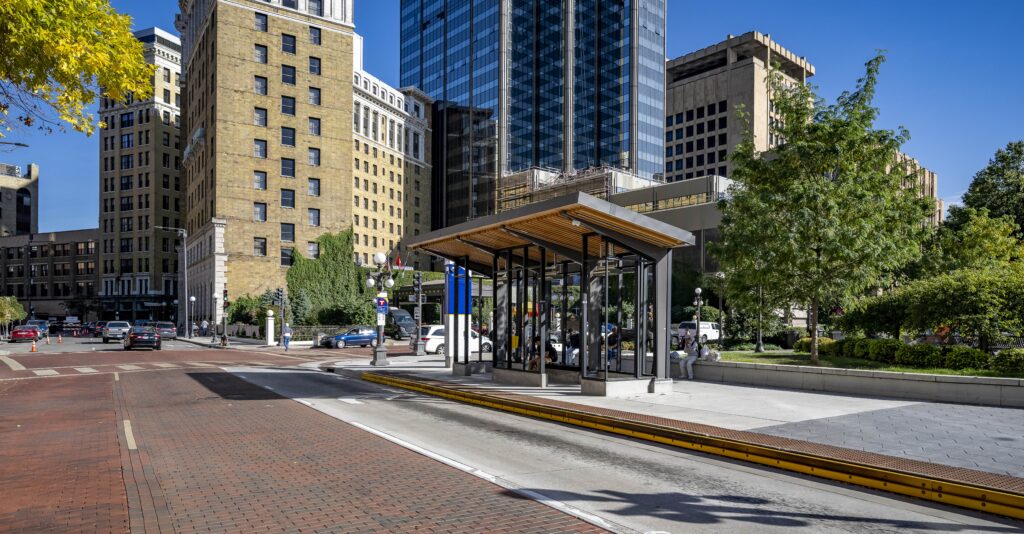
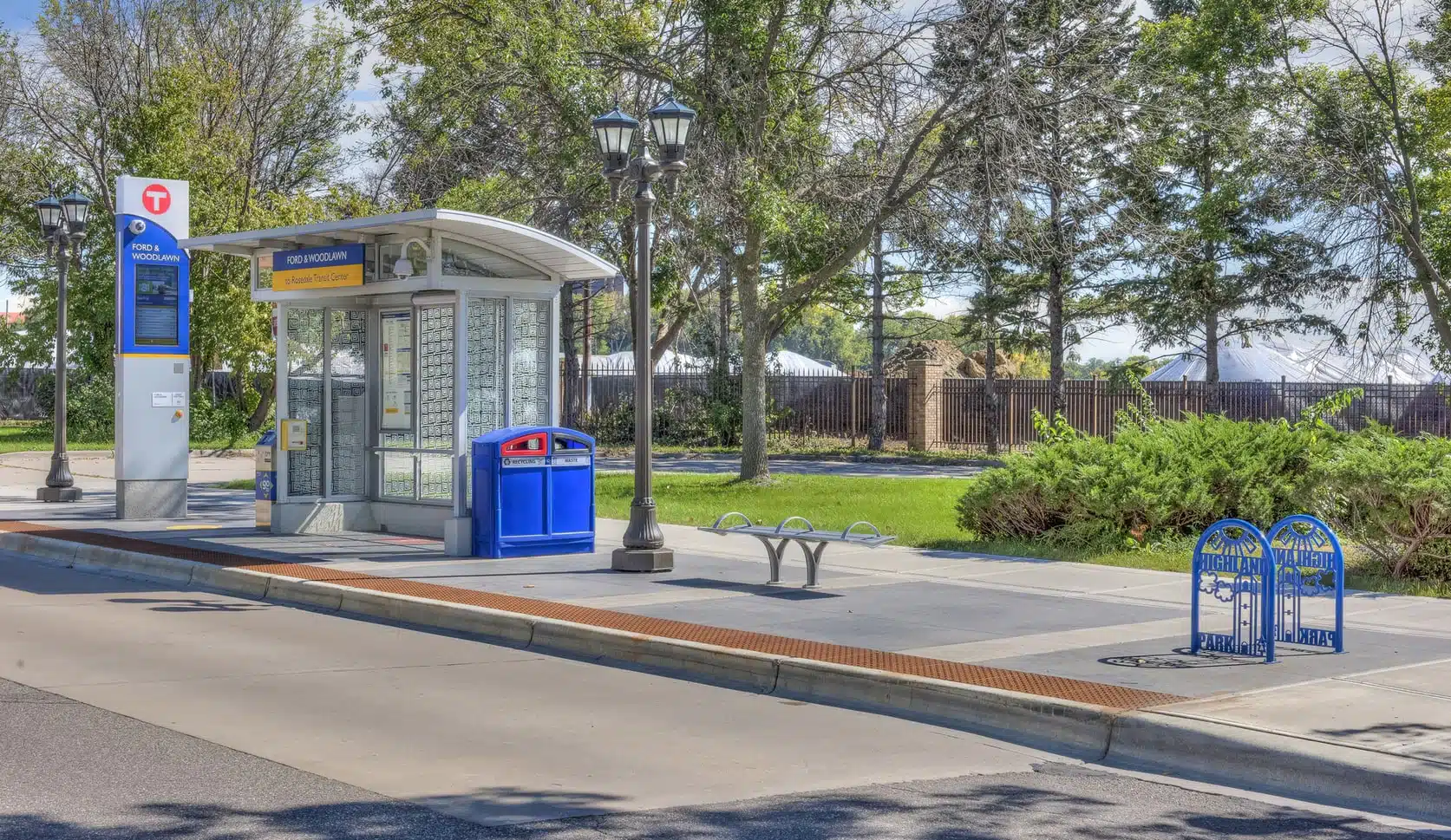
Our team also designed station improvements to provide a comfortable and safe experience for Metro Transit riders. We implemented a 9-inch raised station platform, which makes it easier for passengers, especially those using wheelchairs, to board the bus quickly.
Stations were implemented within urban areas, often placed between adjacent businesses or other buildings and an existing roadway. Implementing this raised platform required a detailed grading design to maintain station accessibility—while also limiting the impacts to the adjacent buildings or roadway and limiting the additional right-of-way at most locations.
To provide an area for passengers, we included the following station amenities:
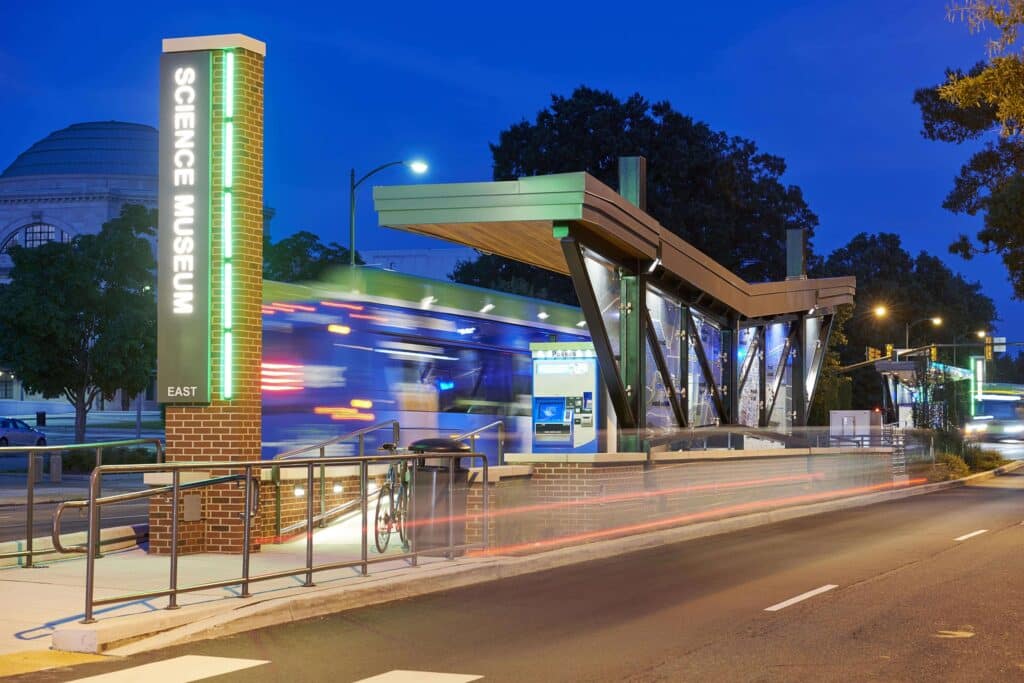
- Substantial station shelters with push-button heat and enhanced lighting
- Improved maps and information, including a real-time “Next Bus” arrival screen
- CCTV cameras for security
- Emergency telephones
- Ticket machines
- Benches
- Bike loops
- Off-board fare collection
Providing Increased Connectivity on a Unique Timeline
The Kimley-Horn team had to work within a tight schedule due to the funding sources for the A Line BRT. The project had a total cost of $25 million, and certain funds—including State Competitive Trunk Highway Bonds, state bonds, Federal Congestion Mitigation and Air Quality funds, federal formula funds, and local funds—needed to be used within a certain timeframe. As Metro Transit navigated these funding constraints, Kimley-Horn accommodated the required schedule while in the design phase of services.
Providing connections to the METRO Blue Line at the 46th Street Station and the METRO Green Line at the Snelling and University Station, the A Line streamlines rider access to Hamline University, Macalester College, Highland Village, Rosedale Transit Center, HarMar Mall, Minnehaha Park, and more.
With 20 stations along a 10-mile corridor, Metro Transit riders enjoy the speed, consistent level of service, and enhanced station amenities. The A Line set the standard for arterial BRT projects and station design in the Twin Cities, and with our provided services and expertise, Metro Transit successfully established a kit-of-parts approach to arterial BRT and laid the groundwork for their transit system’s continued success.
Project Recognition
- Featured in Roads & Bridges “Riding the A Line: A New Kind of BRT in the Twin Cities”
- 2017 WTS Minnesota Innovative Transportation Solutions Award
- 2017 American Council of Engineering Companies Minnesota Honor Award
Related Projects