Zero-Emission Bus Fleet Conversion: Expectations vs. Reality
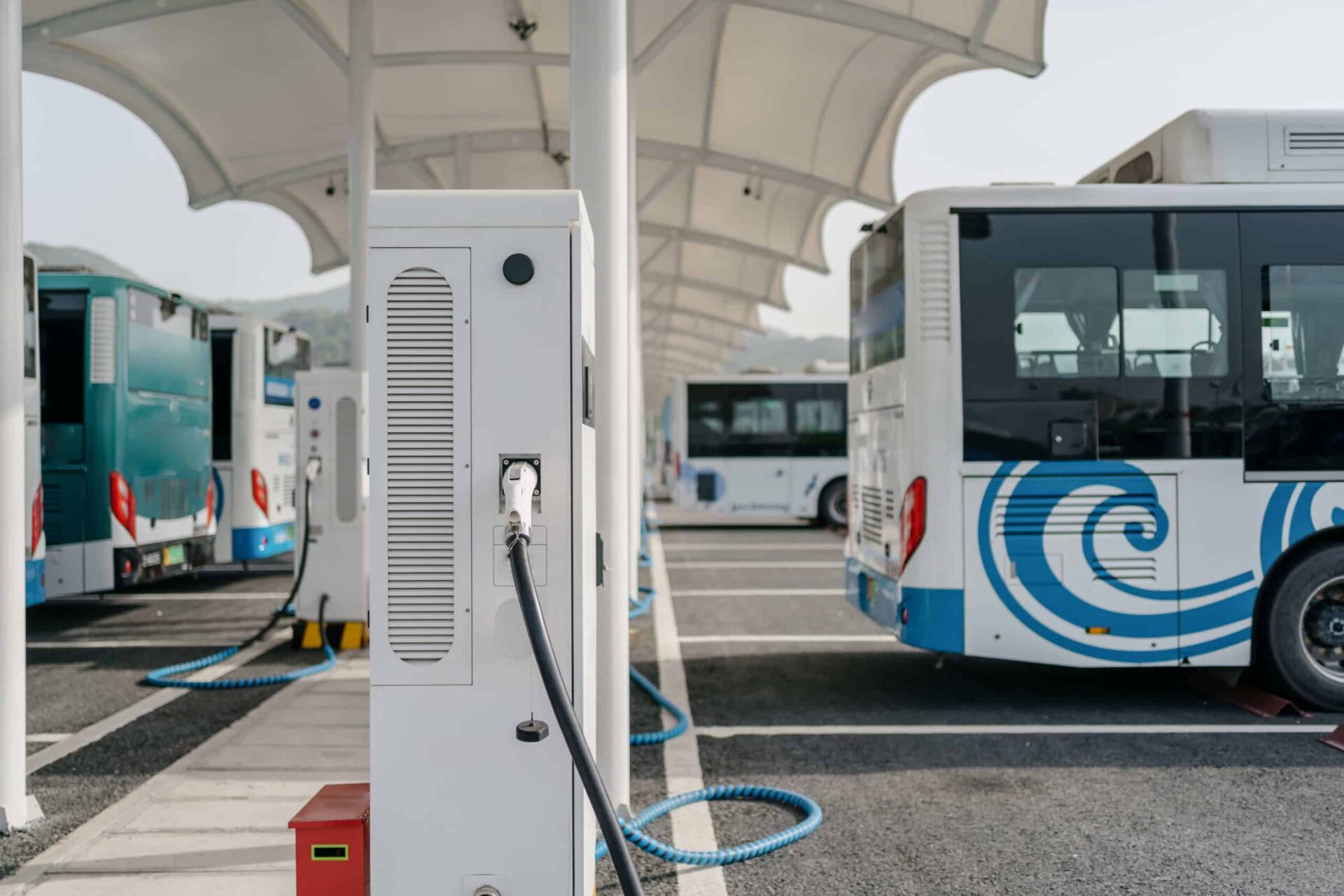
The United States Federal Transit Administration (FTA) aims to support local transit agencies in converting diesel buses to zero-emission bus (ZEB) fleets by 2050. Despite the funding and guidance available, this generational shift in delivering bus service presents multiple challenges for transit agencies and operators. Operators, manufacturers, management software developers, and consultants gathered in San Francisco at the 2022 Clean Buses conference to discuss the road to zero-emission bus service. The key themes that emerged revolved around funding, disparities between large and small operators, and how to determine whether battery electric vehicles (BEV) or fuel cell electric vehicles (FCEV) are right for different operators.
The Funding Dilemma: Operators Need Support with the Operational Implications of ZEB Fleet Conversion
Funding for the transition to ZEBs is not lacking. The FTA’s Low or No Emission Vehicle Program has $1.66B in bus and bus facility grants funded by the Bipartisan Infrastructure Law. This money is for investment in fleets and facilities, but many operators embarking on fleet conversion are struggling with the operational implications of converting to ZEBs. The overwhelming cry from operators is that they need help with planning, maintenance, and workforce training.
Many operators are not sure where to start and there are looming deadlines for those in California and other states who follow California’s lead on zero-emission standards and policies. Funding for planning and operations would go a long way towards making these standards a realistic and achievable goal.
On the workforce training front, FTA’s Workforce Development Initiative was developed to “help transit agencies recruit, hire, train, and retain a diverse workforce needed now and in the future.” While this guidance is helpful, lack of funding for operators who don’t have the capacity and resources to develop workforce training programs makes the guidance difficult or impossible to implement.
Disparity Between Large and Small Operators
For larger and better-resourced operators, the transition to ZEBs is moving more quickly than for small operators that don’t have the capacity or resources to address the issue. There were operators of all sizes at the Clean Bus Conference discussing their programs. One smaller transit agency that is leading the way in ZEB fleet conversion is SunLine Transit Agency in Riverside County, California.
Lauren Skiver, CEO/General Manager at SunLine presented her agency’s steps to a successful full-scale ZEB deployment. SunLine operates ten routes with daily weekday ridership of 7,300 and plans to have its fleet converted entirely to hydrogen buses by 2035. As they convert to hydrogen buses, a mix of compressed natural gas (CNG), electric, and hydrogen fuel cell buses will be in operation. SunLine offers a hydrogen training program to help other operators achieve zero-emission transportation through their West Coast Center of Excellence.
The resounding message from operators that are experiencing success with their ZEB deployments is this: start now!
ZEV Fleet Mix: Answer to the BEV or FCEV Question?
Operators frequently ask us to help determine which type of zero-emission vehicle (ZEV) is right for their operations. As more operators embark on their deployments, this key decision will need to be made. The good news is that you don’t have to choose one or the other. This topic was covered by experts at the Clean Bus Conference, and they agreed that while it may make sense for some fleets to be all BEV or all FCEV, most fleets will have a mix of hydrogen and electric buses. A mixed fleet is a resilient fleet—if weather precludes hydrogen bus delivery, you want electric buses to cover the service area. If blackouts preclude electric buses, you want hydrogen buses to cover the service area.
To determine whether a mix, all-electric, or all-hydrogen fleet is right for your operations, it is critical to coordinate with your electric utility. While electric buses are demanding on the grid, the San Francisco Municipal Transportation Agency (SFMTA) determined that an all-electric fleet was the best option for their operations. Their nearby substations have excess capacity, their climate is consistently moderate, and their topography allows for battery regeneration. Consequently, SFMTA is getting nearly 200 miles on a single charge from their buses. Additionally, SFMTA can cross utilize portions of its existing streetcar electrical infrastructure when it is otherwise not in use.
For other operators, hydrogen fleets are the only choice because of constraints on the power utility. Experts discussed the benefits and drawbacks of going all-hydrogen. For example, SunLine, which has itself become a hydrogen and CNG supplier, encourages other transit agencies to consider this pathway so they can start selling these fuels as a revenue stream. Others talked about how hydrogen is not a mature market yet and owners need to be smart about who they work with. The product may work but the customer-support infrastructure may be lacking. Lastly, the costs of hydrogen vs. battery electric buses must be considered. In general, battery electric buses have a lower procurement cost at the trial or introductory stages, but become more expensive when scaling up, while hydrogen is more expensive to start and less costly to scale.
There’s a lot to plan for and a lot to consider when starting your zero-emission bus deployment and we have you covered every step of the way. What’s your biggest challenge? We’d love to hear from you.



Related Insights