Virginia Department of Transportation Transforms a Critical Gateway Along I-264

Multidisciplinary Design

Vital Safety Improvements

Cohesive Vision
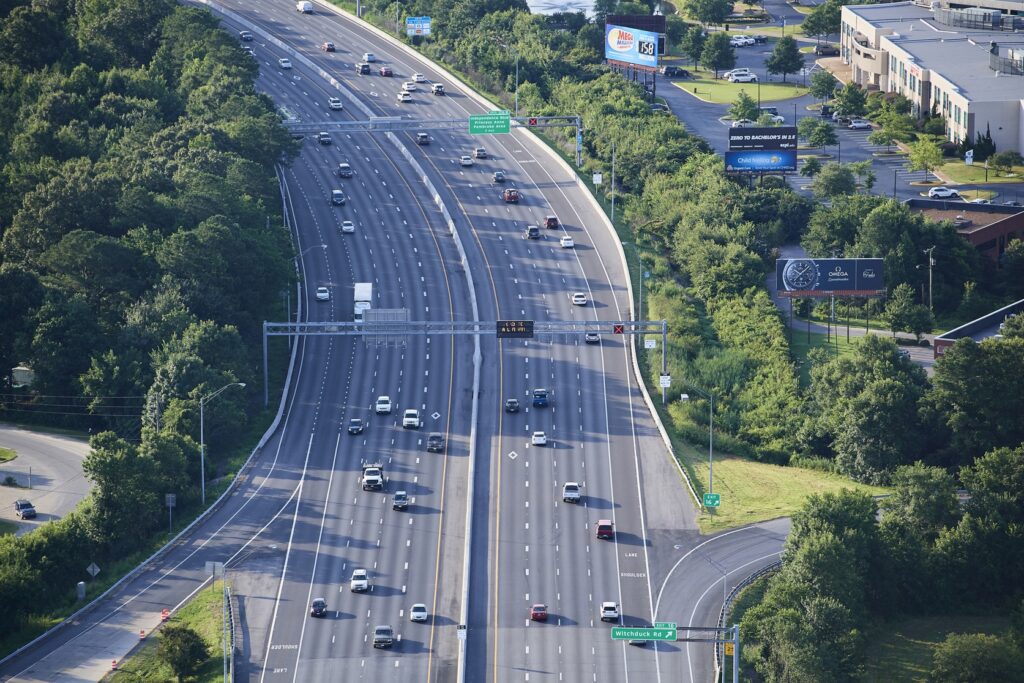
The Virginia Department of Transportation (VDOT) faced a growing challenge along the I‑264 corridor in the Hampton Roads region. Stretching between the Newtown Road and Witchduck Road interchanges in the Cities of Virginia Beach and Norfolk, this segment of I-264 serves as a primary gateway for welcoming visitors and residents to the City of Virginia Beach. As one of the area’s busiest gateways, the corridor had long experienced high congestion, frequent crashes, and recurring flooding, creating daily safety concerns for drivers in the surrounding communities.
As years of traffic growth led to frequent bottlenecks and strain on aging infrastructure, VDOT recognized that incremental fixes would not be enough. The agency identified the Witchduck Road and Newtown Road interchanges as priority locations where safety, operational performance, and long‑term resilience would be addressed by the project’s primary consultant, Kimley-Horn, along with other partners—without disrupting travel in a corridor relied upon by tens of thousands of users each day.
Project Recognition
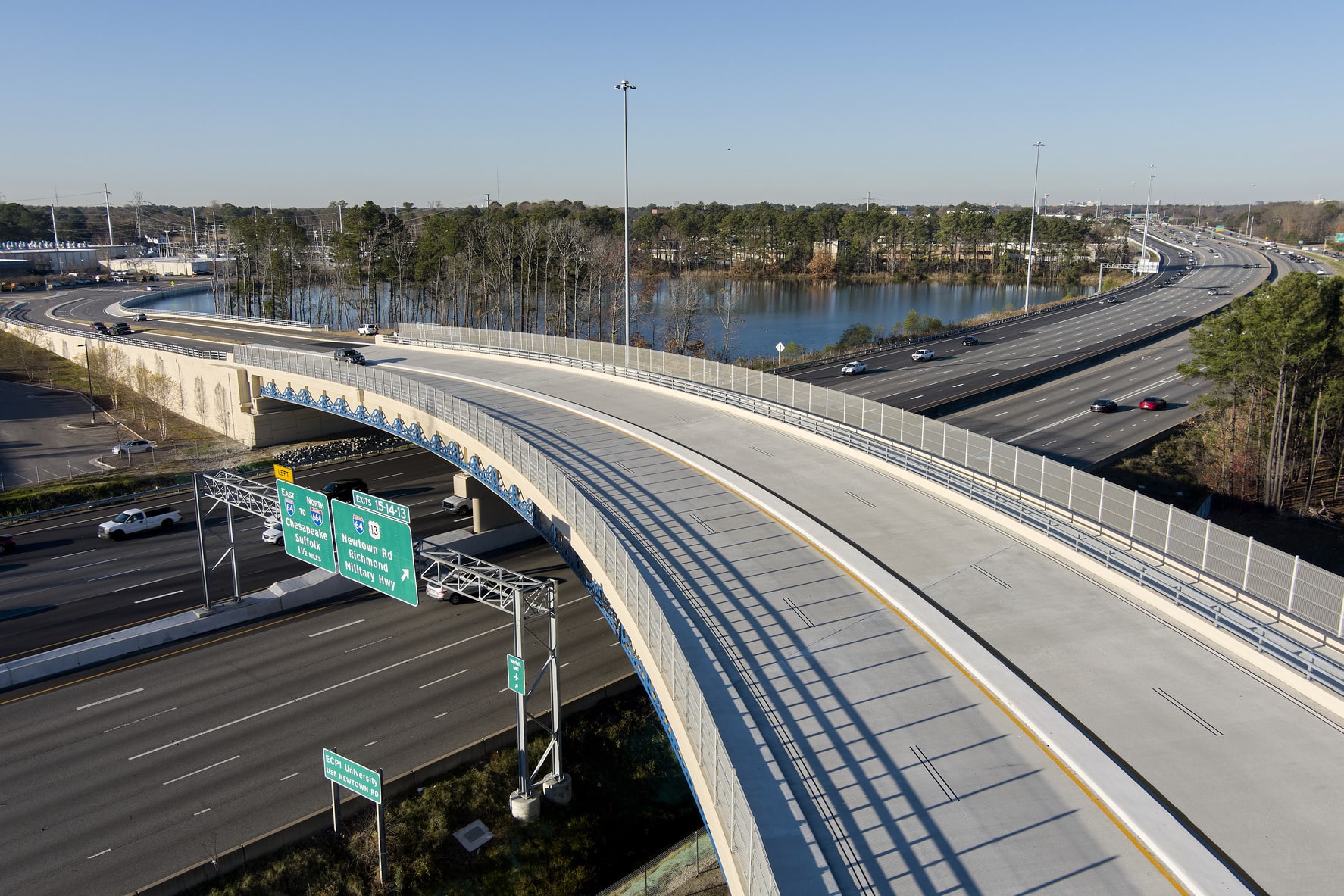

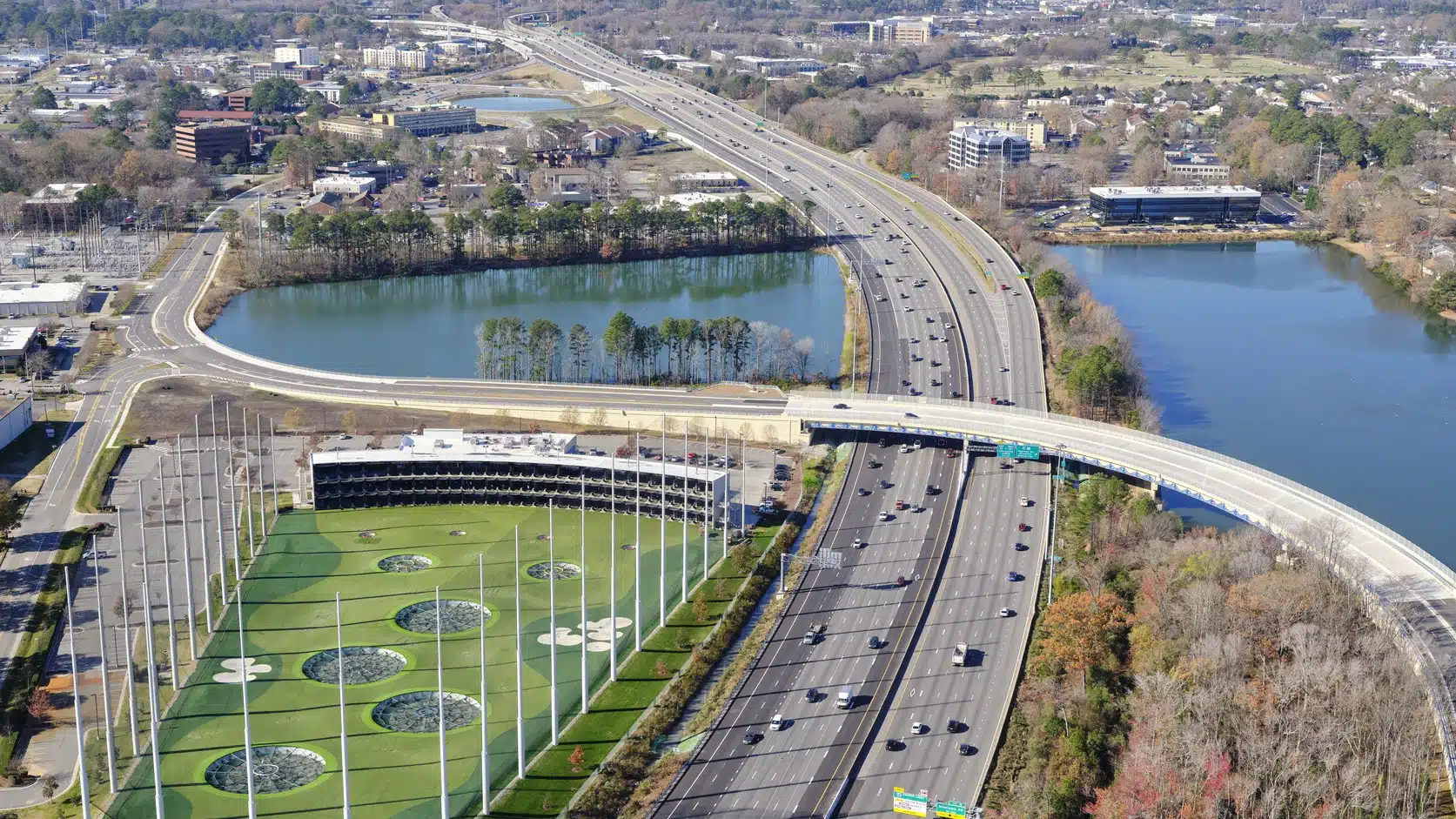
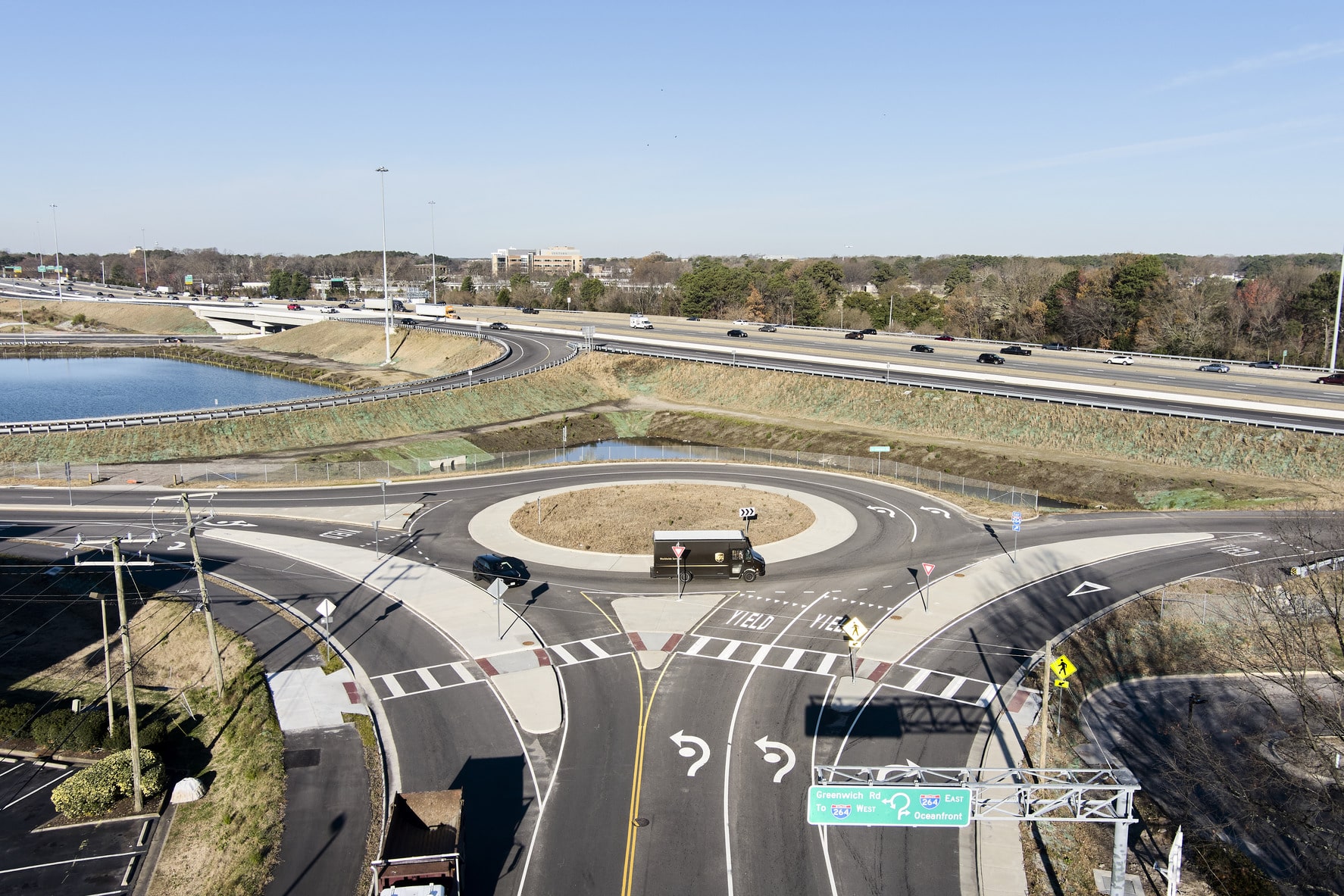
Executing the Vision: Coordinated Improvements Across the Corridor
To advance VDOT’s strategy, Kimley-Horn led comprehensive improvements to Interstate 264 between the Newtown Road and Witchduck Road interchanges, including mainline interstate widening, new interchange ramps, and a collector‑distributor (C-D) roadway system along eastbound I-264 designed to separate local and through traffic.
Key improvements delivered under VDOT’s leadership included:
- Five new interchange ramps at Newtown Road and Witchduck Road
- 3 miles of two‑lane widening along eastbound I‑264
- 4 miles of multilane urban roadway enhancements
Beyond the C-D roadway, VDOT’s strategy included expanding the eastbound capacity from the end of the C-D system through the Witchduck Road interchange, which created a more reliable and continuous traffic flow through one of the region’s busiest corridors. These investments directly addressed congestion and operational conflicts while improving overall corridor safety.
Engineering for Long-Term Resilience
VDOT’s targeted improvements required navigating complex geotechnical and environmental conditions. Large fills, soft underlying soils, and long-term settlement risks demanded careful design and coordination. Ground improvement strategies—including load transfer platforms, wick drains, and surcharge techniques—were implemented by Kimley-Horn to ensure slope stability and long-term structural performance.
The agency guided the development of a comprehensive approach that combined ground improvement strategies, retaining wall systems, and a corridor‑wide stormwater management plan. This included the design of interconnected wet ponds to manage runoff from nearly 100 acres and extensive hydrologic and hydraulic analysis across both interstate and arterial roadways. By addressing these risks proactively, VDOT ensured the improvements would perform reliably for decades.
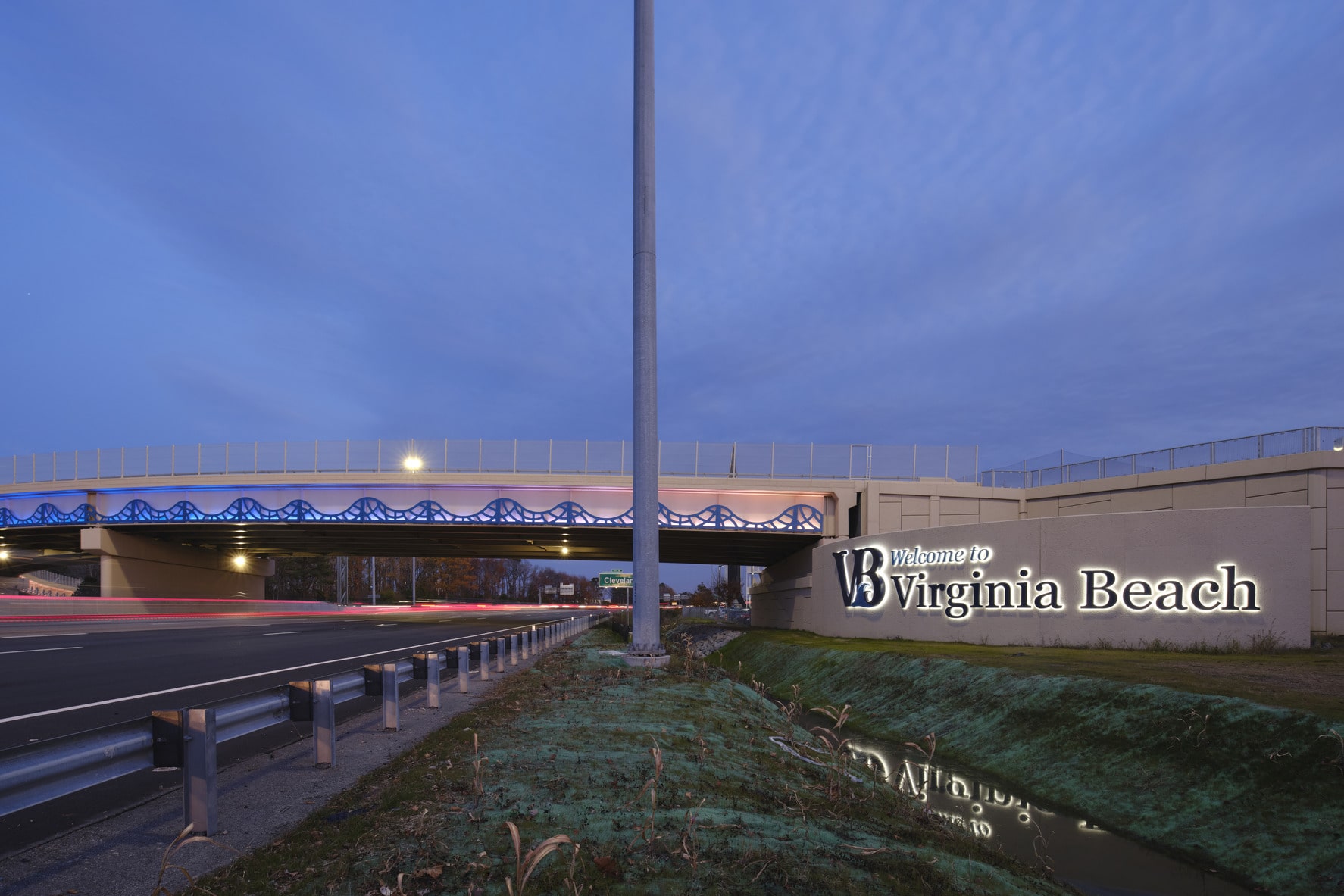
Engaging the Public and Enhancing Community Identity
Recognizing that major infrastructure projects affect more than traffic, VDOT placed a strong emphasis on public engagement and community collaboration. In partnership with Kimley-Horn, the agency worked closely with local governments, homeowners’ associations, and residents throughout the design process, incorporating feedback gathered during public meetings and hearings.
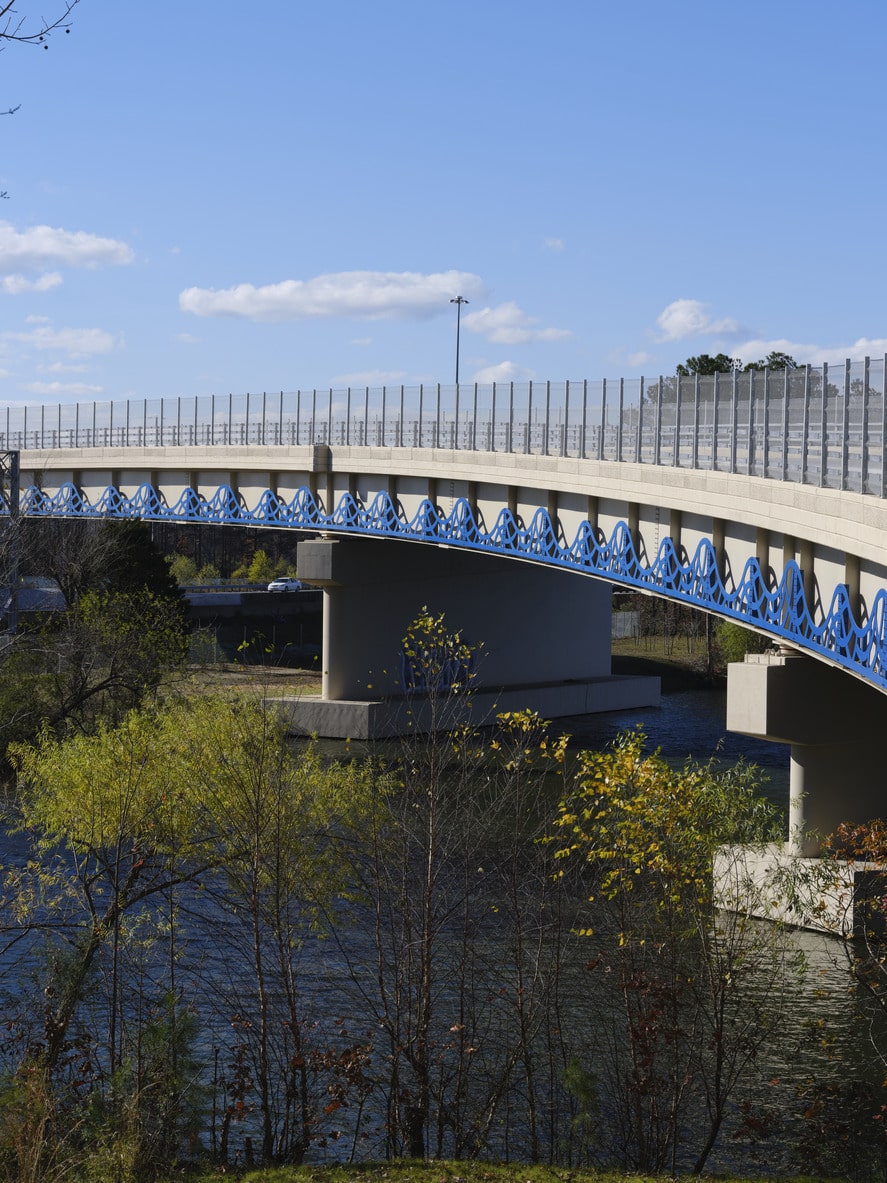
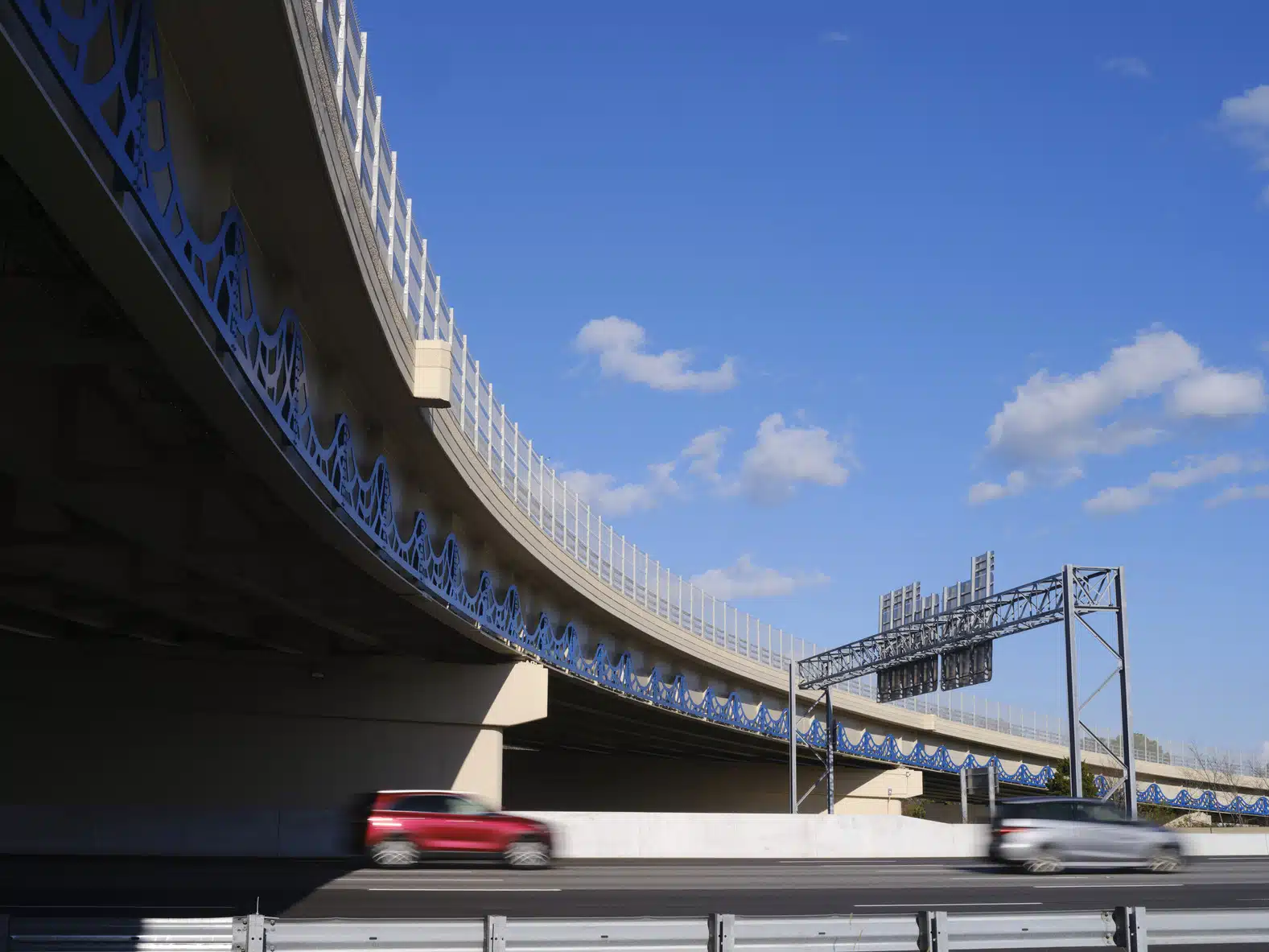
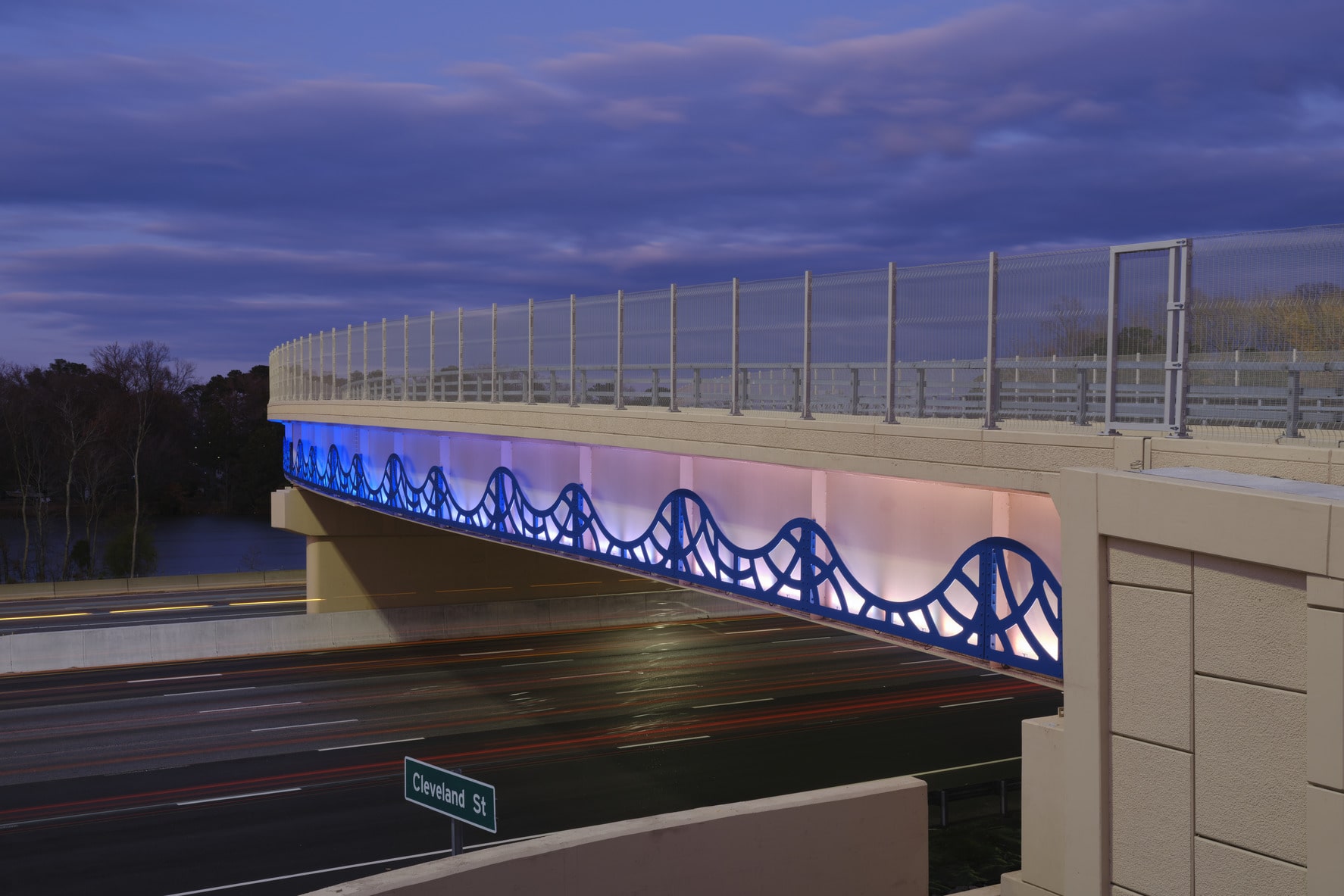
This commitment extended to the project’s flyover bridge that connects Cleveland Street to Greenwich Road. VDOT supported enhancements that transformed a functional structure into a regional landmark that now directs traffic efficiently into the central business district. As a result, Kimley-Horn’s final design includes curved girders, decorative pedestrian fencing, a plaza area, and programmable backlit steel panels that allow the City of Virginia Beach to display custom lighting for events and celebrations, and “Welcome to Virginia Beach” signage welcoming incoming visitors. This gateway element reflects VDOT’s commitment to integrating transportation infrastructure with community identity—transforming a functional improvement into a defining regional feature.
Advancing Virginia’s Safety, Mobility, and Economic Growth
Completed in 2022, the I-264 improvements have delivered measurable public value, including:
- Enhanced eastbound traffic flow
- Increased operational capacity during peak travel hours
- Reduced congestion and weaving-related safety issues
- Improved resilience against recurrent coastal flooding
- Strengthened connectivity into Virginia Beach’s central business district
The flyover bridge and associated improvements have supported redevelopment momentum along the Cleveland Street corridor, boosting connectivity and fostering development for new residential areas, medical offices, businesses, and schools.
By modernizing this vital corridor, VDOT, supported by Kimley-Horn, has reinforced the agency’s role as a forward‑thinking transportation leader—one willing to tackle complex challenges, engage communities, and deliver infrastructure that enhances mobility for those who call this region home.
Related Projects