Closing an Interstate From the Comfort of Home
How COVID-19 Launched a Virtual Traffic Management Center

How COVID-19 Launched a Virtual Traffic Management Center
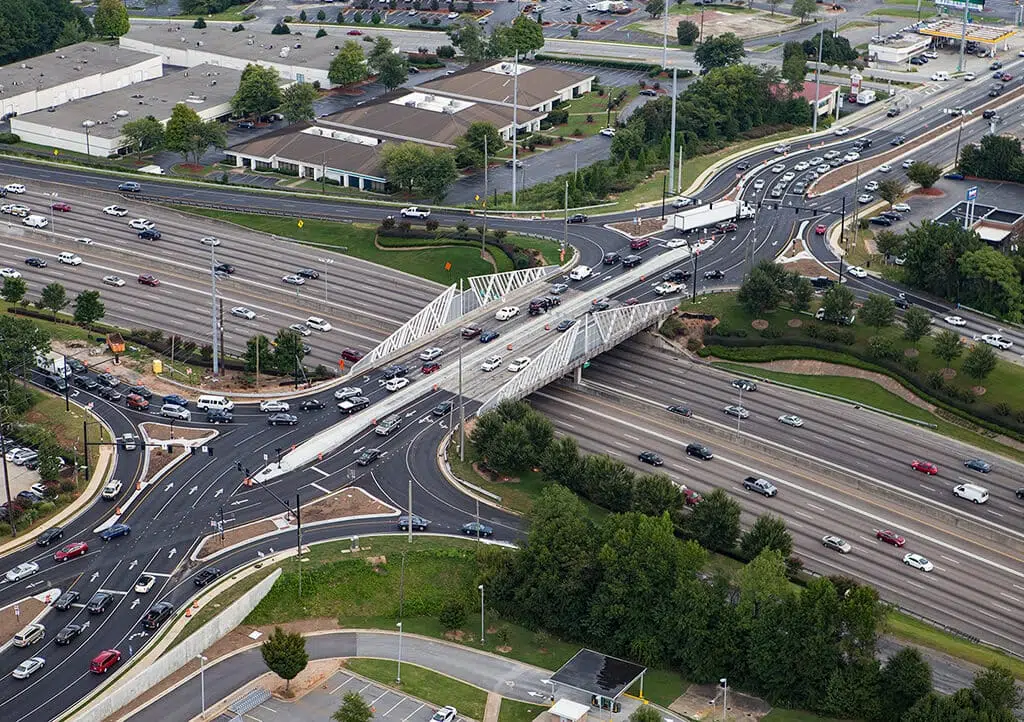
In Arlington, Texas, the I-30 and SH-360 interchange is undergoing massive reconstruction. The partial cloverleaf interchange is becoming a modern interchange with more streamlined direct connectors. A project this size takes substantial collaboration between agencies and project stakeholders, state of the practice information sharing, and coordination of signal systems and traffic management centers in multiple jurisdictions. And in times like these, it’s all happening from home.
COVID-19 has forced many of us to find new, creative ways to keep projects moving forward, despite not being able to operate in the ways we’re used to. Many traditionally manual, cumbersome, and inefficient processes have been streamlined as we’ve figured out how to get the same job done virtually. Road closures are no exception. Today, virtual Traffic Management Centers (TMCs) are efficiently reducing interstate delays, disruptions, and closures all from the comfort of home.
Road Closures Go Virtual
The First Closure: Traditional In-Person TMC
Construction for the I-30 and SH-360 interchange project requires a series of full bidirectional closures of the I-30 mainlanes, two of which have already been completed. During the initial closures, a detour route was created to divert traffic from I-30 to state roads in Arlington and Grand Prairie. Diverting this major interstate’s traffic to nearby state roads during reconstruction could have caused significant congestion if signal timings were not adjusted accordingly.

The first closure on this critical highway between Dallas and Fort Worth happened pre-COVID-19. Based on 2016 data, the section of I-30 through Arlington and Grand Prairie normally carries approximately 150,000 vehicles per weekday and 132,000 vehicles per weekend day. Through in-person coordination with multiple city stakeholders, the project team implemented a seamless detour traffic operations plan, developed signal timing to serve the detour routes, and provided traffic management during the closures. Our staff were present in TMCs in Arlington and Grand Prairie throughout the weekend to assist with active traffic management.
Then the global pandemic threw a wrench in the plan, but with new challenges come new opportunities.
The Second Closure: A Successful Virtual TMC
Scheduled for August 2020, the approach for the second closure was planned to replicate the methods used for the first closure. With COVID-19 restrictions, traditional in-person TMC coordination was not possible, but there was no option to delay. The bridge structures were coming down, the highway needed to close, and traffic needed to be rerouted. The solution? Creating a virtual TMC.

Project stakeholders were already using Microsoft Teams internally, so a virtual Teams meeting was planned to run for the entire duration of the closure, from 6:30 p.m. on Friday to 7:00 a.m. on Monday. Stakeholders from the City of Arlington, the City of Grand Prairie, the North Central Texas Council of Governments, and the Texas A&M Transportation Institute were invited to the meeting with multiple Kimley-Horn project team members.
With this setup, staff at each TMC were able to share live video feeds of the roadways, allowing everyone to monitor the situation as it unfolded. The chat feature was used to provide a record of any updates and real-time conversations among all stakeholders. Traffic engineers checked in from home, which streamlined the scheduling and provided extra coverage. Engineers were also able to immediately push updates to Waze to assist in redirecting traffic.
A Digital Success
Using Microsoft Teams streamlined the traditional road closure process immensely. There was no need to configure firewalls, grant permissions, or configure additional software. The staff from Arlington and Grand Prairie were able to speak to each other directly in real-time, improving the efficiency of communication and signal timing management.
Daniel Burnham with the City of Arlington deemed the Virtual TMC a “smashing success” and Caryl DeVries with the City of Grand Prairie was very complimentary of this innovative approach. Marian Thompson with NCTCOG said she appreciated being able to log into the Teams meeting for status updates throughout the weekend.
COVID-19 is leading many project teams to adapt and work through unexpected constraints, and this project is no exception. With a focus on communication and efficiency, virtual TMC operations can substantially improve the process and outcomes when coordinating road closures.
Is your TMC ready to go virtual?


Related Insights