Revitalizing the Historic Downtown Streetscape at Greer Station

Flexibility

Underground Power

Partnership & Visioning
Founded in 1873, Greer Station has undergone various improvement projects throughout its history—but none have focused on community-centered design or maintained the city’s historic charm quite like this. With a mission to enhance pedestrian experiences and re-activate downtown with a flexible streetscape, the Greer Station transformation is paving the way for a revitalized future in this northwest South Carolina city.
Project Recognition
- 2023 Hardscape North America Honorable Mention, Clay Brick – Commercial
- 2022 American Society of Landscape Architects South Carolina, Honor Award: Urban Design
- 2021 Landscape Architecture & Specifier News Highlight
- 2021 Municipal Association of South Carolina Highlight
Analyzing Existing Roadways & Cultivating a Flexible Streetscape
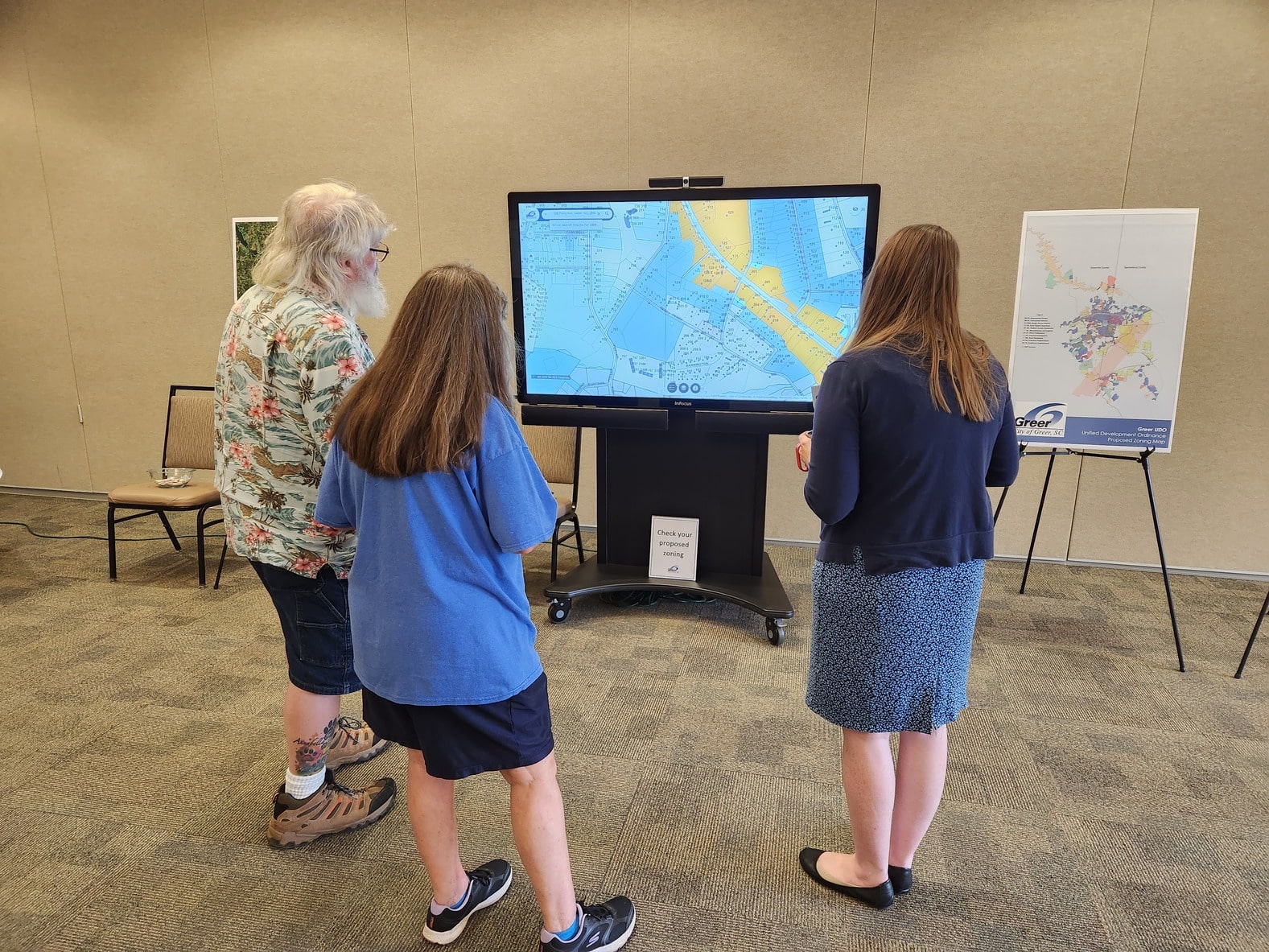
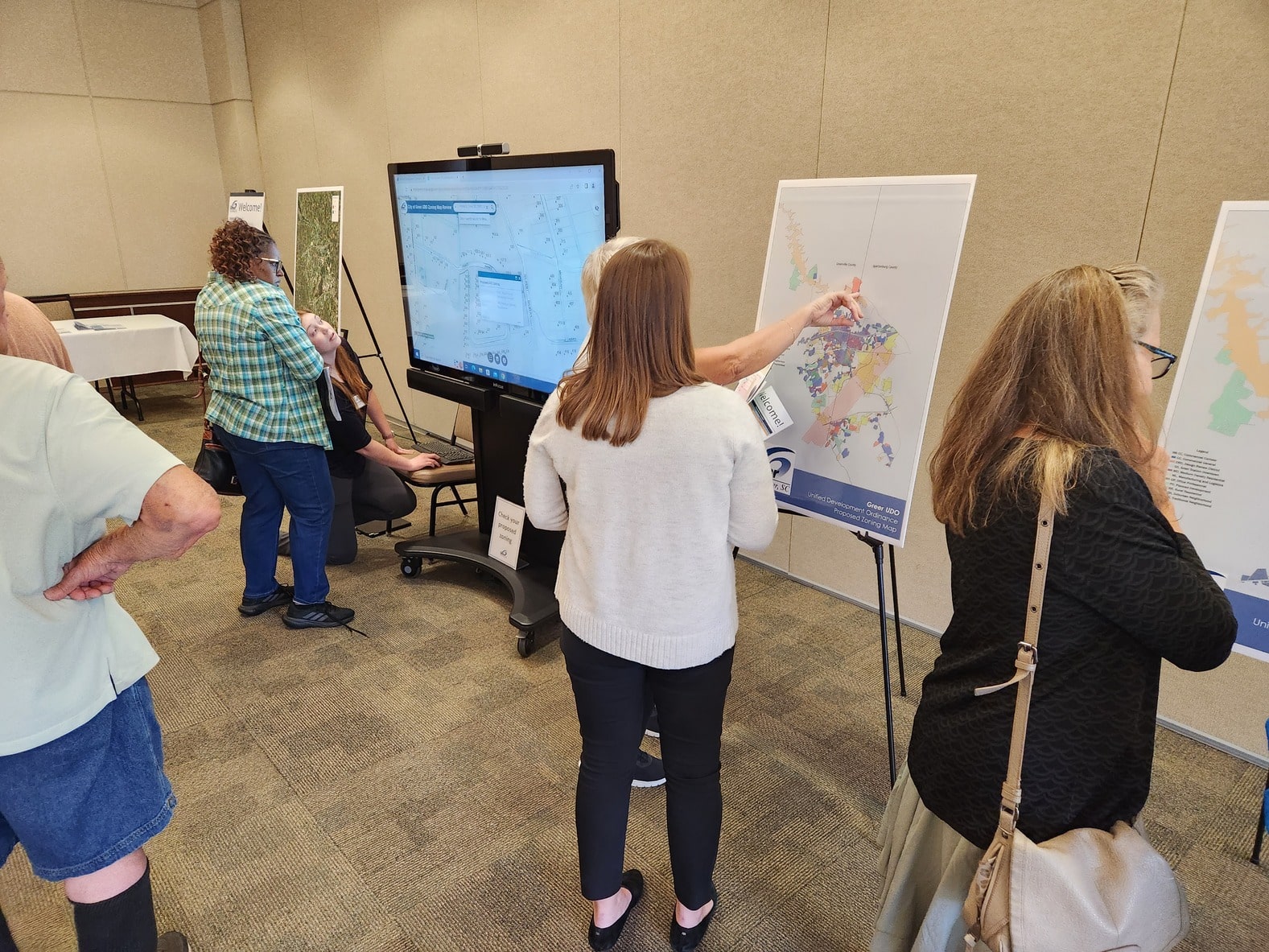
The City of Greer developed both a Community Master Plan (CMP) and Downtown Streetscape Master Plan (DSMP), with the DSMP prioritizing changes to Trade Street, Greer’s main avenue through downtown. After partnering with the City to develop both the CMP and the DSMP, Kimley-Horn helped put the ideas from the CMP into action through every phase of the project—from groundbreaking to ribbon cutting—by providing the following services:
- Landscape and hardscape design
- Electrical and lighting design
- Structural engineering
- Streetscape & irrigation design
Analyzing an Active Urban Zone
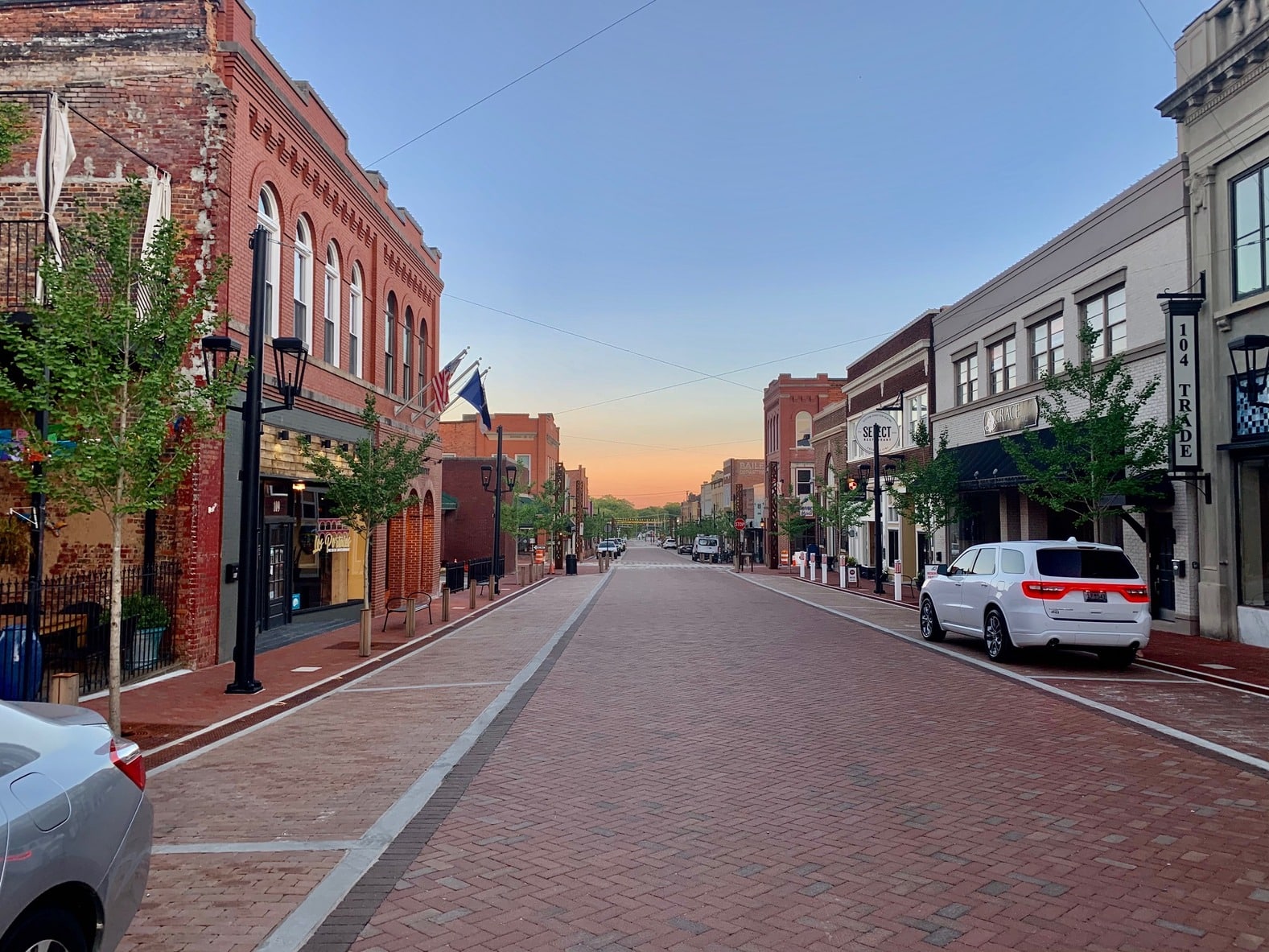
The scope of the DSMP included the evaluation of nine streets within the eight-block urban core of Greer Station to assess street connectivity, pedestrian safety and walkability, parking, urban open space design, and placemaking. A distinct challenge when developing Trade Street into a mixed-use environment was maintaining parking and access to local businesses—and the team prioritized coordination to make this possible throughout the redevelopment process.
Empowering an Adaptable, Community-Centric Space
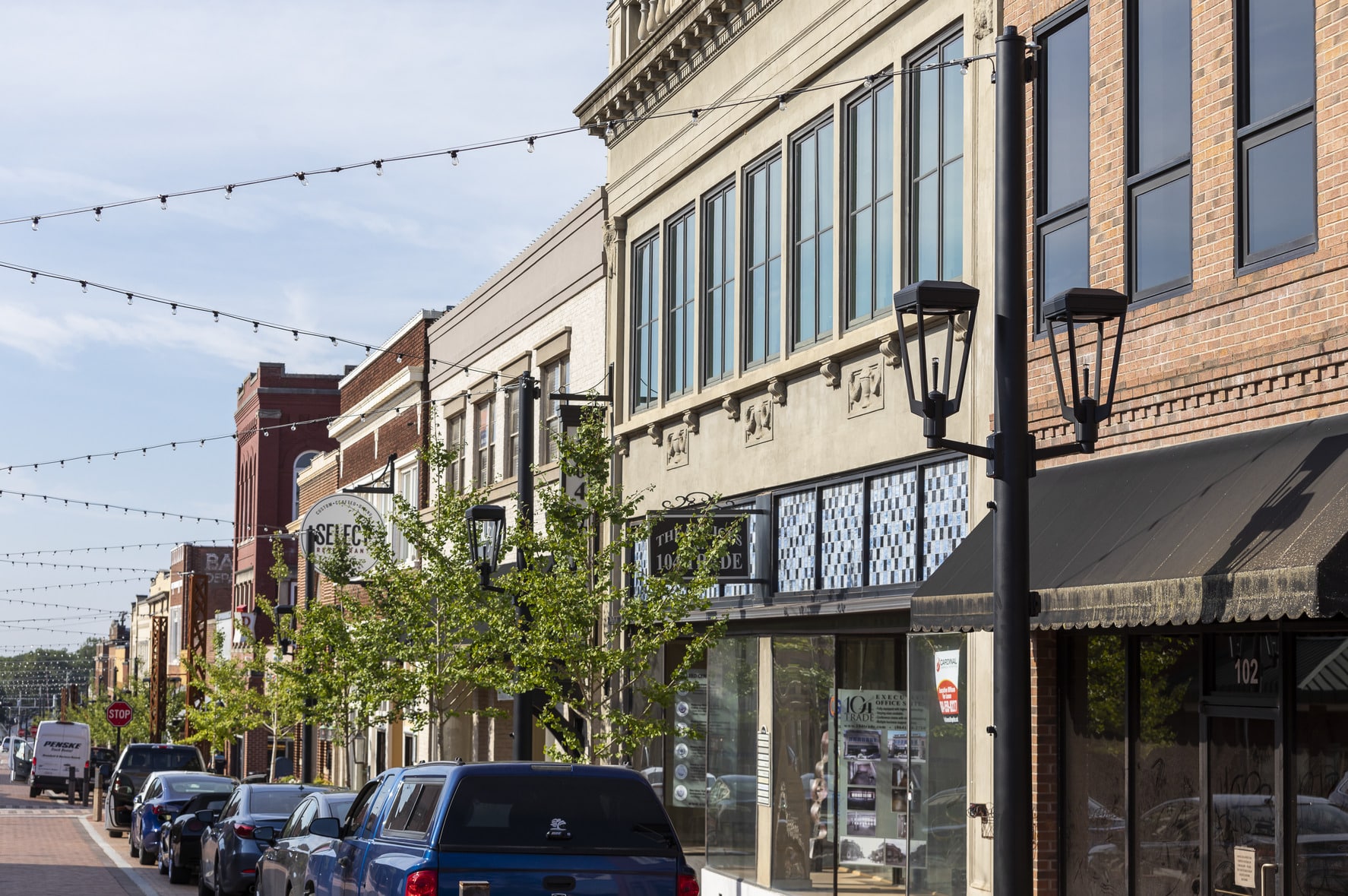
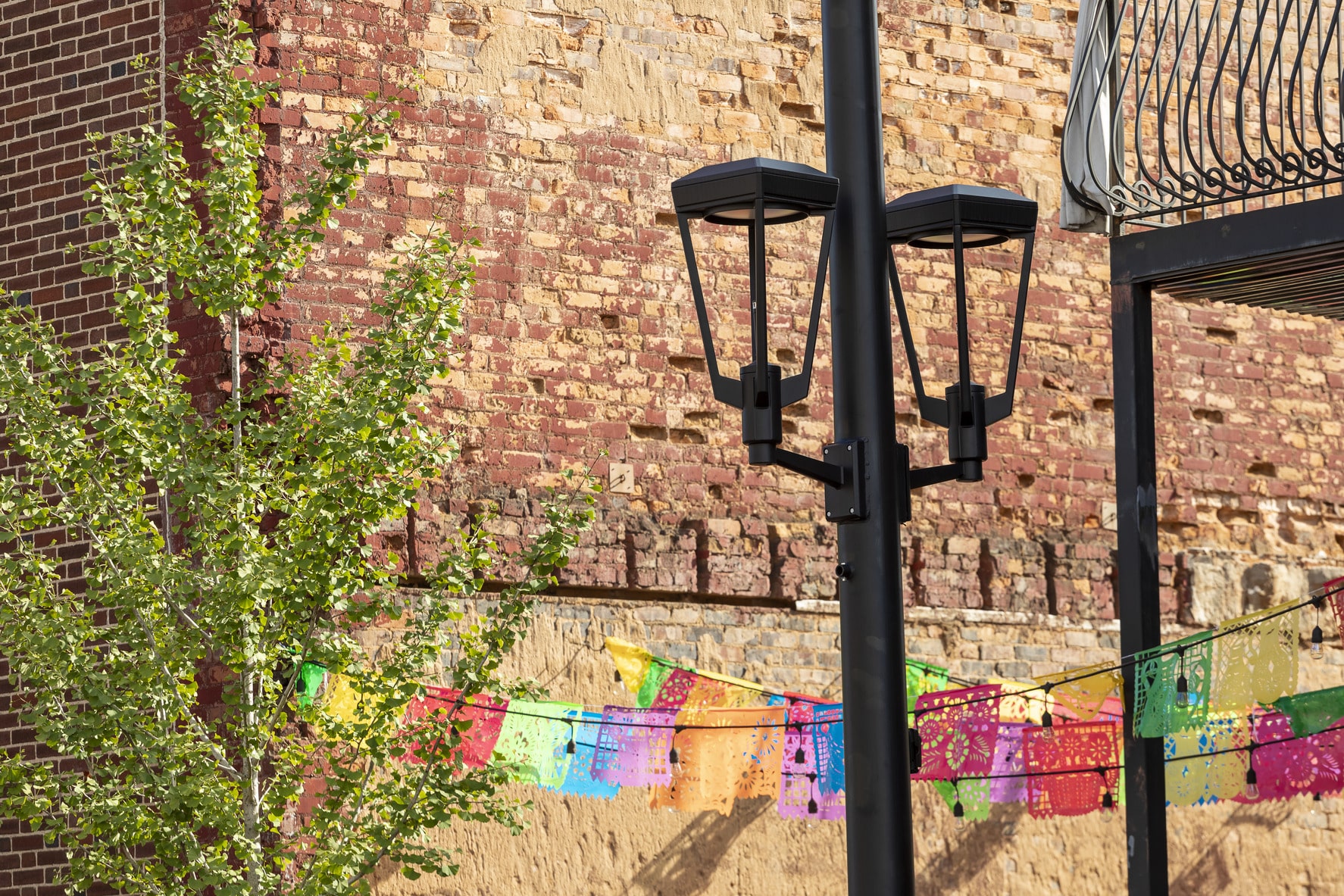
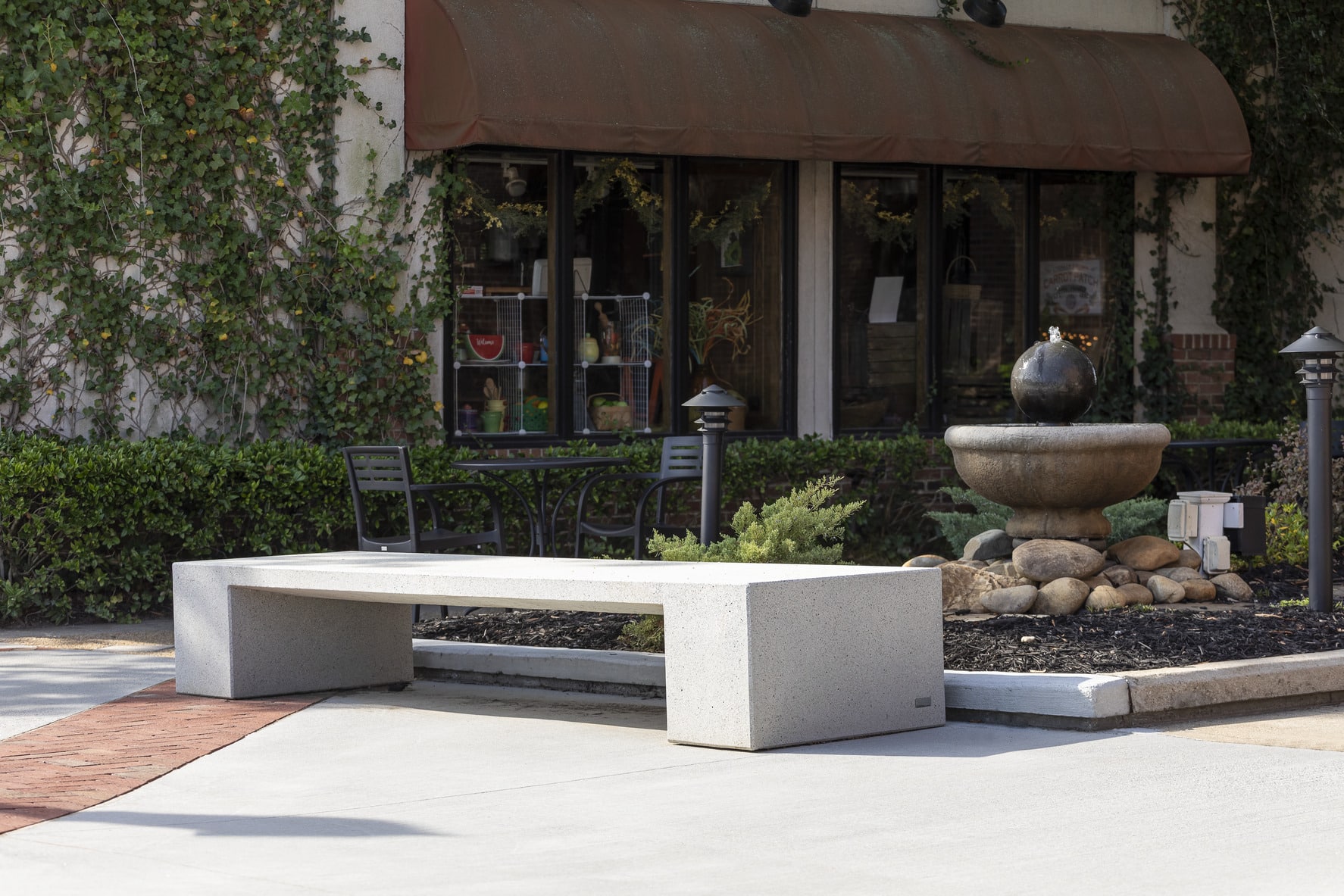
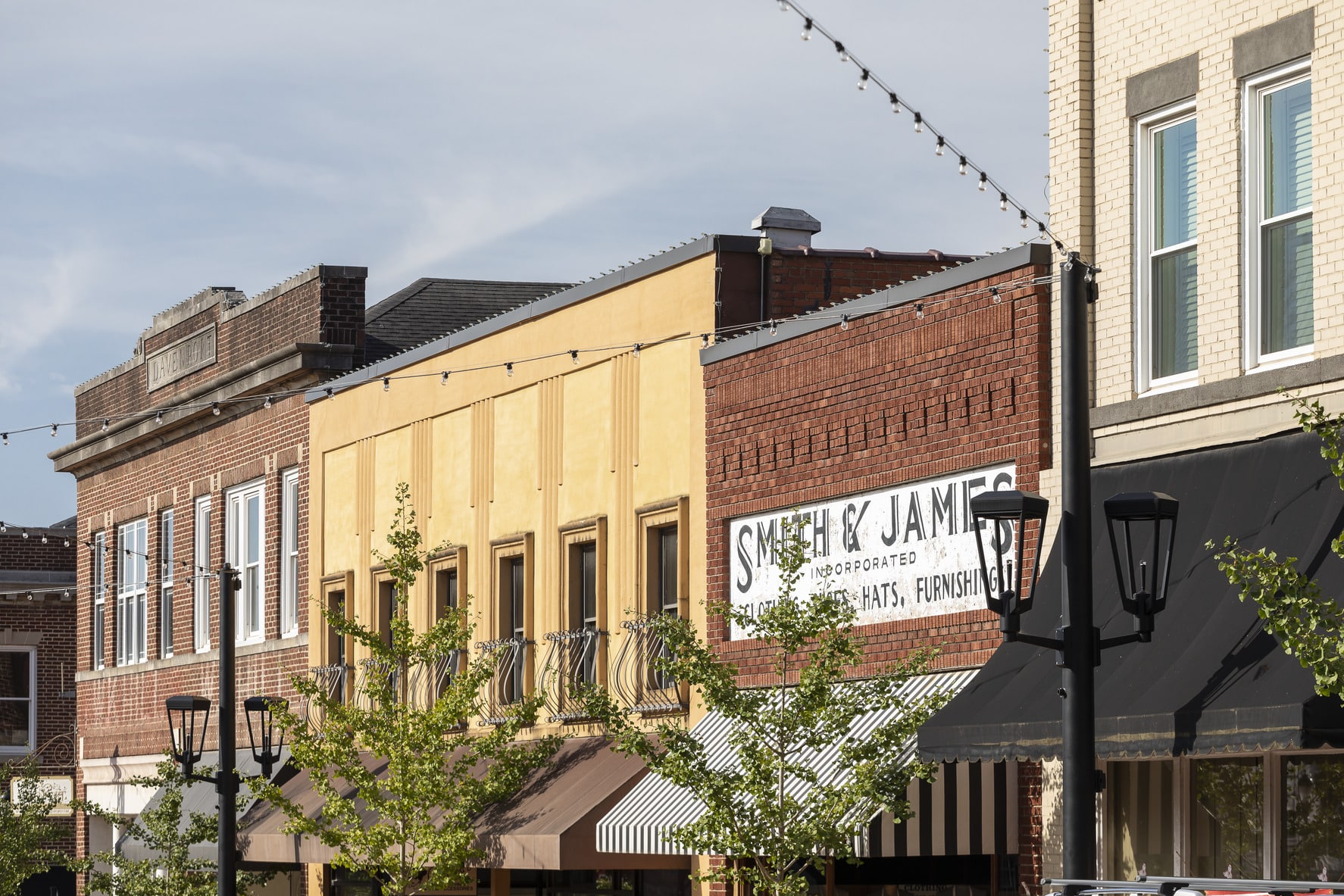
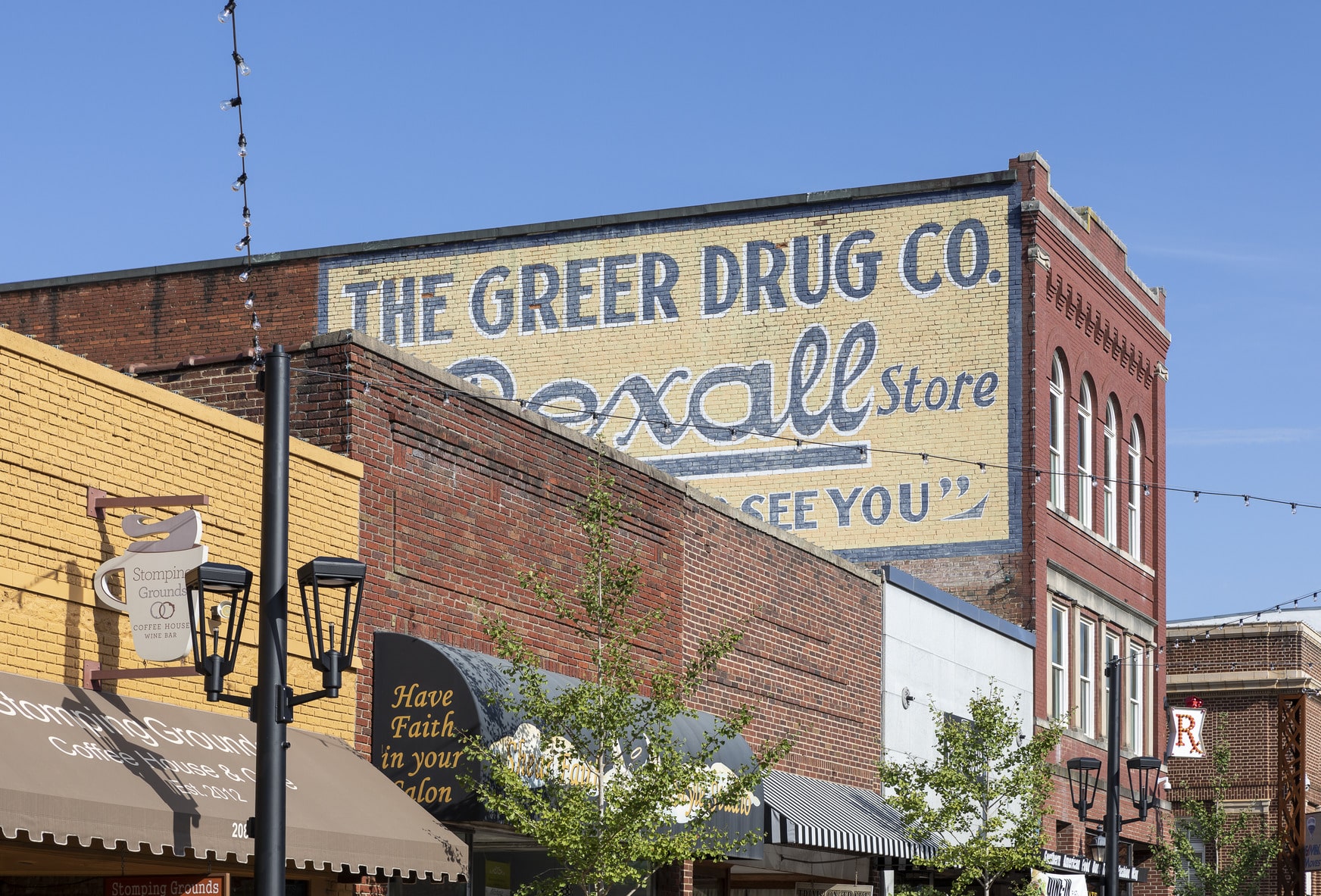
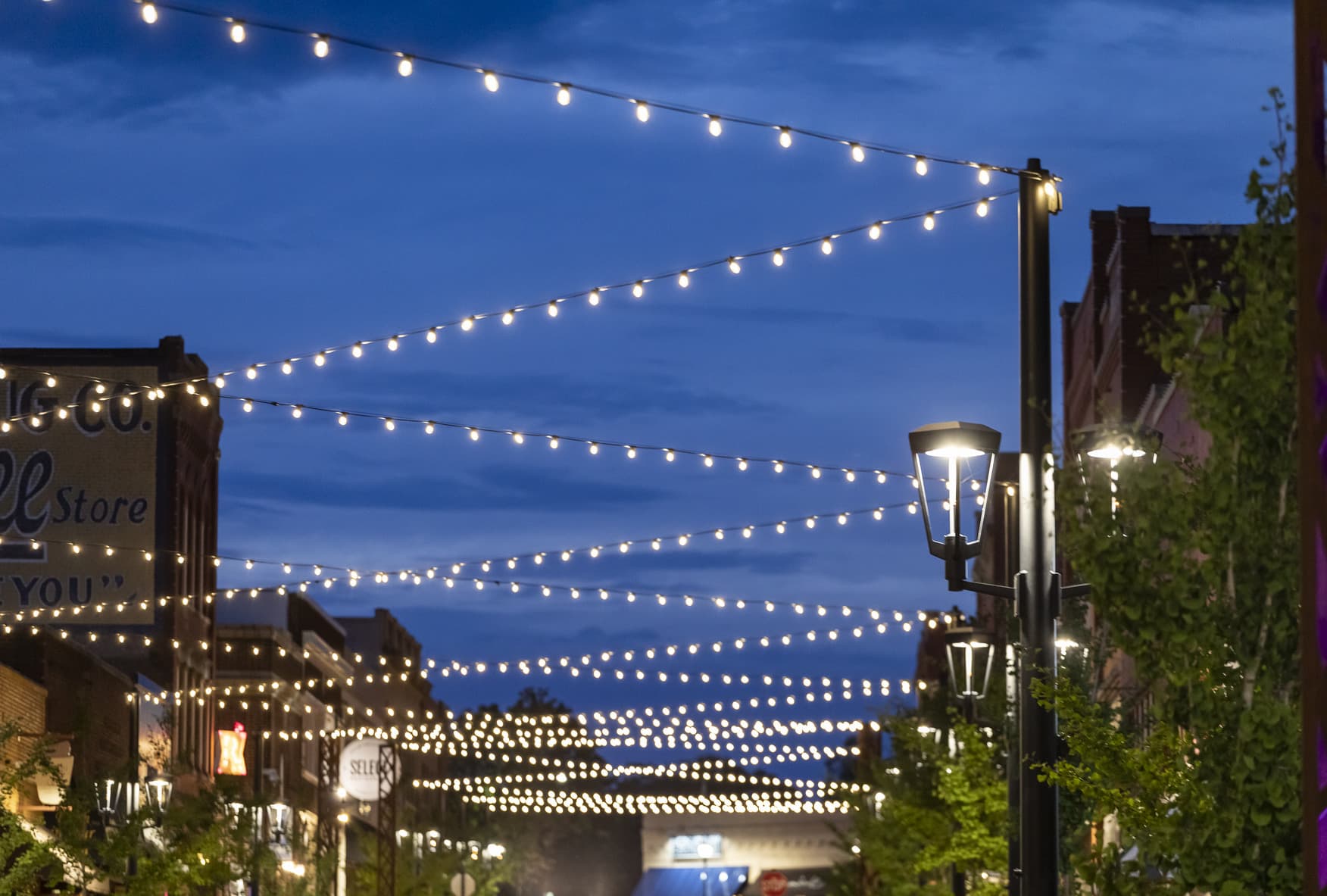
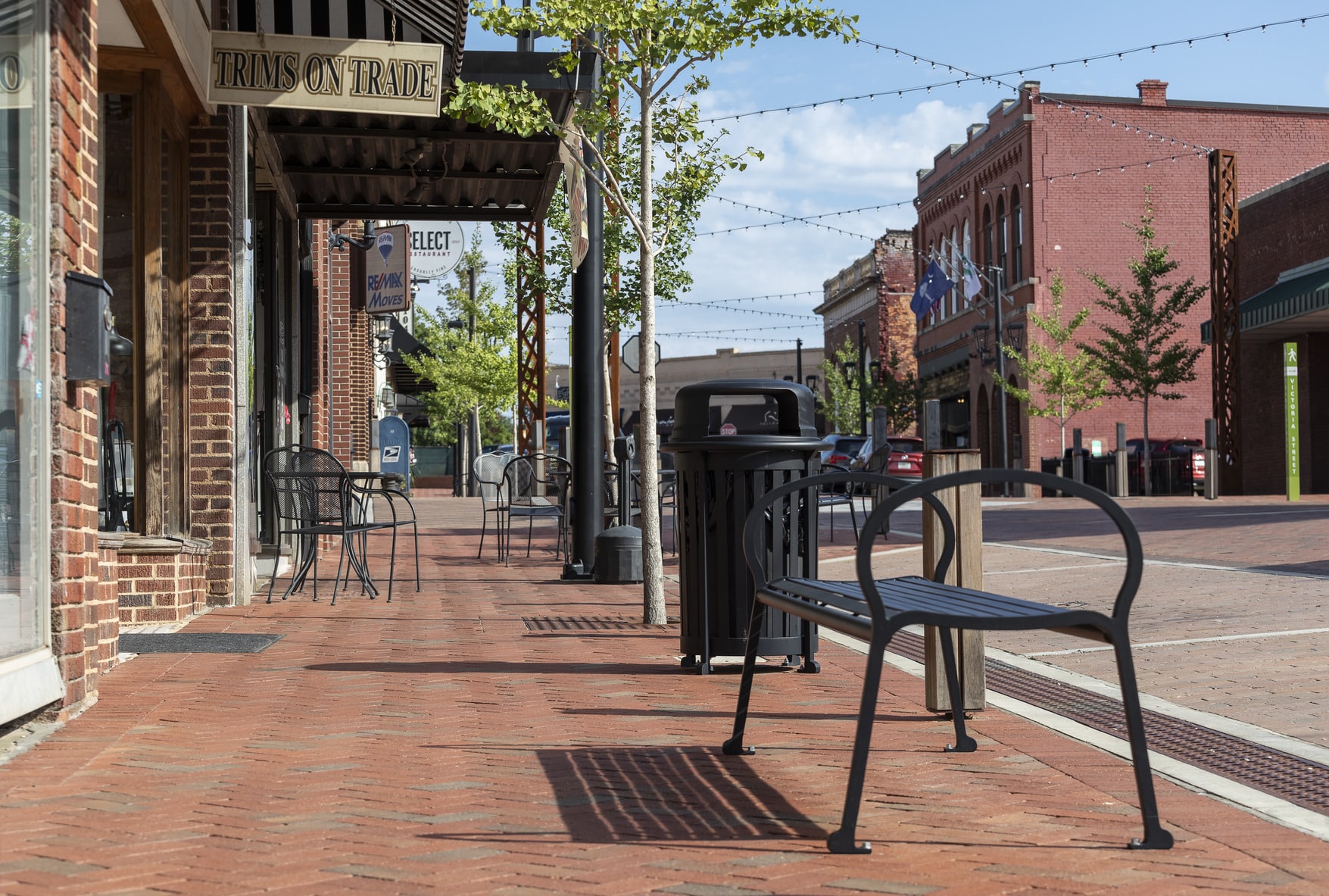
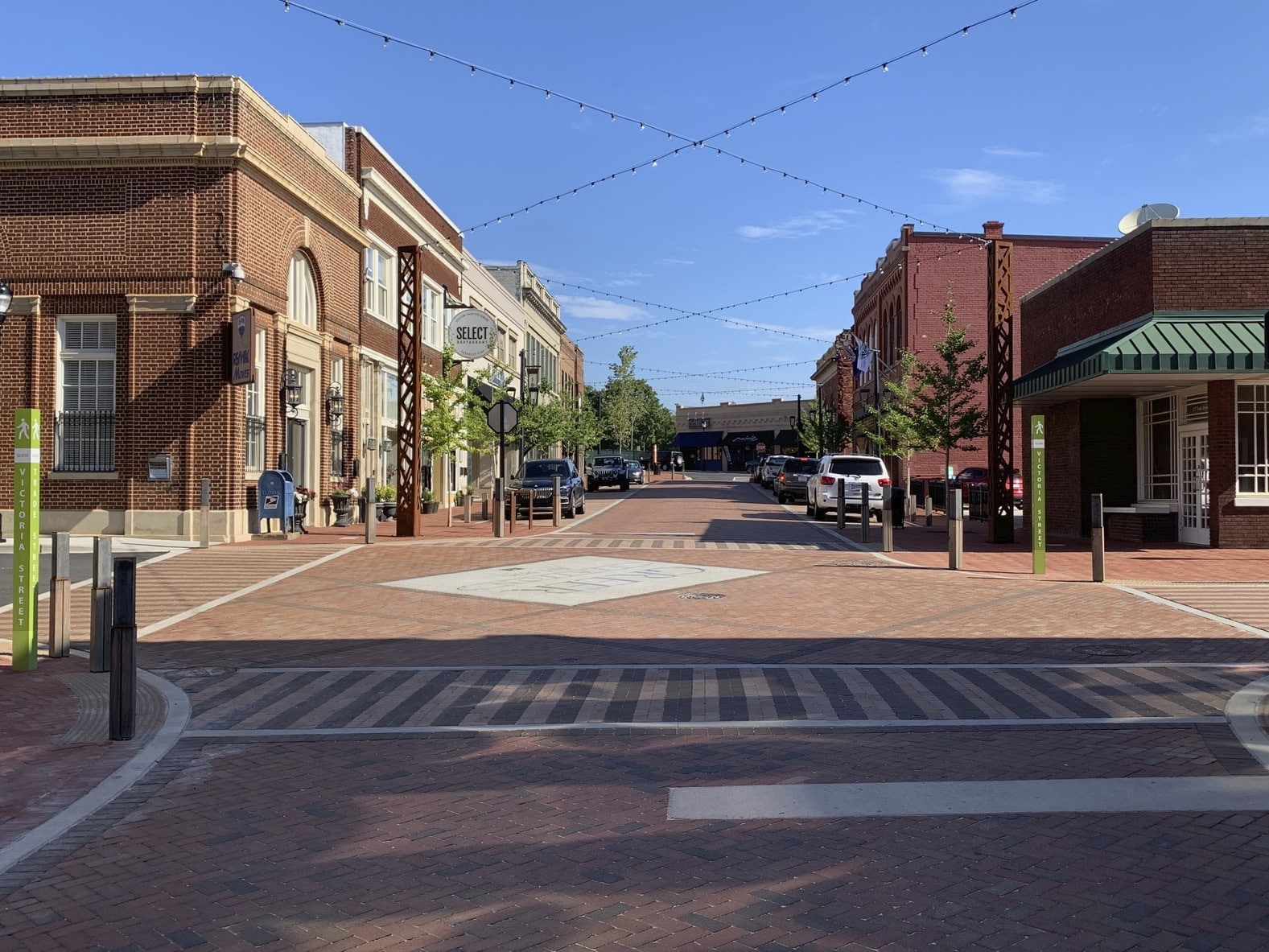
Local civil engineering firm CoTranCo prepared the final roadway design drawings with no curb separation, allowing the City and Kimley-Horn to use trees, bollards, street lighting, and seating elements to shield pedestrians from motorists. To ground the street in its historic beginnings, we also partnered with street furnishings manufacturer Landscape Forms to design custom lighting that would emulate the gas lanterns that once lined the street. This historic-style lighting is juxtaposed with a canopy of modern festival lights that crisscross the street, structurally supported by tension cables.
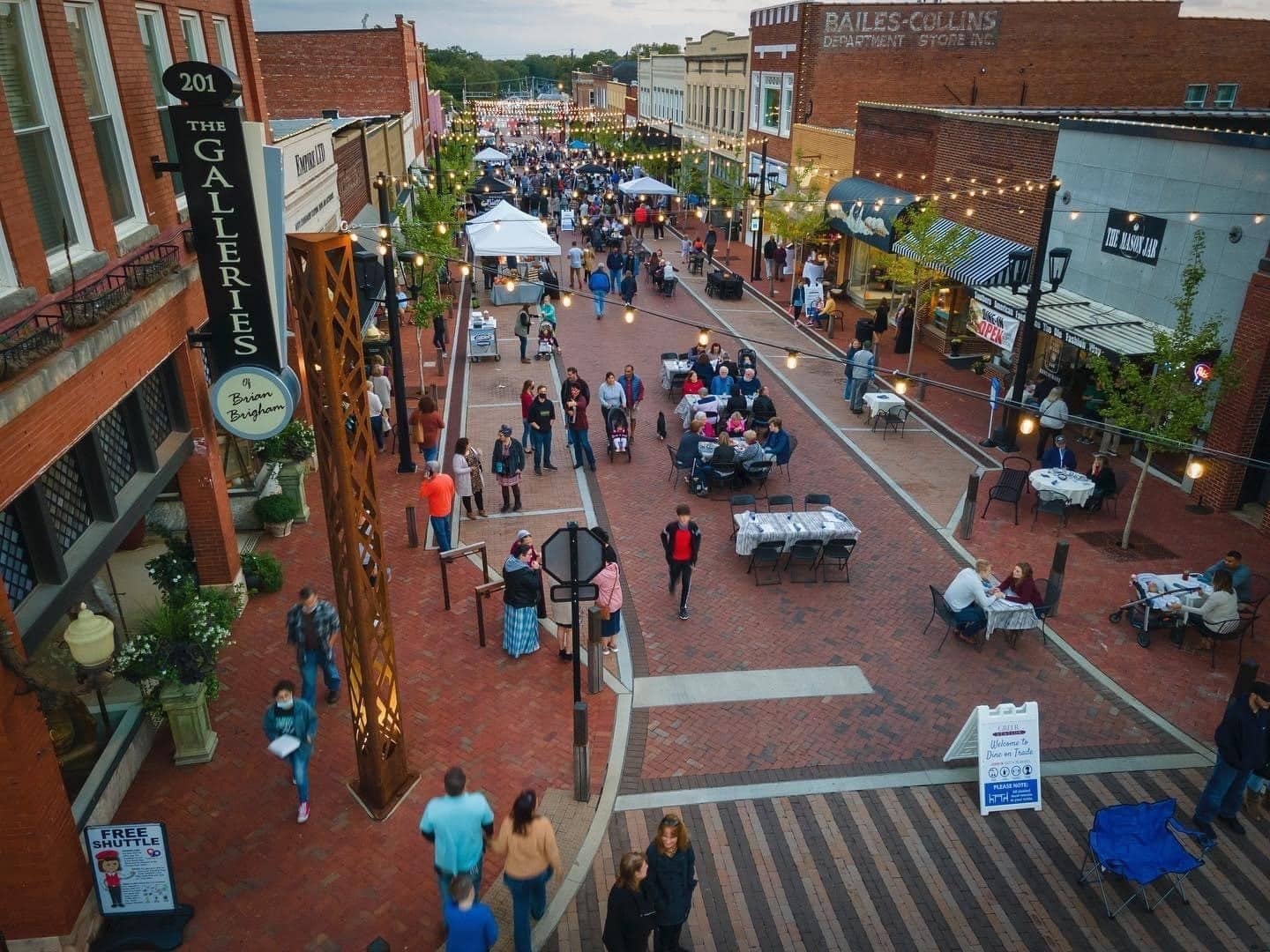
Beyond the above-ground amenities, our team designed an underground electrical grid that supports music equipment and displays during live events and enables vendors to power their booths. Now, the flexible street can be closed for festivals, live entertainment, and other events throughout the year.
The restoration of Greer Station has ultimately provided a safer, more vibrant, walkable, and bikeable downtown, reinvesting more than $250 million back into the community.
Featured image courtesy of Landscape Forms; photography captured by Kris Decker
Related Projects