Going the Distance
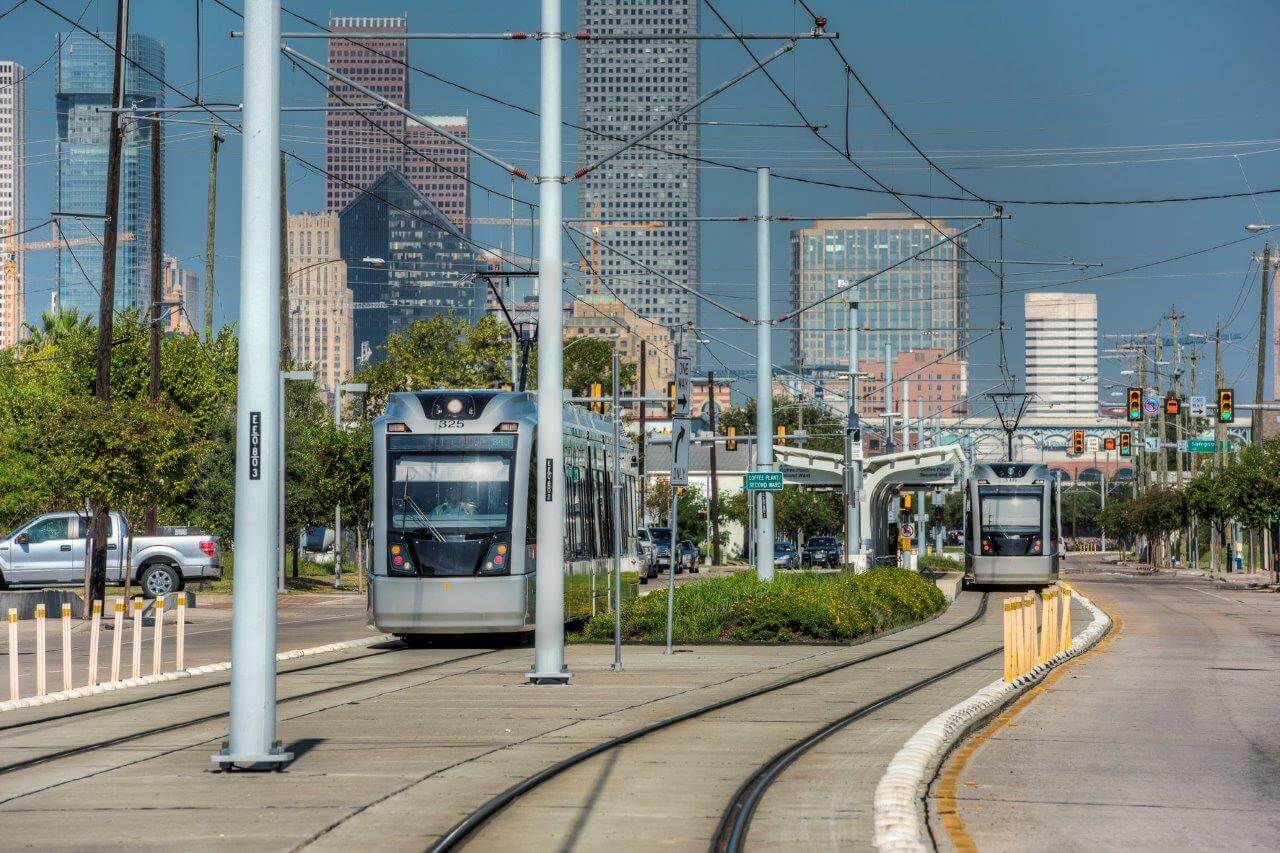
In the face of such wide-spread uncertainty, what is also emerging is a collective consciousness around shared resources, outreach, and compassion. Acknowledging that public transportation accounts for the predominance of daily travel for citizens in many major U.S. cities, transit systems have continued to provide a vital resource for communities, ensuring access to grocery stores and employment and mobility for healthcare workers and first responders.
With an eye on protecting the public, transit agencies have responded to the need for increased health and hygiene practices by implementing measures such as free fares, blocked seats to enforce physical distancing, rear-door boarding on buses, and increased fleet cleaning and sanitation.
Transit and transportation agencies are also going above and beyond their core services with creative partnerships and reimagined technology.
- The Greater Richmond Transit Company has partnered with local Reservoir Distillery to provide free hand sanitizer to their employees on the front lines.
- Pierce Transit in Lakewood, WA has allocated two buses to act as mobile Wi-Fi hot spots for students attending school remotely who do not have access to home internet.
- The Jacksonville Transportation Authority, Beep Inc., and NAVYA have joined forces with the Mayo Clinic to deploy autonomous vehicles that deliver COVID-19 tests and medical supplies to their Jacksonville location.
- Via and the Washington, D.C. Department of For-Hire Vehicles have launched an on-demand service that repurposes D.C. Neighborhood Connect (a former microtransit system) to provide rides to essential healthcare workers at Howard University Hospital and United Medical Center after 9:00 PM.
These are just a few examples of how transportation plays a key role as we battle this pandemic and they remind us that we’re all in this together, a mantra that has rallied us as a global community.
Funding Transit’s Future
 As people are working from home, using delivery apps for groceries, and avoiding the usual weekend activities, transit ridership has plummeted nationwide. LA Metro predicts by Fall 2020, they will experience a loss of over $800 million in sales tax and $300 million in farebox revenue. They have already seen a 70-80% drop in ridership and have decreased transportation service by 20-25% based on shifts in traffic patterns. Washington Metropolitan Area Transit Authority (WMATA) reports that rail ridership is down about 94% and bus ridership is down 76%. In Minneapolis, Metro Transit ridership is down over 75% on buses, 85% on rail, and 95% on express routes.
As President Trump encourages the country to re-open, where does that leave industries, such as transit, that are currently operating under a deficit? The CARES Act includes $25 billion in grants to help transit agencies prevent, prepare for, and respond to COVID-19. These relief funds help the transit industry maintain increased sanitation standards, support customers experiencing economic hardship, avert layoffs, and develop a plan for future re-stabilization.
Some existing funds can be repurposed as well, such as the Emergency Relief Program. In states where the Governor has declared a State of Emergency, transit systems serving metropolitan areas can seek up to 100% federal reimbursement for funds used for emergency-related capital and operating costs that help to secure public health and safety such as:
- System operating expenses
- Protective equipment for employees
- Cleaning/sanitizing rolling stock, equipment, and facilities
- Hand sanitizers for high-traffic areas
In a time where jobs are desperately needed, investing in infrastructure projects will create valuable employment opportunities while increasing the effectiveness of daily transportation operations. During a recent interview with Transportation Radio, Paul Skoutelas, President and CEO of the American Public Transportation Association (APTA), advocated government funding for infrastructure, citing economist data that “for every $1 spent, there is a $5 return on investment,” returning billions of dollars back into the economy.