
Data‑Driven Technology Supporting ADA Compliance and Accessibility Planning
Meeting requirements of the Americans with Disabilities Act (ADA) requires reliable data, clear prioritization, and a clear path from evaluation to implementation. KADA™ is Kimley‑Horn’s proprietary, GIS‑based technology developed to support ADA self‑evaluations and ADA Transition Plans by turning complex accessibility data into actionable insights.
Developed by Kimley‑Horn experts and used nationwide, KADA combines field data collection, GIS analysis, and data management to help public agencies understand existing conditions, prioritize improvements, and move confidently toward compliance.
What Is KADA?
KADA™ is an ArcGIS/GPS-based data collection and data management application used to inventory accessibility features and identify ADA non-compliance within the public right-of-way, buildings, parks, and other pedestrian facilities. ADA compliance is both a civil rights obligation and a significant operational responsibility for public agencies. KADA helps bridge the gap between policy requirements and real-world implementation.
The program supports actionable, results-driven implementation, including:
- ADA Self‑Evaluations
- ADA Transition Plans
- Project prioritization and implementation planning
- Ongoing ADA compliance tracking
By integrating spatial data with field‑verified conditions, KADA provides a structured, repeatable approach to accessibility planning that meets federal requirements and aligns with industry best practices.
Benefits of the KADA‑supported approach include:
- More defensible decisions based on consistent, spatially accurate data
- Clear prioritization of accessibility improvements using GIS analysis
- Improved collaboration across planning, engineering, and public works teams
- Greater confidence in meeting Title II ADA requirements
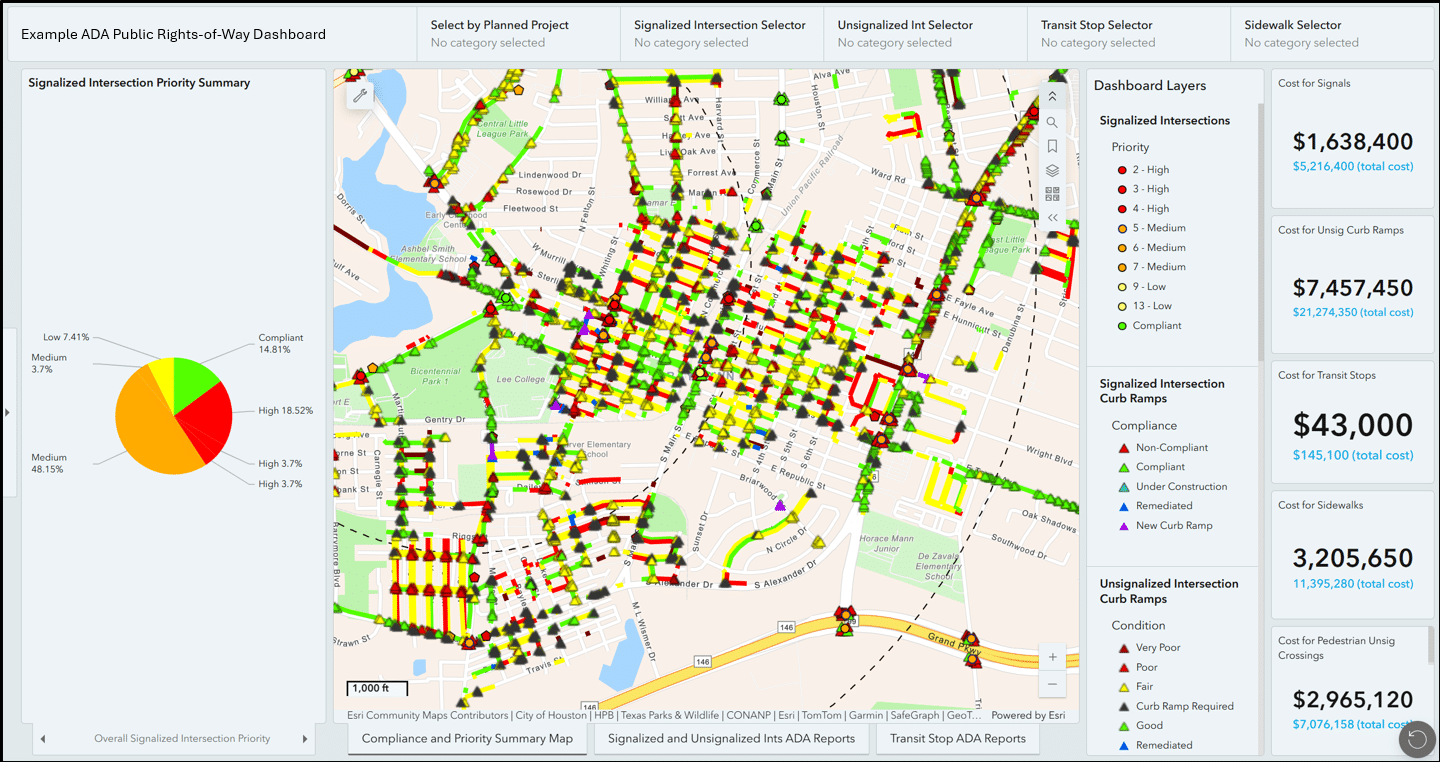
How Our ADA Compliance Technology Works
KADA supports the full ADA planning lifecycle by connecting data collection, analysis, and planning in one GIS‑driven framework:

Field Data Collection

Centralized Data Management

Spatial Analysis & Prioritization

Transition Plan Support
Let’s Talk About Your ADA Goals
We use KADA to help clients not only plan for compliance—but implement improvements that benefit the traveling public. The platform supports projects of varying scale, from focused corridor assessments to system‑wide ADA Transition Plans, while maintaining consistent data standards. Whether you are beginning an ADA self‑evaluation, updating an existing Transition Plan, or looking for better ways to track and prioritize accessibility improvements, Kimley‑Horn can help.
Contact our ADA and Accessibility team to learn how KADA can support your planning, compliance, and implementation efforts.