From Concept to Reality: Holistic Strategies for At-Grade Rail Crossings
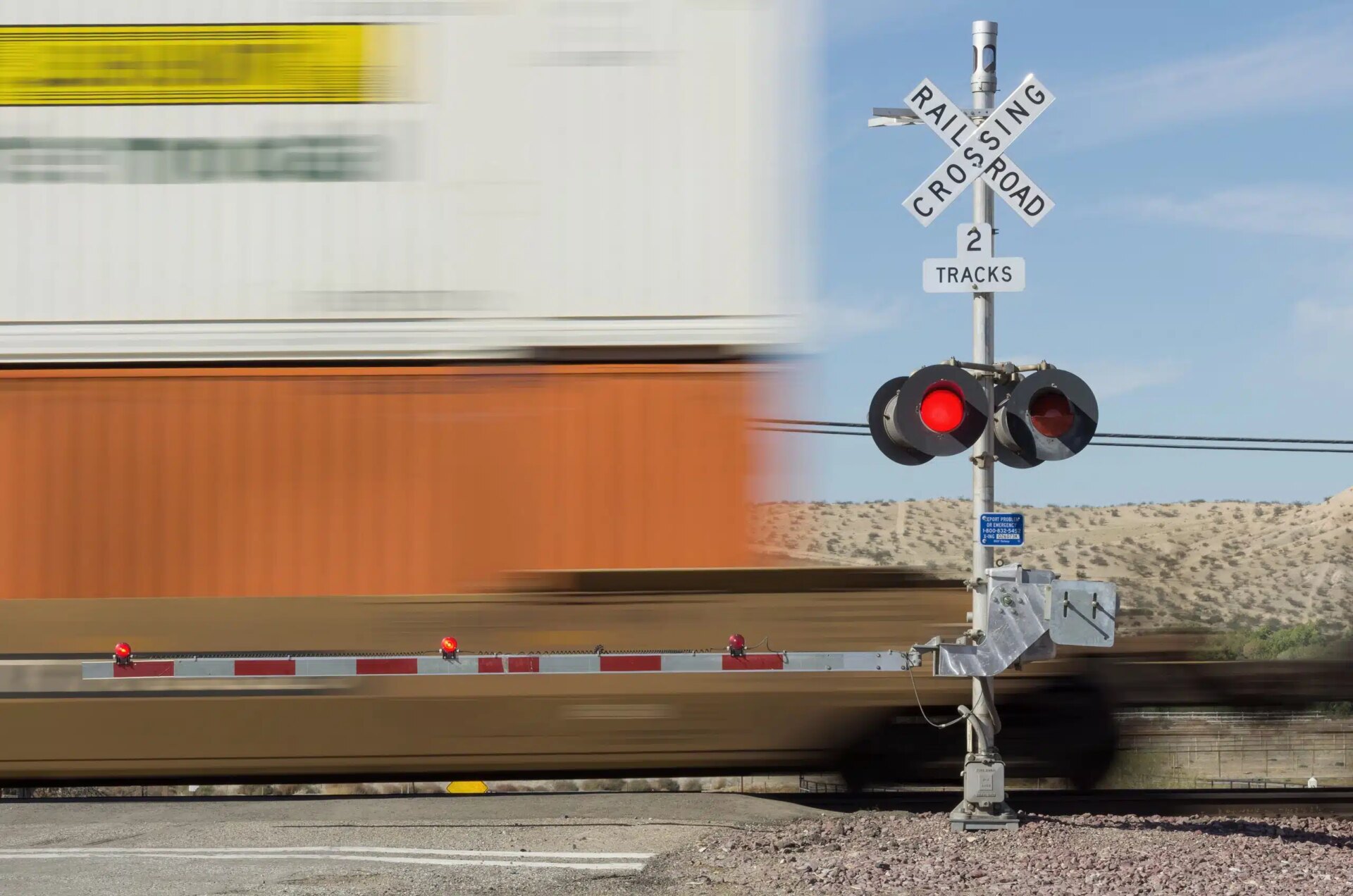
Across the country, there have been a reported 1,169 fatalities at at-grade railroad crossings since 2020. It is imperative to address these crossings to improve pedestrian, bicyclist, and vehicular safety and enhance multimodal travel options.
Evaluating How to Address Rail Crossings
With any at-grade railroad crossing, there is a natural tension. Railroad corridors are meant to provide safe and reliable infrastructure for freight, passenger, and/or commuter transit—yet they can pose safety and mobility challenges and may be at odds with roadway and active transportation networks. Mobility goals and priorities will vary from city to city, which makes it necessary to balance a comprehensive rail crossings solution with the priorities of communities and the local railroad.
To address safety challenges at at-grade rail crossings, you should begin with data collection relevant to your crossings, such as the number of trains per hour, train speed, average daily vehicle traffic and number of pedestrians and/or bicyclists, the current crossing treatments and warning devices, and the annual number of collisions and fatalities at the crossing. Additionally, it is important to understand how the railroad interacts with the local street network. Some questions to ask are:
- Is there traffic congestion around the railroad? At what time(s) does this congestion occur?
- To what extent is there vehicular, pedestrian, and other queuing during gate downtime?
- What is the projected future population growth in the surrounding area?
- With this projected growth, what changes in travel patterns are likely to occur?
Improving safety at grade crossings will vary, depending on the existing and future operations of the railroad and roadway network, as well as the existing conditions and infrastructure at the crossing. Solutions range from simple (e.g. installing medians approaching to the crossing) to complex and expensive (e.g. grade separating the tracks and roadway). Solutions should be evaluated and recommended on a crossing-by-crossing basis with close coordination from the crossing’s roadway authority, state agency overseeing rail crossings, as well as the railroad owner or operator.
Grade separations are expensive solutions, so you should assess funding sources early on. Since these financial resources are typically constrained, it is beneficial to strategize how to best package grant applications, which can broaden possibilities for these projects.
Designing Effective Safety Treatments
Because a grade separation is a costly solution and may not be feasible at many grade crossings, alternative improvements may instead help significantly improve safety. A holistic perspective is needed when it comes to safety treatments, and you should start by assessing community needs.
There are a range of improvement solutions, which can be passive or active. Passive devices include fencing to prevent trespassing into the railroad corridor, pedestrian barriers, channelization fencing and/or manual swing gates, pavement markings and texturing, median extensions, and fixed message signs. Active devices include train-activated flashers and/or gate arms, audible active control devices, automated pedestrian gate arms, pedestrian signals, and blank-out signs. Other train-activated improvements can include traffic signals at the crossing (queue cutters or pre-signals), and special operations for signalized intersections in close proximity to the crossing(signal interconnection and/or preemption timing).
Grade Separation Design: A Community-Forward Approach
If planning a grade separation is the best option to increase safety at your rail crossing, it is important to assess the crossing’s current constraints, what your goals are for the grade separation, and what role the local community plays in the separation. For example, would altering the railroad create division in the community disrupt neighborhoods during construction or negatively impact local aesthetics?
You need a comprehensive approach to consider the bigger picture, including how the project can affect equity and safety in the community. This may look like assessing the businesses adjacent to the railroad to provide solutions that avoid or reduce impacts. For example, at the McKinley Grade Separation in the City of Corona, California, Kimley-Horn helped reduce the embankment and bridge width and tightened up the connector road alignment, which improved safety while preserving an adjacent strip mall with multiple small businesses.
Additionally, consider that communities historically divided by at-grade rail crossings often have underserved neighborhoods that need particular care. When removing barriers though grade separation, it is imperative to facilitate multiple modes of travel and be sensitive to the community’s context and aesthetics—which can help revitalize the area after construction and create a sense of local pride. An example of this is Kimley-Horn’s approach to the Sunset Grade Separation project in Banning, CA. We provided raised walkways with a stagecoach aesthetic theme to match the city’s nickname: “Stagecoach Town, USA.”


As communities grow and existing pedestrian travel patterns expand, prioritizing safety at at-grade railroad crossings is essential. With the help of a trusted consultant with a comprehensive approach to crossings and breadth of experience, you can be on your way to crafting an at-grade rail crossing solution tailored to your specific needs. Combining mobility evaluations with a thorough understanding of railroad operations, funding, and feasibility, Kimley-Horn works closely with communities, developing practical long- and short-term solutions to enhance safety and meet your needs.



Related Insights