From traffic operations to document management, artificial intelligence (AI) and machine learning (ML) are steadily gaining traction across transportation agencies. While the technology itself isn’t new, a wave of recent innovations—particularly in video analytics and large language model (LLM) applications—is making AI a more practical, accessible, and valuable decision-support tool for everyday infrastructure challenges. Read on to hear from transportation experts Doug Gettman and Raj Paradkar on the opportunities, limitations, and emerging trends shaping AI adoption in the transportation sector.
Camera-Ready: Existing and Future Technology
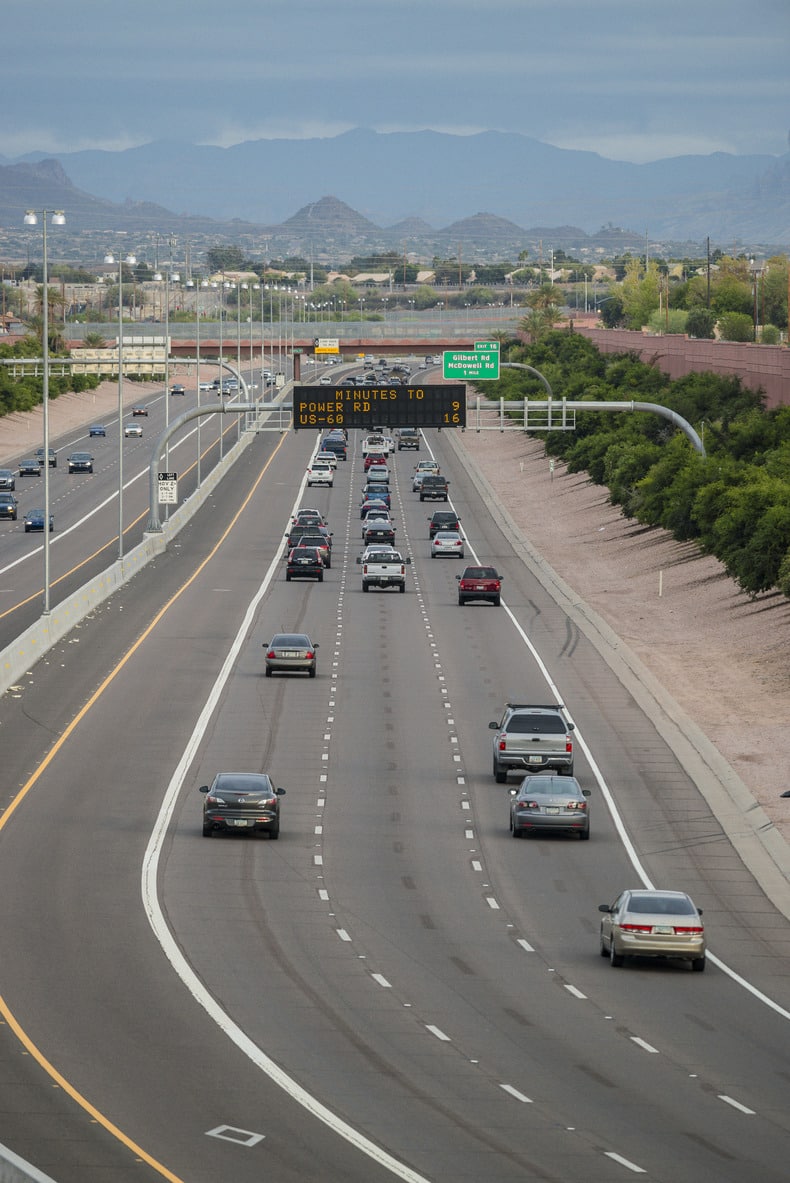
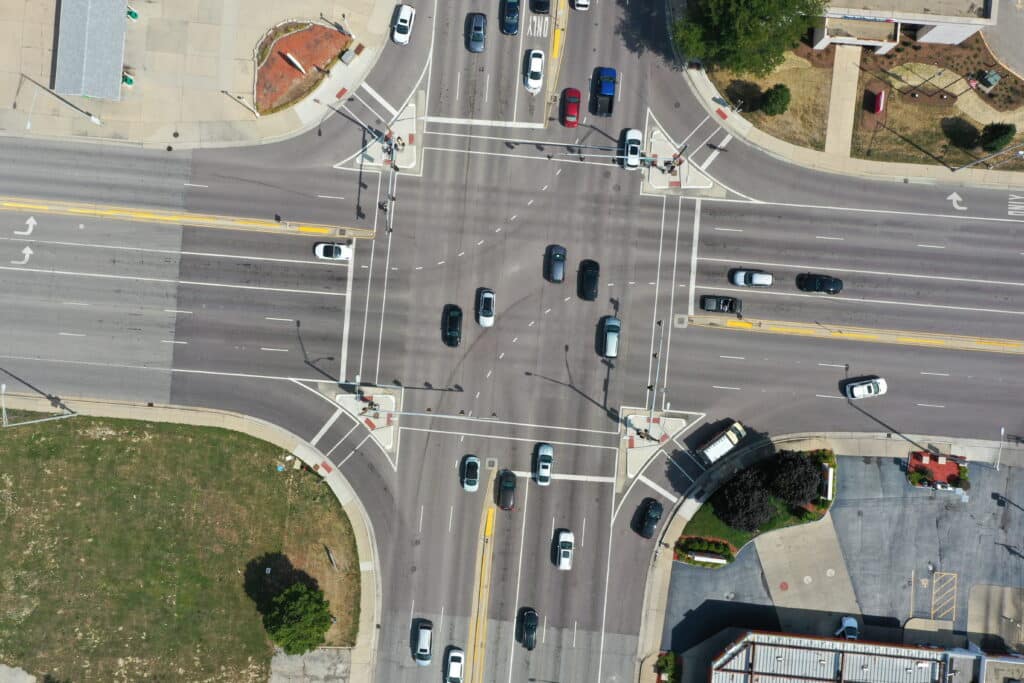
Transportation agencies have historically used and explored innovative technology to help solve transportation challenges. Over the past several decades, Departments of Transportation (DOTs) have deployed thousands of roadway cameras to report real-time data from existing CCTV feeds. AI-driven video analytics tools can be trained to continuously evaluate critical data from these existing cameras. As a result, they can extract meaningful information, such as vehicle counts, turning movements, congestion indicators, and surrogate measures of safety, like “near misses”, leading to helpful applications such as:
- Traffic diversion decision support using real-time data to estimate volume-to-capacity ratios and propose more balanced traffic distributions
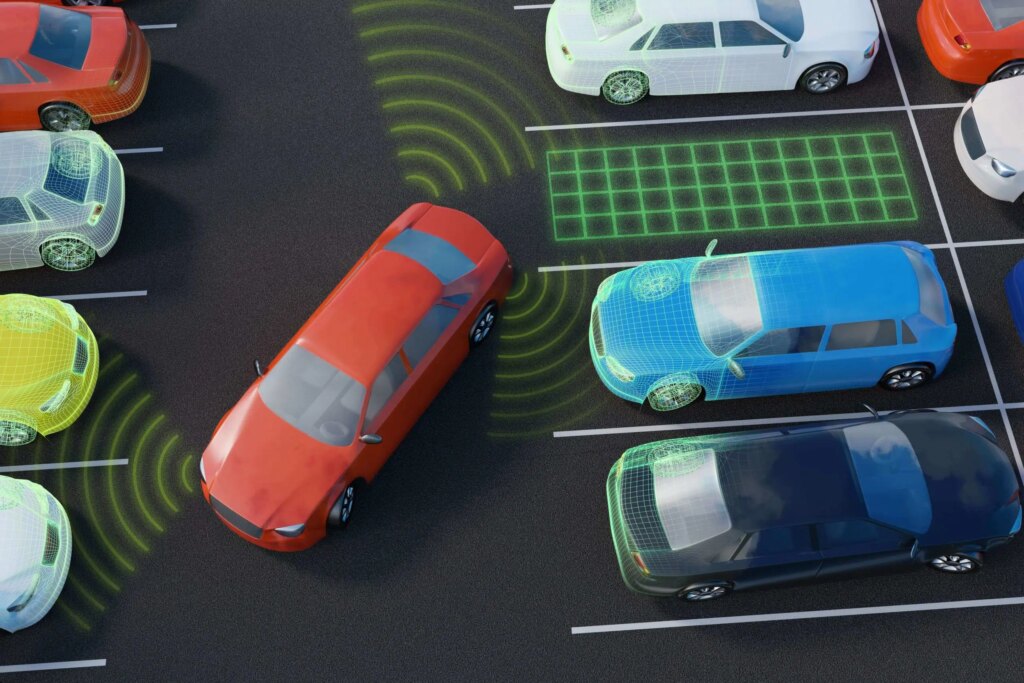
- Parking utilization analysis using drone-collected video to assess turnover
- Wrong-way driver detection and safety alerts
- Vehicle trajectory tracking for safety diagnostics and early identification of potential crashes at hot spot locations
With AI-powered capabilities, many transportation agencies won’t have to wait years to collect and analyze crash statistics. These tools allow agencies to address hot spots earlier, such as adding bollards or a dedicated bike lane, leading to increased response time and safety.
AI and LiDAR for Traffic Detection and Safety
DOTs and other agencies are exploring ways to extract more insights from their existing infrastructure without purchasing new camera systems or moving sensitive video feeds to the cloud. Because AI-based cloud systems can pose cybersecurity, liability, and privacy risks if connected to a DOT network, many are looking to in-house processing to deliver AI capabilities.
While cameras will remain essential for Transportation Systems Management and Operations (TSMO), they will eventually be paired more often with Light Detection and Ranging (LiDAR). Cameras struggle with glare, fog, and severe weather, and no amount of AI can interpret pixels that simply aren’t visible. LiDAR, which produces reliable point cloud data in a broader range of conditions, is increasingly favored for detection. Combined camera LiDAR systems provide both the visual context operators need and the detection accuracy AI thrives on.
Streamlining Data Management in Transportation Agencies
Another promising AI application transportation agencies are evaluating is information management. DOTs maintain enormous libraries of specifications, policies, permitting requirements, and Request for Proposal (RFP) archives. Navigating this information is time consuming, often requiring specialized institutional knowledge. LLM-powered document repositories offer a practical solution to gathering and applying this historical knowledge to ensure consistency.
Instead of manually searching PDFs or digging through file structures, users can ask for natural language queries and receive summaries, relevant sections, and supporting citations. This same technology is being applied to streamline permitting, improve access to construction standards, and even support drafting and reviewing RFPs for quality.