Pioneering Drone Technology for Improved Roundabout Safety
Kimley-Horn is leading the roundabout community in developing and sourcing new technologies to provide solutions to roundabout safety and operational issues. Learn how innovative drone technology is being combined with traditional safety data to more accurately evaluate existing roundabouts for speed and safety.
Improved Accuracy and Safety
Traditionally, roundabouts are evaluated post-construction with crash data, observational data, and ground-based radar guns. However, ground-based radar is imprecise because sampling of spot speed cannot be taken at the precise location needed to compare fast paths to geometric measured fast paths. This traditional data only tells part of the story.
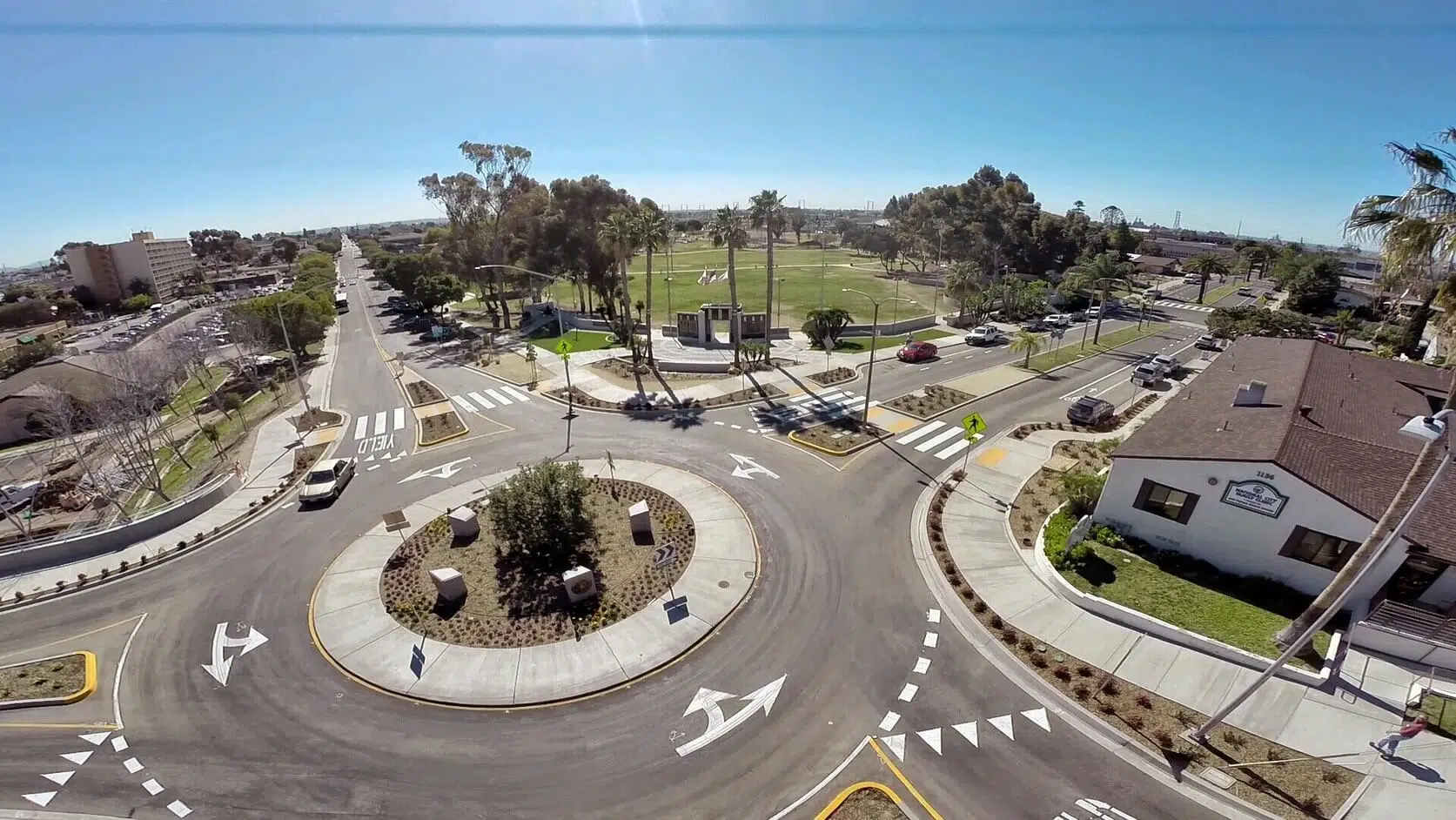
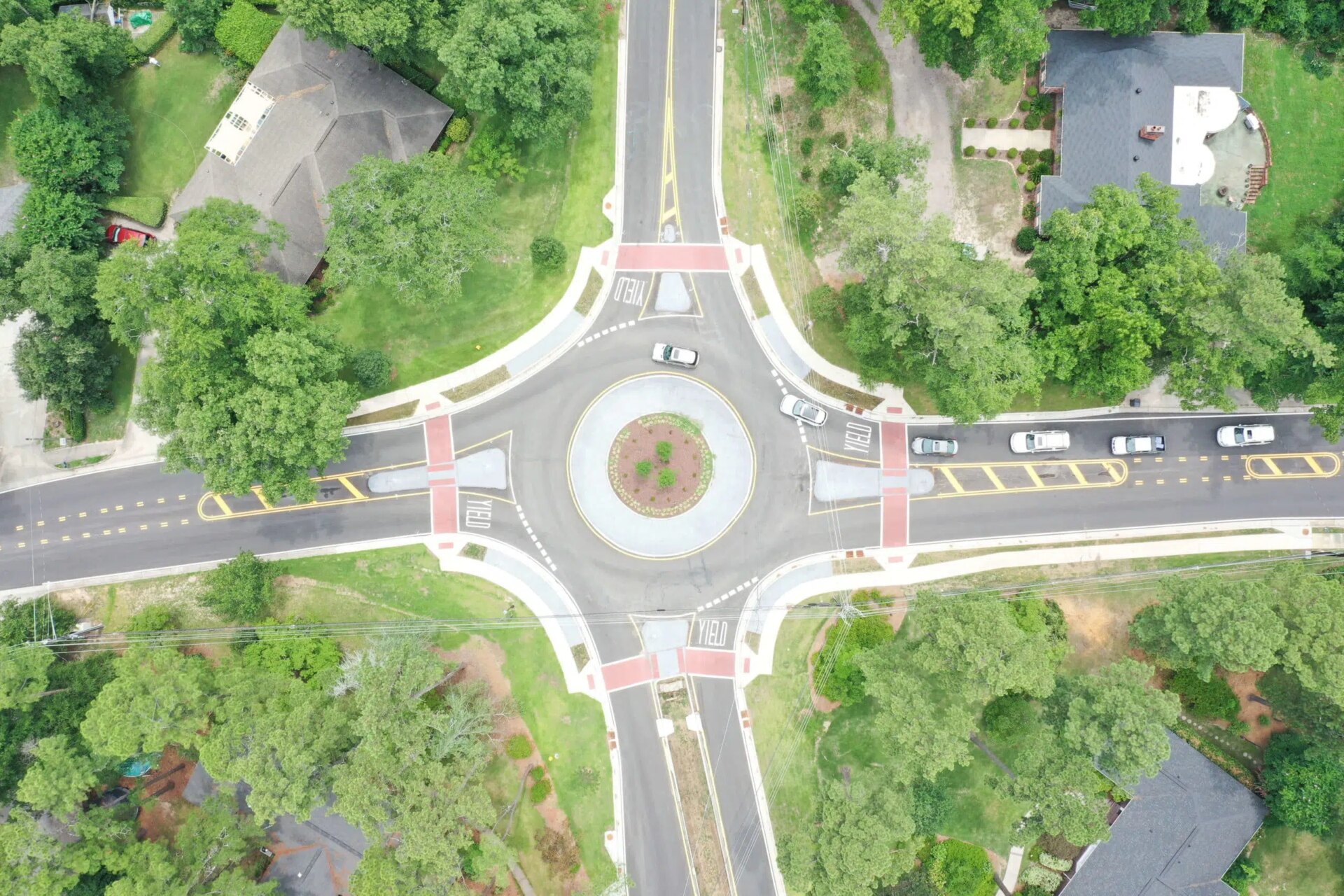
Using drones, engineers can get much higher-quality data with statistical significance. The drone flies above the roundabout for an aerial view and captures peak-period traffic on video. This bird’s-eye video is then analyzed with artificial intelligence software, allowing for the tracking of movement trajectories, frequency heat maps, speed and trajectory maps, and calculation of average speeds and travel times. Footage from drone elevation is also useful for viewing occurrences of near-misses (conflict patterns) and potential accidents.
Mark Lenters, a roundabout engineer at Kimley-Horn, pioneered this concept and is partnering with an industry expert to study additional uses and benefits of drone technology in improving safety. A pilot study is underway to test speed differentials on various roundabout geometries, reviewing the opportunities of the drone technology and gauging the relative safety of different roundabout designs via pixel tracking.
Above and Beyond Traditional Data
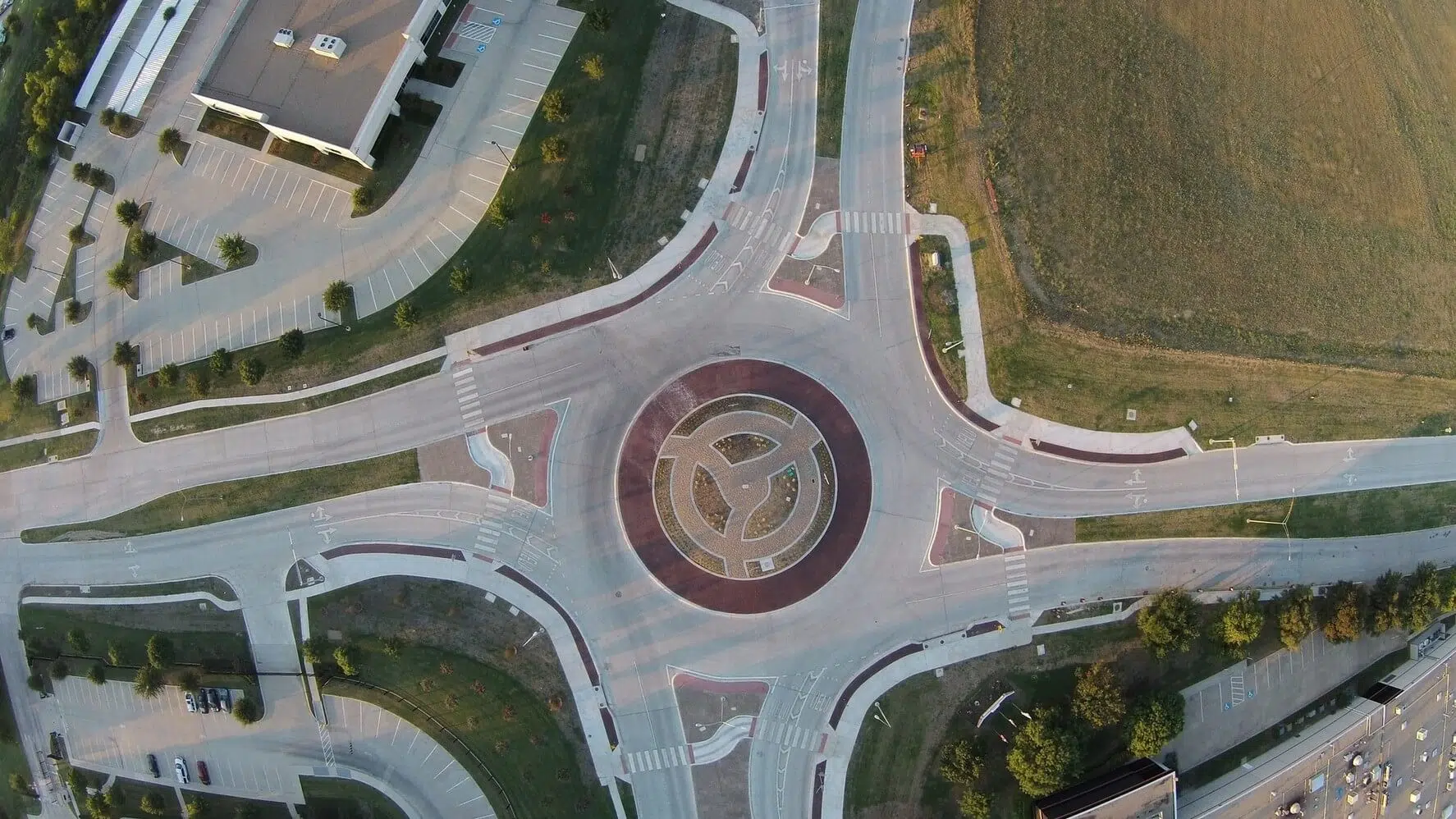
In a recent safety study of a roundabout in Elk Grove, California, Kimley-Horn’s Sean Houck combined traditional data (such as crash history) and aerial drone video to improve roundabout safety. Over two years, traditional collision data captured 28 crashes, yielding important information about the severity of the collision, general location of the incident on the roundabout, time of day, and possible causes. However, this data didn’t include the full experience of the roundabout; near-misses and real-world driving situations were not captured.
The drone video that was captured during the morning and afternoon peak travel times of a typical day allowed our engineering team to track vehicle paths, producing clear traffic patterns and conveying where drivers frequently passed between lanes or did not abide by lane markings. The drone video was also used to calculate speeds at the entry and exit points of the roundabout, offering precise data on the average speed.
Combining drone video analysis with collision data and other common data sets provided a more comprehensive analysis of the roundabout, offering appropriate recommendations to improve its safety. Based on this additional data, Kimley-Horn was able to recommend updates to pavement markings and changes to lane widths, signage, illumination, and lane geometry.
The advent of drone technology has created a new avenue of safety review for roundabouts. While all the possible uses and benefits are still under review, drones offer transportation engineers a new tool to capture a greater variety of high-quality data.
Want to learn more about how your in-service roundabouts may benefit from the use of drone analysis? Contact our roundabout experts or your local Kimley-Horn partner.


Related Insights